Lin Meng-Xiang, Yi Yong-Xiang, Fang Pei-Pei, Huang Shan-Shan, Pan Chen-Wei, Jin Ling-Xiang, Zhang Tong, Zhou Guang-Yao
Department of Anesthesiology, Critical Care and Pain Medicine, The Second Affiliated Hospital and Yuying Children's Hospital of Wenzhou Medical University, Wenzhou, Zhejiang, 325027, P.R. China.
Department of Hepatobiliary Surgery, The Second Affiliated Hospital of Southeast University, Nanjing, Jiangsu, 210003, P.R. China.
Oncotarget. 2017 Sep 16;8(53):91542-91550. doi: 10.18632/oncotarget.21070. eCollection 2017 Oct 31.
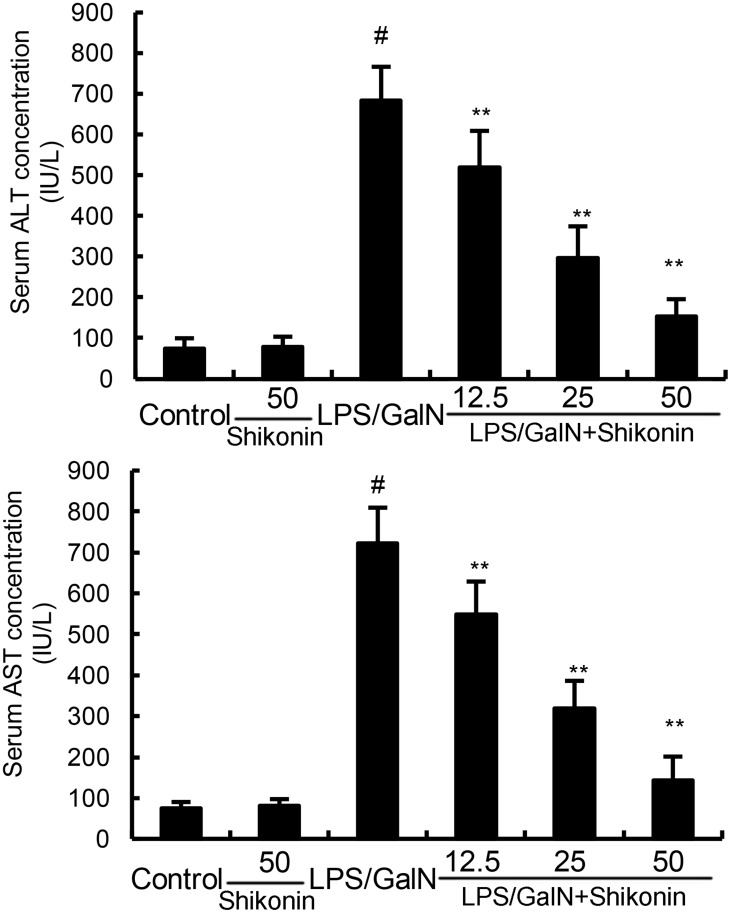
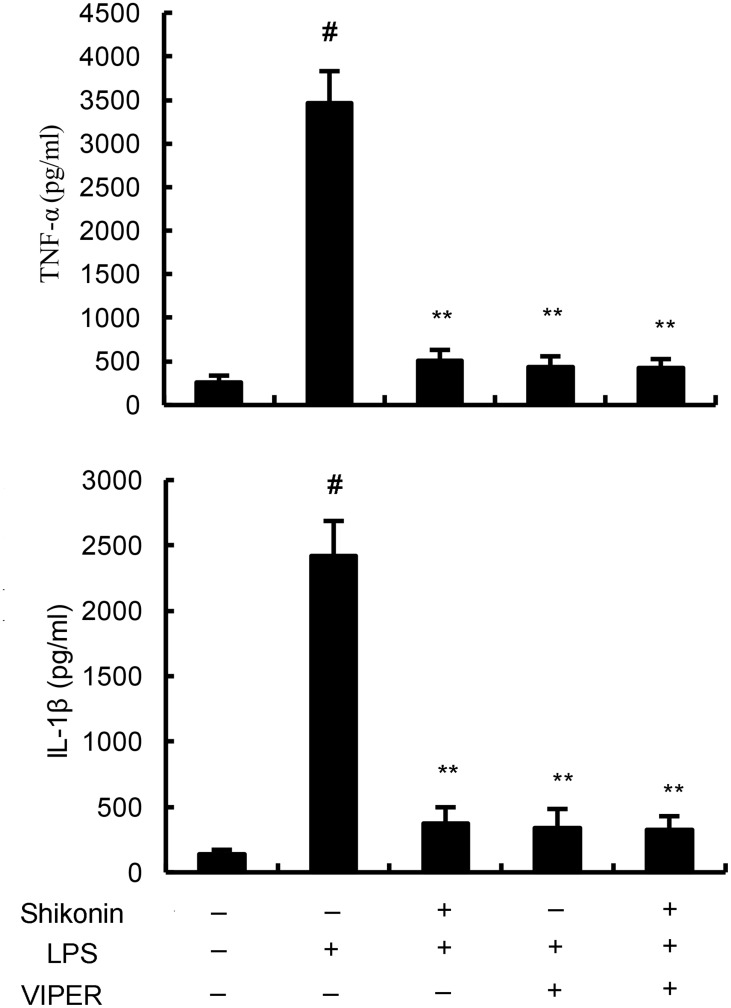
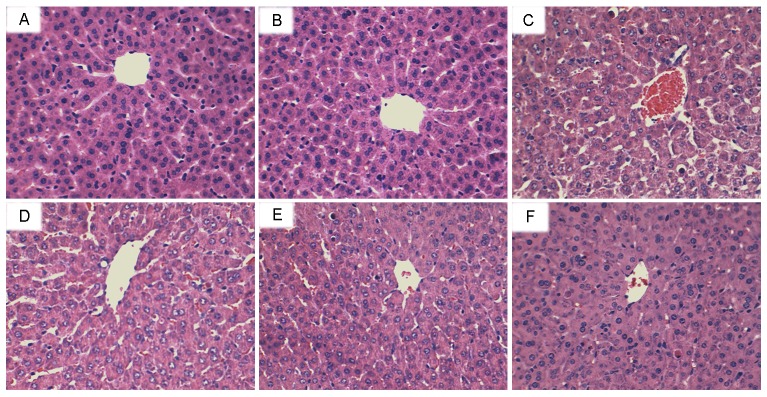
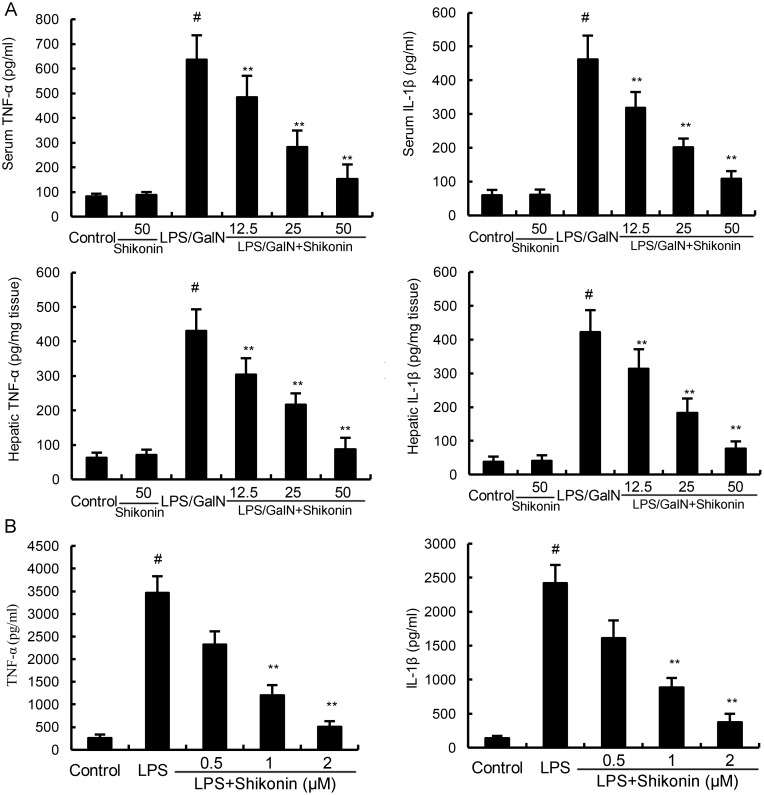
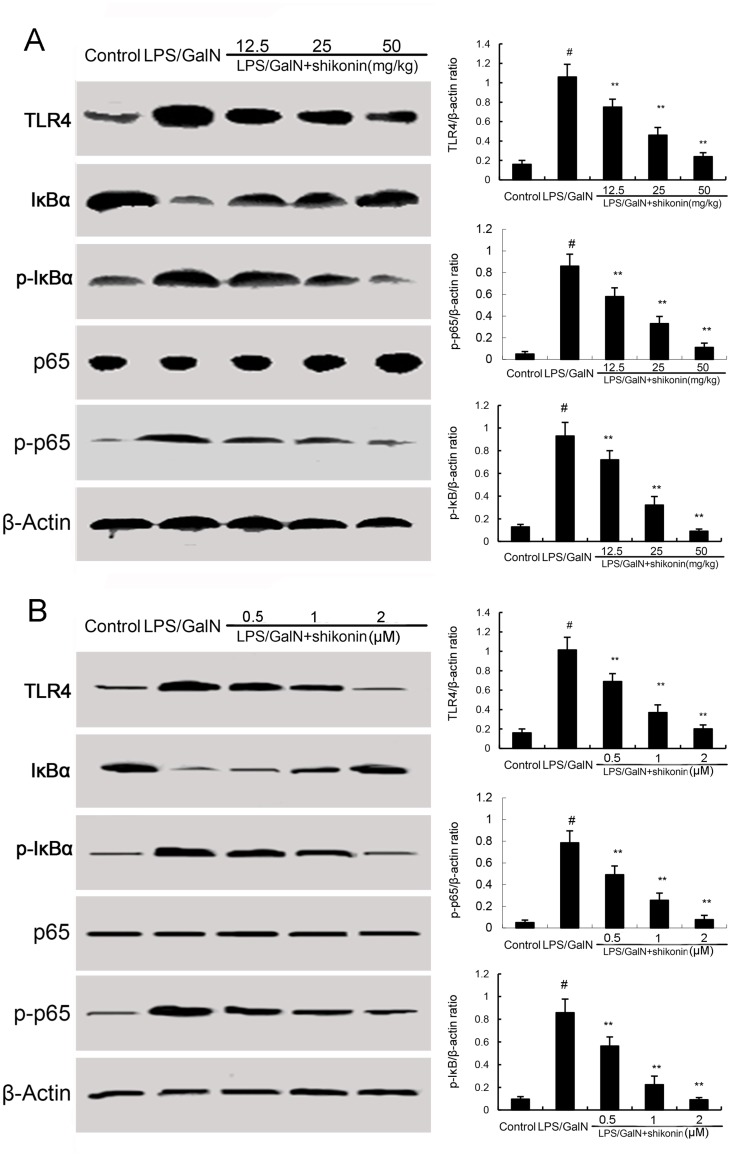
Shikonin, a naphthoquinone isolated from the root of medical herb has been reported to have anti-inflammatory effect. However, there is no related research for the treatment of shikonin on hepaic injury. The purpose of this study was to investigate the effects of shikonin on D-Galactosamine and Lipopolysaccharide-induced hepatic injury in mice. Male BALB/c mice were pretreated with shikonin 1 h before LPS/D-GalN treatment. The pathological changes of hepatic injury were detected by H&E staining. The levels of TNF-α and IL-1β in hepatic tissues were detected by ELISA. The levels of alanine aminotransferase (ALT) and aspartate aminotransferase (AST) were also measured in this study. In addition, the expression of TLR4 and NF-κB were determined by western blot analysis. These results suggest that shikonin effectively prevents LPS/D-GalN-induced liver injury by inhibiting AST and ALT levels, as well as inflammatory cytokines TNF-α and IL-1β production. The expression of TLR4 and NF-κB activation induced by LPS/D-GalN were also inhibited by treatment of shikonin. , shikonin significantly inhibited LPS-induced TNF-α and IL-1β production, as well as TLR4 expression and NF-κB activation. In conclusion, the results of the present study suggest that shikonin attenuates LPS/D-GalN-induced hepatic injury by inhibiting TLR4 signaling pathway.
紫草素是从药用植物根部分离出的一种萘醌,据报道具有抗炎作用。然而,关于紫草素治疗肝损伤尚无相关研究。本研究旨在探讨紫草素对D-半乳糖胺和脂多糖诱导的小鼠肝损伤的影响。雄性BALB/c小鼠在LPS/D-半乳糖胺处理前1小时用紫草素预处理。通过苏木精-伊红(H&E)染色检测肝损伤的病理变化。采用酶联免疫吸附测定(ELISA)法检测肝组织中肿瘤坏死因子-α(TNF-α)和白细胞介素-1β(IL-1β)的水平。本研究还检测了丙氨酸转氨酶(ALT)和天冬氨酸转氨酶(AST)的水平。此外,通过蛋白质免疫印迹分析确定Toll样受体4(TLR4)和核因子κB(NF-κB)的表达。这些结果表明,紫草素通过抑制AST和ALT水平以及炎性细胞因子TNF-α和IL-1β的产生,有效预防LPS/D-半乳糖胺诱导的肝损伤。紫草素处理还抑制了LPS/D-半乳糖胺诱导的TLR4表达和NF-κB激活。此外,紫草素显著抑制LPS诱导的TNF-α和IL-1β产生以及TLR4表达和NF-κB激活。总之,本研究结果表明紫草素通过抑制TLR4信号通路减轻LPS/D-半乳糖胺诱导的肝损伤。