Chopyk Daniel M, Kumar Pradeep, Raeman Reben, Liu Yunshan, Smith Tekla, Anania Frank A
Division of Digestive Diseases, Department of Medicine, Emory University School of Medicine, Atlanta, Georgia.
Physiol Rep. 2017 Dec;5(23). doi: 10.14814/phy2.13541.
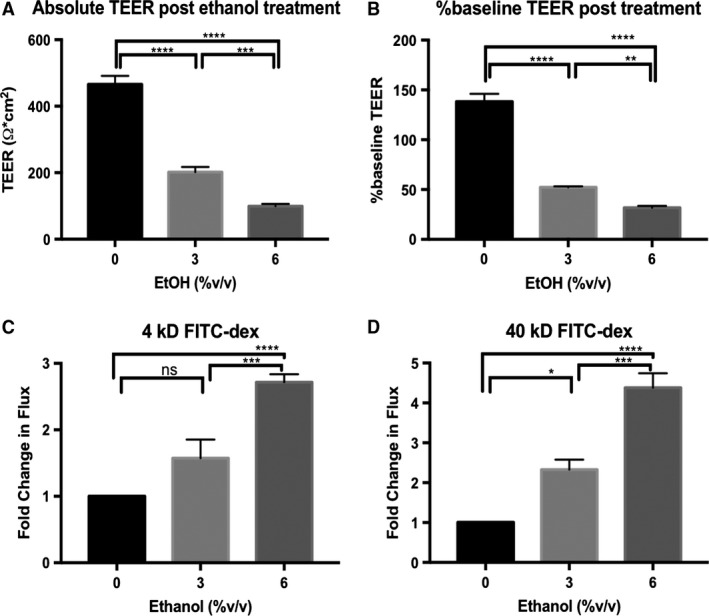
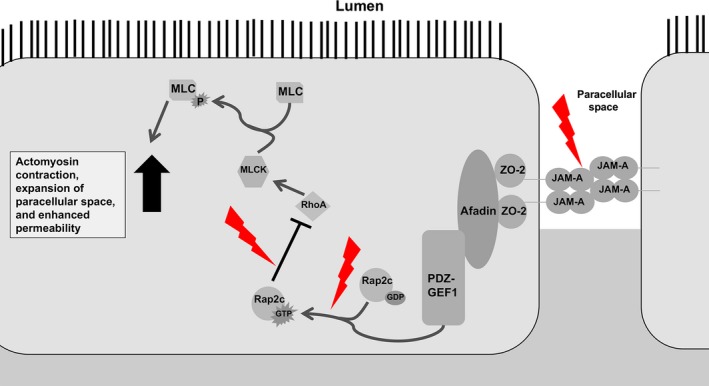
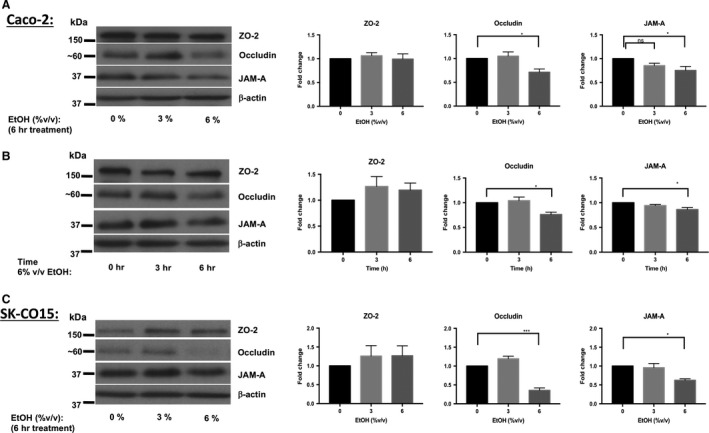
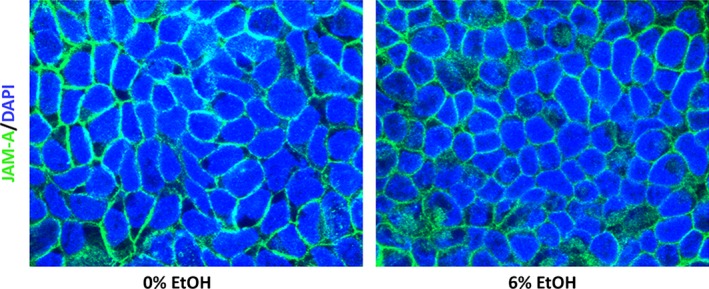
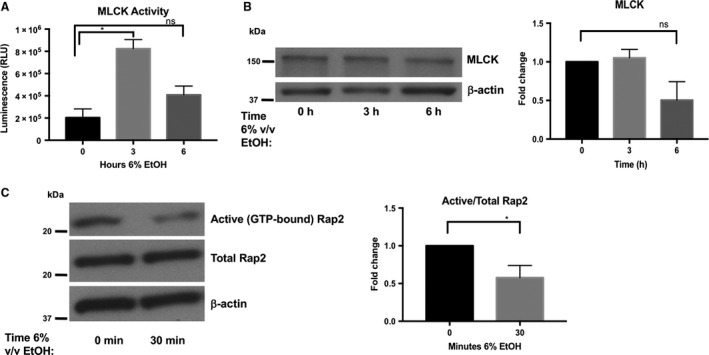
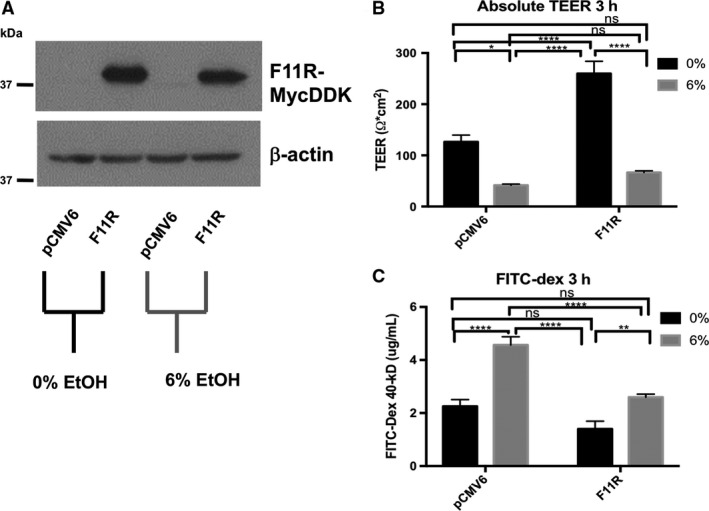
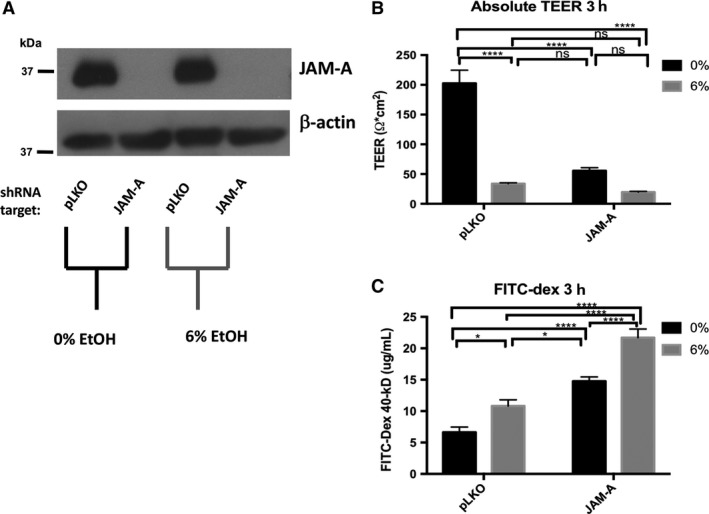
Alcohol consumption promotes loss of intestinal barrier function. However, mechanisms by which ethanol affects the tight junction (TJ), the cellular structure responsible for maintaining the gut epithelial barrier, are not well understood. Three classes of transmembrane proteins comprise TJs: occludin, claudins, and junctional adhesion molecules (JAMs). It has recently been postulated that JAM-A (F11R), the most abundant JAM expressed in intestinal epithelium, regulates "leak" pathway flux, a paracellular route for the nonselective permeation of large solutes. Since transluminal flux of many gut-derived antigens occurs through this pathway, we investigated the role of JAM-A in ethanol-induced disruption of the intestinal epithelial barrier. Using Caco-2 and SK-CO15 monolayers, we found that ethanol induced a dose- and time-dependent decrease in JAM-A protein expression to about 70% of baseline levels. Alcohol also reduced Ras-related protein 2 (Rap2) activity, and enhanced myosin light chain kinase (MLCK) activity, changes consistent with impaired JAM-A signaling. Stable overexpression and shRNA-mediated knockdown of JAM-A were employed to investigate the role of JAM-A in paracellular-mediated flux following alcohol exposure. The paracellular flux of 40-kDa fluorescein isothiocynate (FITC)-dextran following ethanol treatment was decreased by the overexpression of JAM-A; conversely, flux was enhanced by JAM-A knockdown. Thus, we conclude that ethanol-mediated control of JAM-A expression and function contributes to mechanisms by which this chemical induces intestinal epithelial leakiness.
饮酒会导致肠道屏障功能丧失。然而,乙醇影响紧密连接(TJ)(维持肠道上皮屏障的细胞结构)的机制尚不清楚。跨膜蛋白的三类构成了紧密连接:闭合蛋白、克劳丁蛋白和连接黏附分子(JAMs)。最近有人提出,肠道上皮中表达最丰富的JAM-A(F11R)调节“渗漏”途径通量,这是一种大分子溶质非选择性渗透的细胞旁途径。由于许多肠道来源抗原的跨腔通量通过该途径发生,我们研究了JAM-A在乙醇诱导的肠道上皮屏障破坏中的作用。使用Caco-2和SK-CO15单层细胞,我们发现乙醇诱导JAM-A蛋白表达呈剂量和时间依赖性下降至基线水平的约70%。酒精还降低了Ras相关蛋白2(Rap2)的活性,并增强了肌球蛋白轻链激酶(MLCK)的活性,这些变化与JAM-A信号受损一致。采用JAM-A的稳定过表达和shRNA介导的敲低来研究JAM-A在酒精暴露后细胞旁介导的通量中的作用。乙醇处理后40 kDa异硫氰酸荧光素(FITC)-葡聚糖的细胞旁通量因JAM-A的过表达而降低;相反,JAM-A敲低则增强了通量。因此,我们得出结论,乙醇介导的对JAM-A表达和功能的控制有助于这种化学物质诱导肠道上皮渗漏的机制。