Lin Chih-Chung, Yang Chien-Chung, Hsiao Li-Der, Chen Ssu-Yu, Yang Chuen-Mao
Department of Anesthetics, Chang Gung Memorial Hospital at Linkou, and College of Medicine, Chang Gung University, Tao-Yuan, Taiwan.
Department of Traditional Chinese Medicine, Chang Gung Memorial Hospital at Linkou, Tao-Yuan, Taiwan.
Front Mol Neurosci. 2017 Nov 20;10:387. doi: 10.3389/fnmol.2017.00387. eCollection 2017.
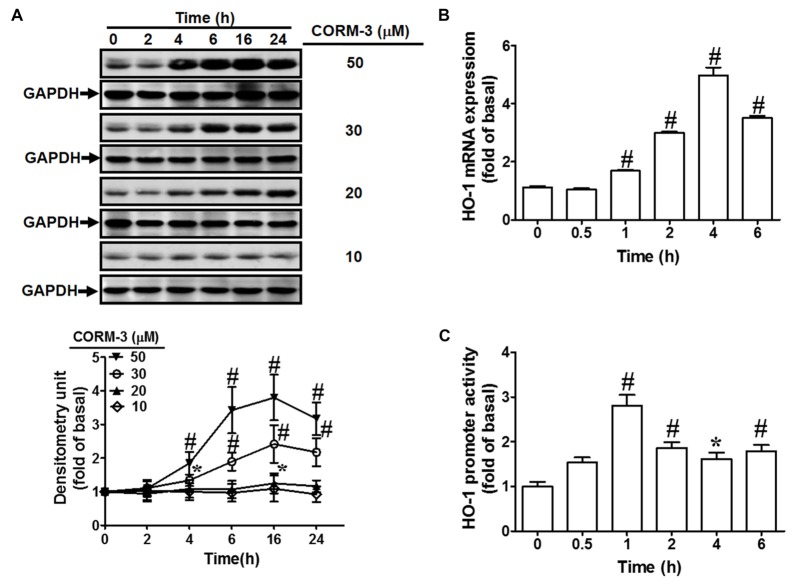
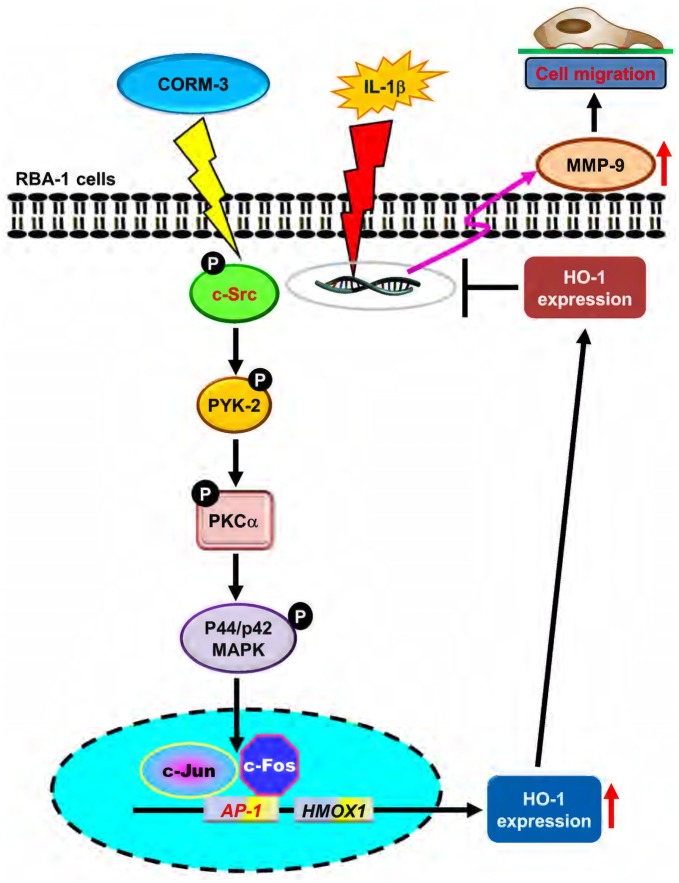
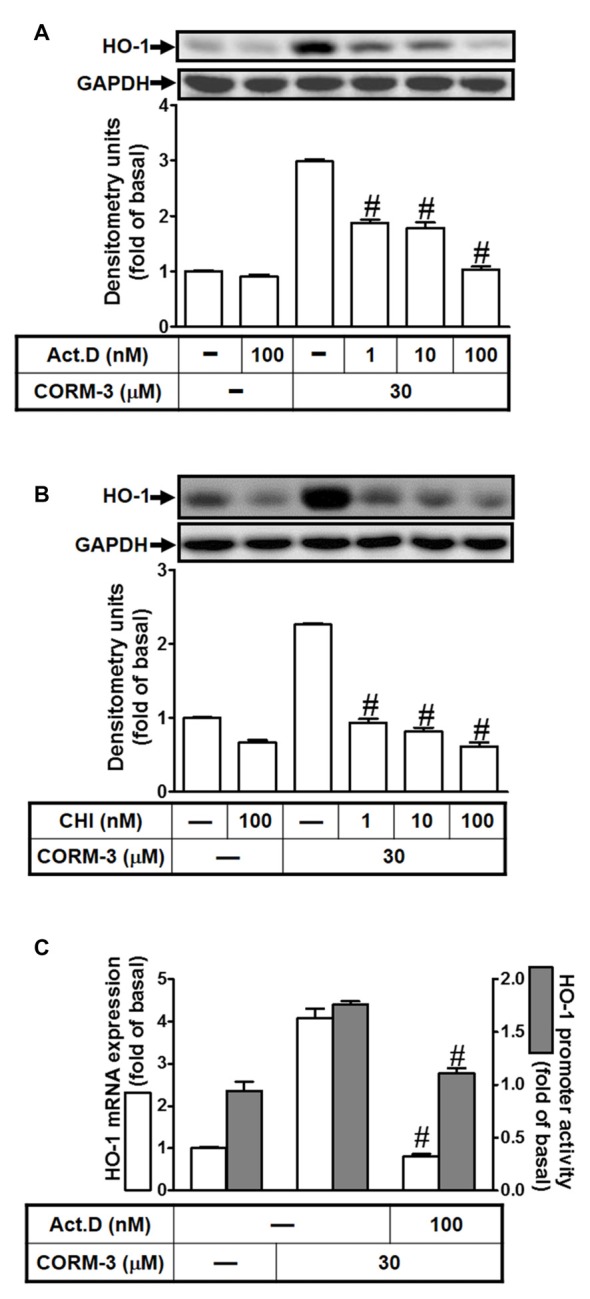
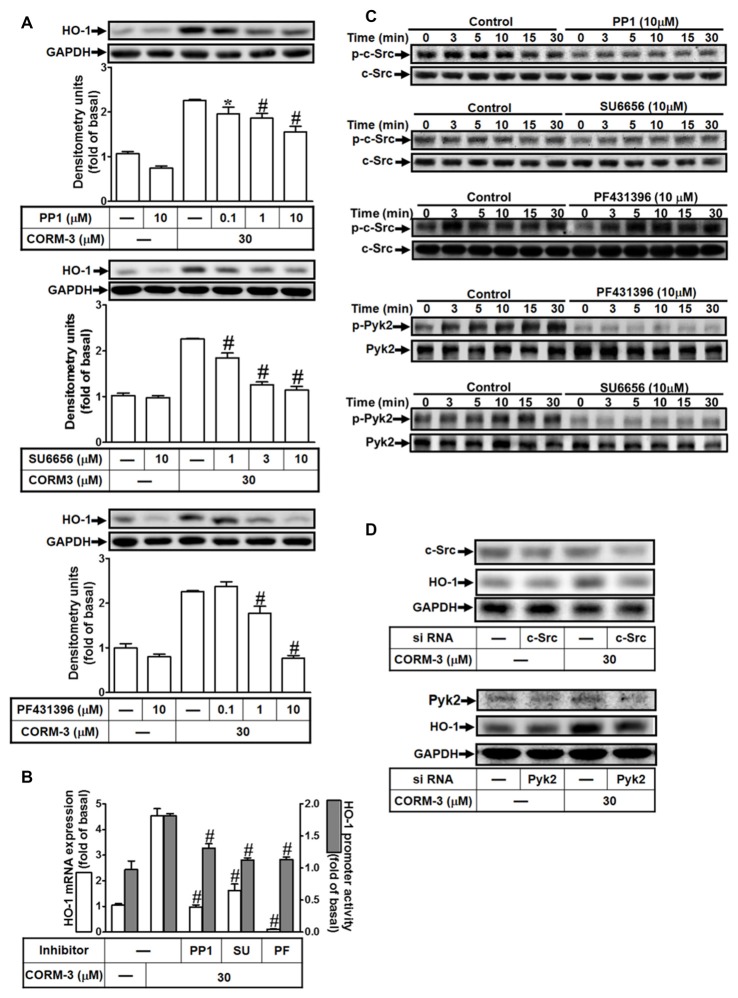
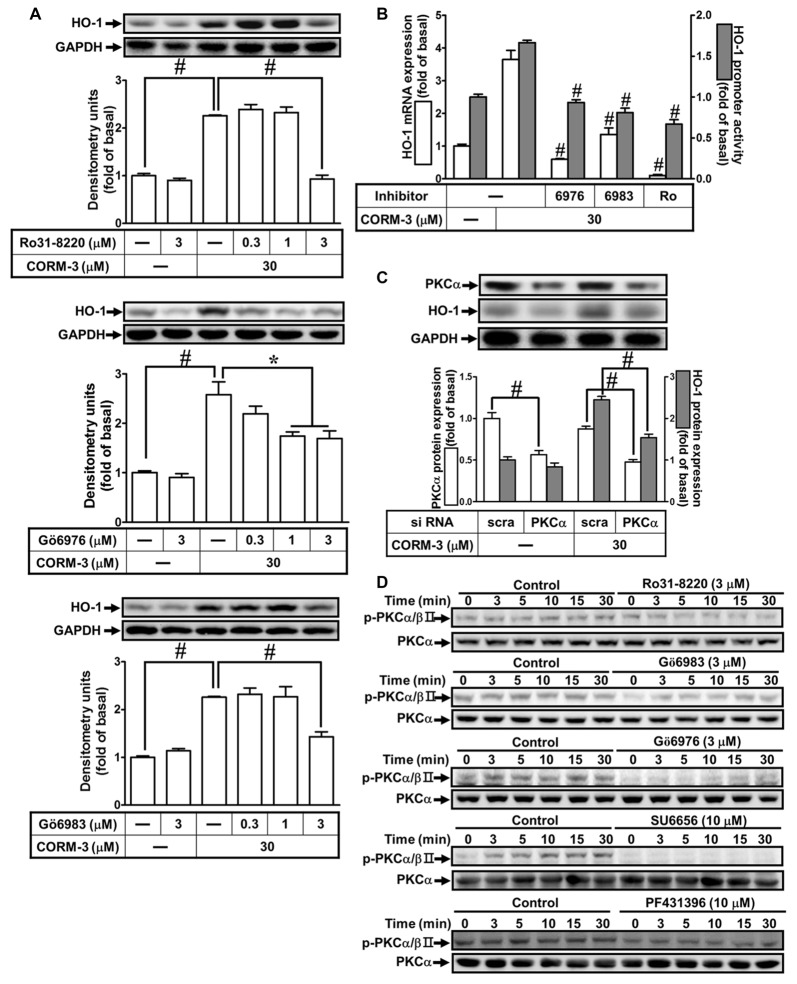
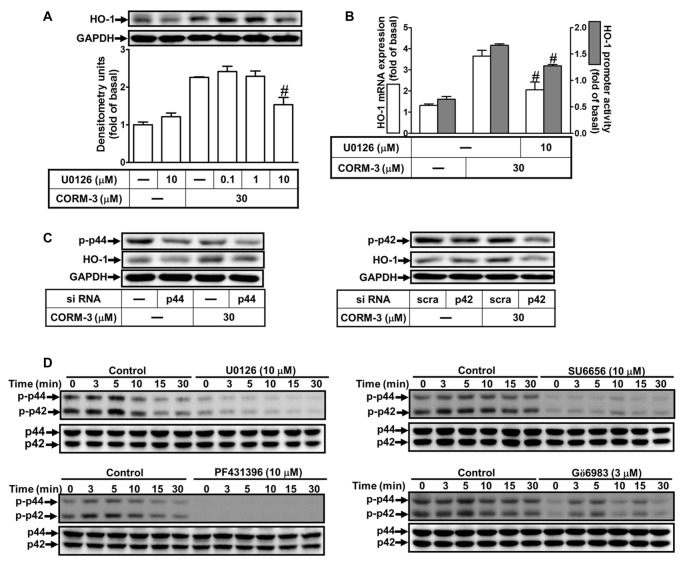
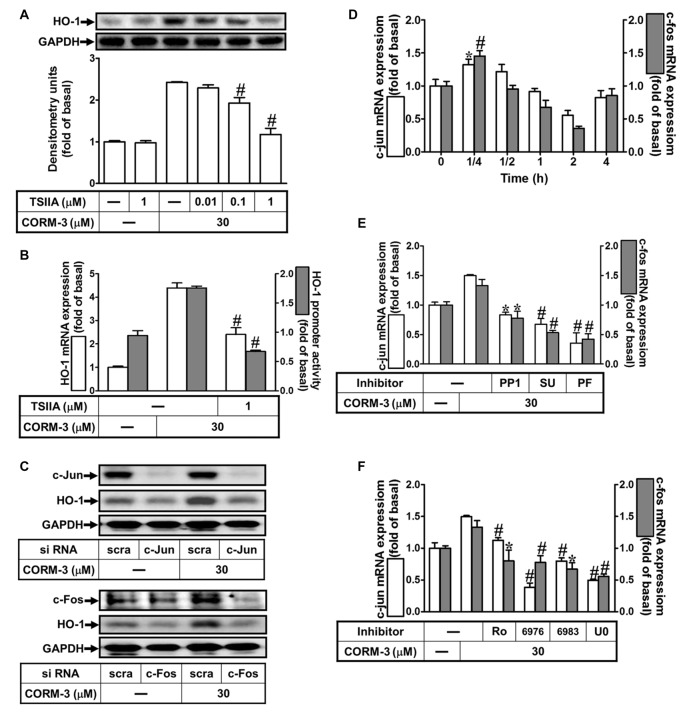
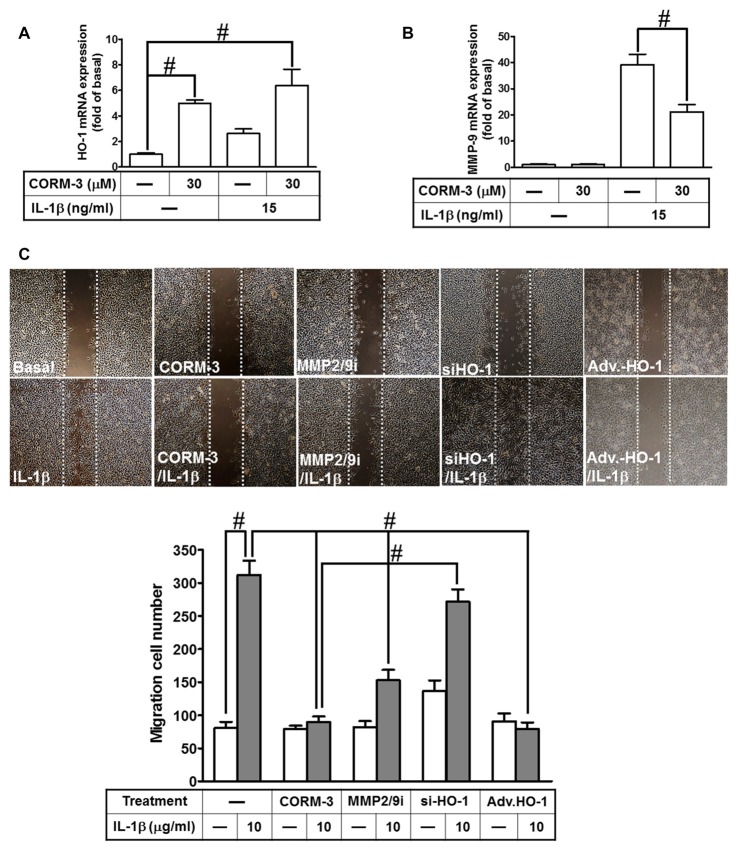
Neurodegenerative disorders and brain damage are initiated by excessive production of reactive oxygen species (ROS), which leads to tissue injury, cellular death and inflammation. In cellular anti-oxidant systems, heme oxygenase-1 (HO-1) is an oxidative-sensor protein induced by ROS generation or carbon monoxide (CO) release. CO releasing molecules (CORMs), including CORM-3, exert anti-oxidant and anti-inflammatory effects. However, the molecular mechanisms of CORM-3-induced HO-1 expression and protection against interleukin (IL)-1β-induced inflammatory responses have not been fully elucidated in rat brain astrocytes (RBA-1). To study the regulation of CORM-3-induced HO-1 expression, signaling pathways, promoter activity, mRNA and protein expression were assessed following treatment with pharmacological inhibitors and gene-specific siRNA knockdown. We found that CORM-3 mediated HO-1 induction via transcritional and translational processes. Furthermore, CORM-3-induced HO-1 expression was mediated by phosphorylation of several protein kinases, such as c-Src, Pyk2, protein kinase Cα (PKCα) and p42/p44 mitogen-activated protein kinase (MAPK), which were inhibited by respective pharmacological inhibitors or by gene-specific knockdown with siRNA transfections. Next, we found that CORM-3 sequentially activated the c-Src/Pyk2/PKCα/p42/p44 MAPK pathway, thereby up-regulating mRNA for the activator protein (AP)-1 components c-Jun and c-Fos; these effects were attenuated by an AP-1 inhibitor (Tanshinone IIA; TSIIA) and other relevant inhibitors. Moreover, CORM-3-induced upregulation of HO-1 attenuated the IL-1β-induced cell migration and matrix metallopeptidase-9 mRNA expression in RBA-1 cells. These effects were reversed by an matrix metalloproteinase (MMP)2/9 inhibitor or by transfection with HO-1 siRNA.
神经退行性疾病和脑损伤是由活性氧(ROS)过度产生引发的,这会导致组织损伤、细胞死亡和炎症。在细胞抗氧化系统中,血红素加氧酶-1(HO-1)是一种由ROS生成或一氧化碳(CO)释放诱导的氧化感应蛋白。包括CORM-3在内的CO释放分子(CORMs)具有抗氧化和抗炎作用。然而,在大鼠脑星形胶质细胞(RBA-1)中,CORM-3诱导HO-1表达以及抵御白细胞介素(IL)-1β诱导的炎症反应的分子机制尚未完全阐明。为了研究CORM-3诱导HO-1表达的调控机制,在用药理抑制剂和基因特异性小干扰RNA(siRNA)敲低处理后,评估了信号通路、启动子活性、mRNA和蛋白表达。我们发现CORM-3通过转录和翻译过程介导HO-1的诱导。此外,CORM-3诱导的HO-1表达是由几种蛋白激酶的磷酸化介导的,如c-Src、Pyk2、蛋白激酶Cα(PKCα)和p42/p44丝裂原活化蛋白激酶(MAPK),这些激酶分别被药理抑制剂或通过siRNA转染的基因特异性敲低所抑制。接下来,我们发现CORM-3依次激活c-Src/Pyk2/PKCα/p42/p44 MAPK通路,从而上调激活蛋白(AP)-1组分c-Jun和c-Fos的mRNA;这些作用被AP-1抑制剂(丹参酮IIA;TSIIA)和其他相关抑制剂减弱。此外,CORM-3诱导的HO-1上调减弱了RBA-1细胞中IL-1β诱导的细胞迁移和基质金属肽酶-9 mRNA表达。这些作用被基质金属蛋白酶(MMP)2/9抑制剂或HO-1 siRNA转染所逆转。