Nam Hye Yeon, Na Eun Jung, Lee Eunyoung, Kwon Youngjoo, Kim Hwa-Jung
College of Pharmacy, Graduate School of Pharmaceutical Sciences, Ewha Womans University, Seoul, South Korea.
Front Pharmacol. 2017 Nov 21;8:817. doi: 10.3389/fphar.2017.00817. eCollection 2017.
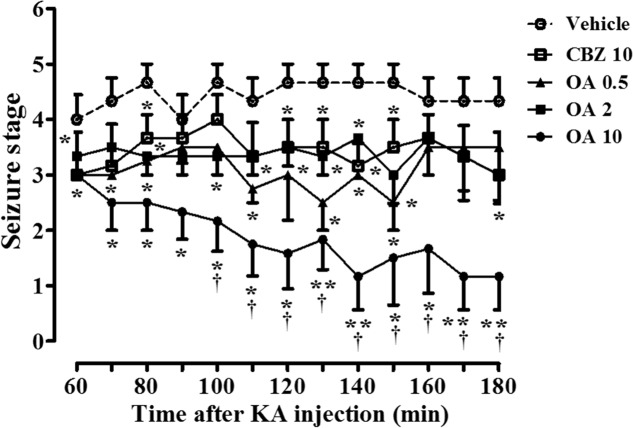
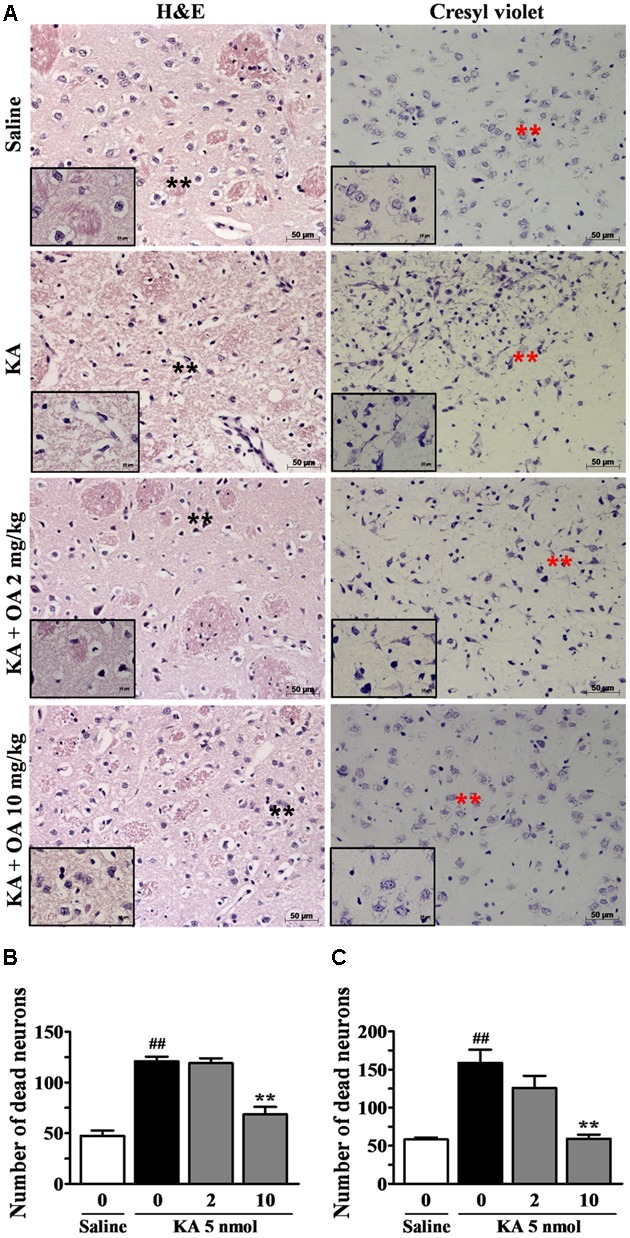
Oleamide was first known as a sleep-inducing fatty acid amide, and later shown to have wide range of neuropharmacological effects upon different neurochemical systems. However, the effects of oleamide on brain damage have scarcely been studied, and the molecular mechanisms and sites of its action remain elusive. Kainic acid (KA) has been used to produce an epileptic animal model that mimics human temporal lobe epilepsy and to induce calpain-activated excitotoxicity, which occurs in numerous neurodegenerative disorders. In this study, we examined whether oleamide protects against the KA-induced excitotoxic brain damage accompanied by behavioral seizure activity and neuronal cell death. Moreover, whether these effects of oleamide were mediated by calpain activity-related cellular mechanisms was investigated. KA-induced epileptic rats were produced by an intrastriatal injection of KA (5 nmole). Oral administration of oleamide (0.5, 2, and 10 mg/kg) 30 min prior to the KA injection showed dose-dependent inhibition of the KA-induced behavioral seizure activities that were monitored starting from 60 to 180 min post-surgery. Further repetitive oral administration of oleamide (once per day) for the next 4 consecutive days post-KA injection produced significant neuroprotection against the disrupted neuronal integrity that resulted from KA-induced excitotoxic damage that was also demonstrated by staining of striatal tissue sections with cresyl violet, hematoxylin/eosin, and fluoro-Jade B. In addition, oleamide blocked the KA-induced cleavage of cyclin-dependent kinase-5 coactivator (Cdk5-p35) and collapsin response mediator protein-2, which are believed to be mediated by calpain activation in striatal tissues dissected from KA-induced epileptic rats. Oleamide also reversed the KA-induced reduction in expression of an endogenous calpain inhibitory protein, calpastatin, and a marker of synaptic activity, synapsin-II. The hypothesis that oleamide could induce direct calpain inhibition was further investigated using calpain assays in both brain tissue and a cell-free and calpain-overexpressed neuronal cell system. These findings together suggest that oleamide has protective effects against excitotoxicity-induced neuronal death and behavioral seizure, partly via its direct calpain inhibitory activity.
油酰胺最初被认为是一种诱导睡眠的脂肪酸酰胺,后来发现它对不同的神经化学系统具有广泛的神经药理学作用。然而,油酰胺对脑损伤的影响鲜有研究,其作用的分子机制和位点仍不清楚。海藻酸(KA)已被用于建立一种模拟人类颞叶癫痫的癫痫动物模型,并诱导钙蛋白酶激活的兴奋性毒性,这种毒性发生在许多神经退行性疾病中。在本研究中,我们研究了油酰胺是否能保护免受KA诱导的伴有行为性癫痫活动和神经元细胞死亡的兴奋性毒性脑损伤。此外,还研究了油酰胺的这些作用是否由钙蛋白酶活性相关的细胞机制介导。通过纹状体内注射KA(5纳摩尔)制备KA诱导的癫痫大鼠。在KA注射前30分钟口服油酰胺(0.5、2和10毫克/千克)显示出对KA诱导的行为性癫痫活动的剂量依赖性抑制,从手术后60至180分钟开始监测这些活动。在KA注射后的接下来连续4天进一步重复口服油酰胺(每天一次),对KA诱导的兴奋性毒性损伤导致的神经元完整性破坏产生了显著的神经保护作用,这也通过用甲酚紫、苏木精/伊红和氟玉红B对纹状体组织切片进行染色得到证实。此外,油酰胺阻断了KA诱导的细胞周期蛋白依赖性激酶-5共激活因子(Cdk5-p35)和塌陷反应介导蛋白-2的裂解,据信这是由从KA诱导的癫痫大鼠解剖的纹状体组织中的钙蛋白酶激活介导的。油酰胺还逆转了KA诱导的内源性钙蛋白酶抑制蛋白钙蛋白酶抑制素和突触活动标志物突触素-II表达的降低。使用脑组织以及无细胞和钙蛋白酶过表达的神经元细胞系统中的钙蛋白酶测定法,进一步研究了油酰胺可诱导直接钙蛋白酶抑制的假设。这些发现共同表明,油酰胺对兴奋性毒性诱导的神经元死亡和行为性癫痫具有保护作用,部分是通过其直接的钙蛋白酶抑制活性实现的。