Sorokowski Piotr, Sorokowska Agnieszka, Butovskaya Marina, Karwowski Maciej, Groyecka Agata, Wojciszke Bogdan, Pawłowski Bogusław
Institute of Psychology, Faculty of Historical and Pedagogical Sciences, University of Wrocław, Wrocław, Poland.
Department of Psychotherapy and Psychosomatic Medicine, Technische Universität Dresden, Dresden, Germany.
Front Psychol. 2017 Nov 21;8:1922. doi: 10.3389/fpsyg.2017.01922. eCollection 2017.
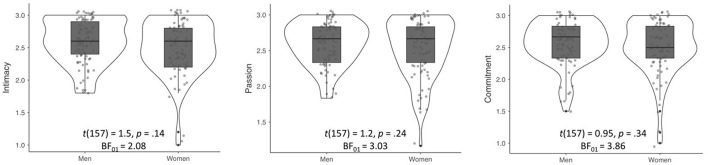
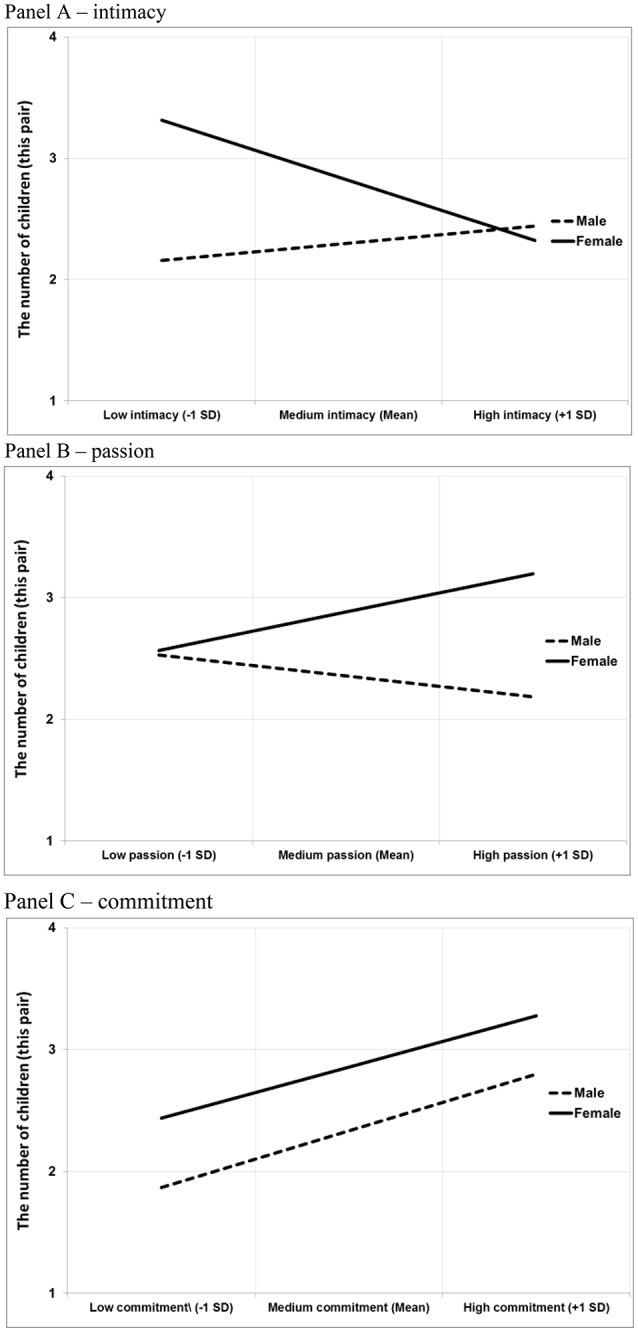
As love seems to be universal, researchers have attempted to find its biological basis. However, no studies till date have shown its direct association with reproductive success, which is broadly known to be a good measure of fitness. Here, we show links between love, as defined by the Sternberg Triangular Theory of Love, and reproductive success among the Hadza-traditional hunter-gatherer population. We found that commitment and reproductive success were positively and consistently related in both sexes, with number of children showing negative and positive associations with intimacy and passion, respectively, only among women. Our study may shed new light on the meaning of love in humans' evolutionary past, especially in traditional hunter-gatherer societies in which individuals, not their parents, were responsible for partner choice. We suggest that passion and commitment may be the key factors that increase fitness, and therefore, that selection promoted love in human evolution. However, further studies in this area are recommended.
由于爱似乎具有普遍性,研究人员一直试图寻找其生物学基础。然而,迄今为止尚无研究表明爱与生殖成功存在直接关联,而生殖成功通常被广泛认为是衡量适应性的一个良好指标。在此,我们揭示了由斯滕伯格爱情三角理论所定义的爱与哈扎族(传统狩猎采集群体)的生殖成功之间的联系。我们发现,承诺与生殖成功在两性中均呈正向且持续的关联,而子女数量仅在女性中分别与亲密感和激情呈负向和正向关联。我们的研究可能为人类进化史上爱的意义带来新的启示,尤其是在传统狩猎采集社会中,个体而非其父母负责选择伴侣。我们认为,激情和承诺可能是提高适应性的关键因素,因此,在人类进化过程中,自然选择促进了爱的发展。然而,建议在该领域开展进一步研究。