Department of Biological Regulation, Weizmann Institute of Science, Rehovot, Israel.
Department of Molecular Cell Biology, Weizmann Institute of Science, Rehovot, Israel.
EMBO Mol Med. 2018 Feb;10(2):294-308. doi: 10.15252/emmm.201708076.
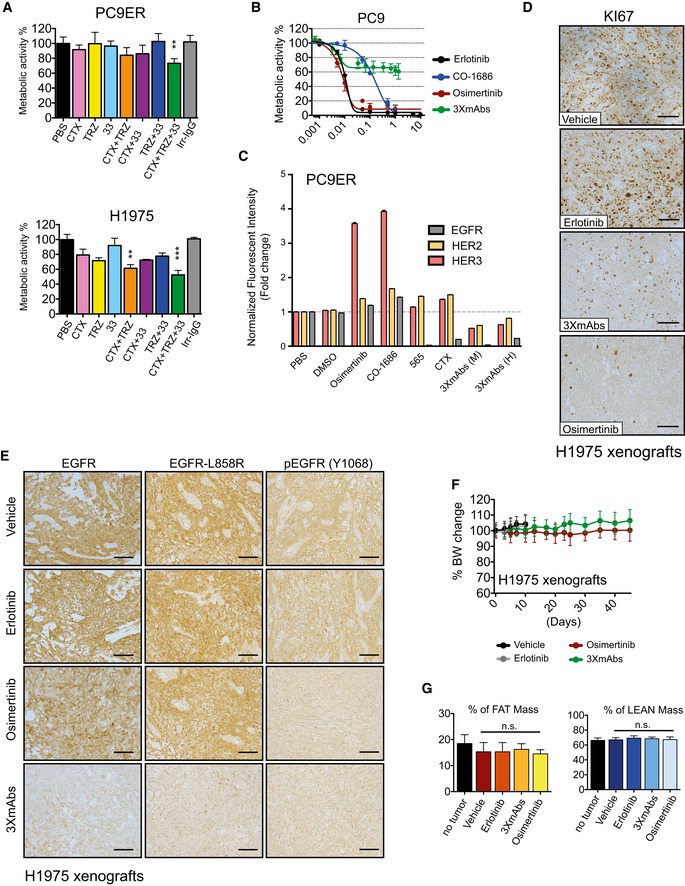
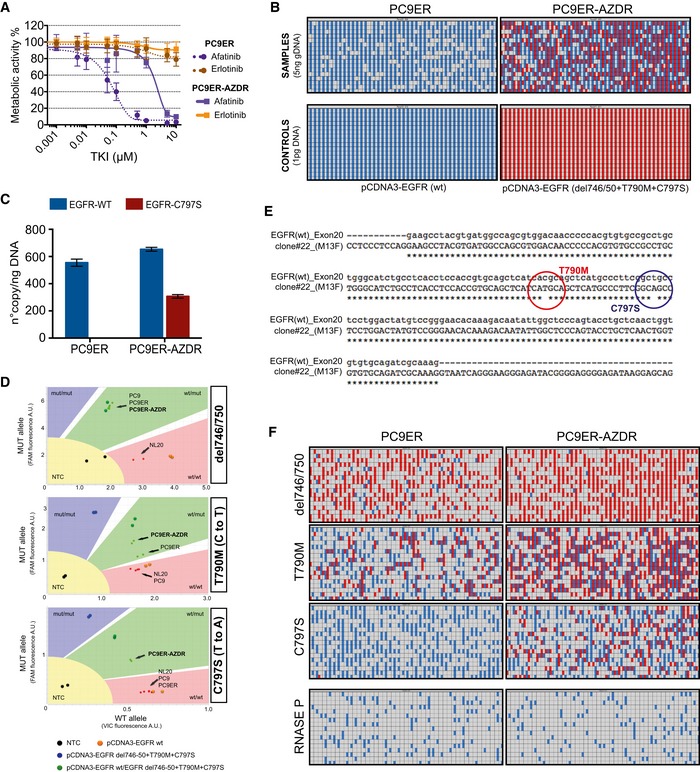
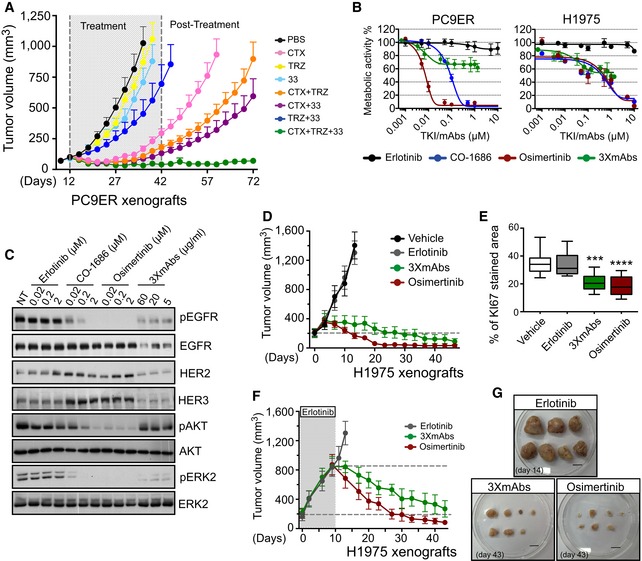
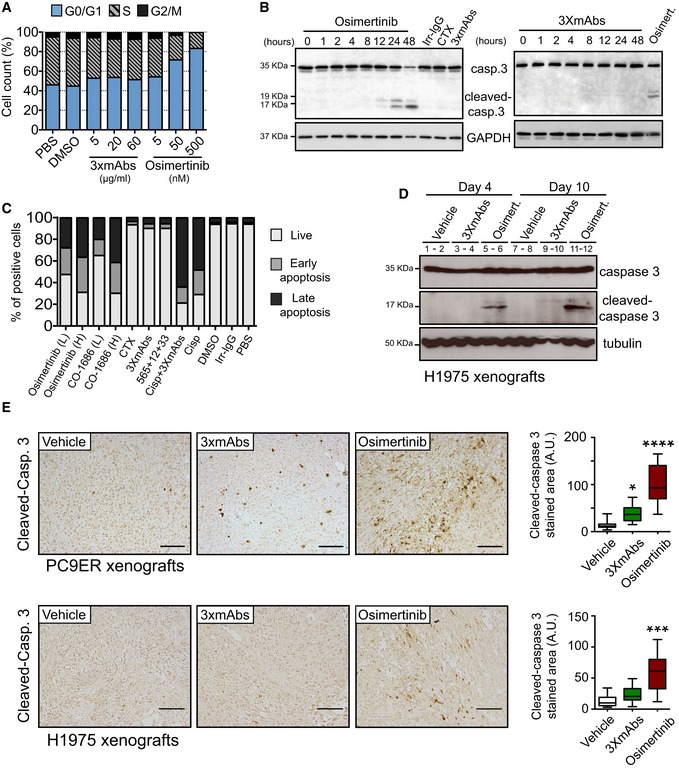
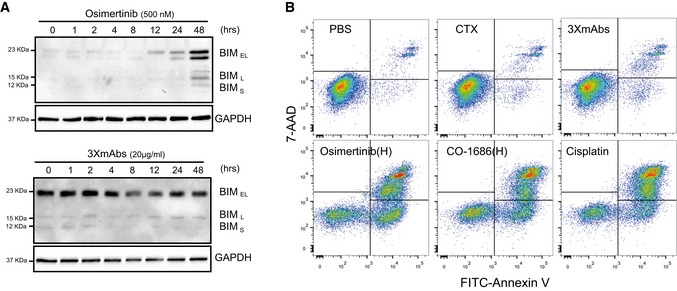
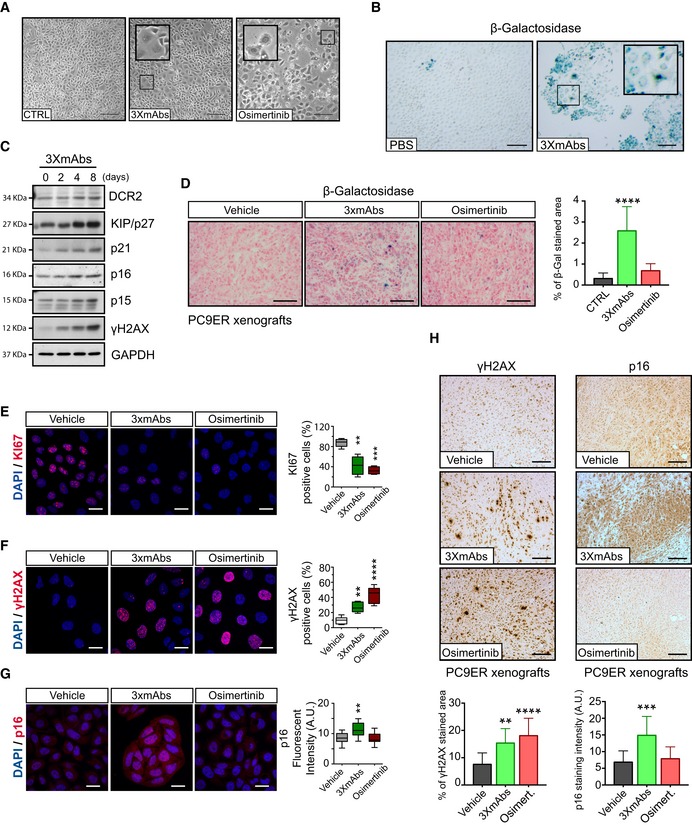
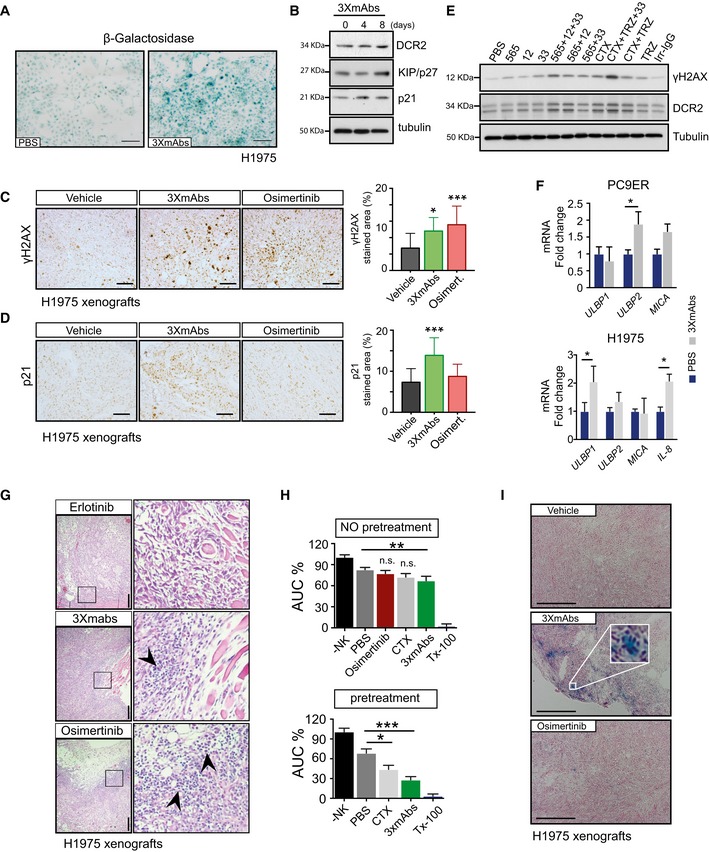
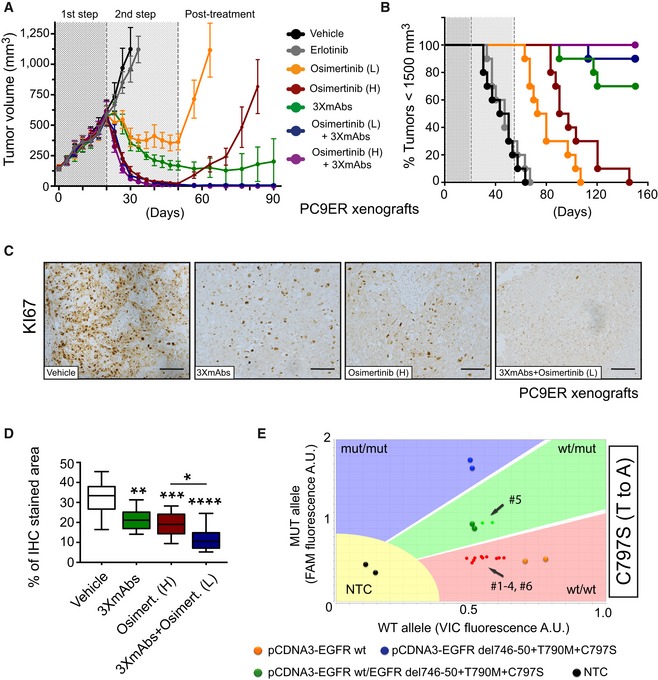
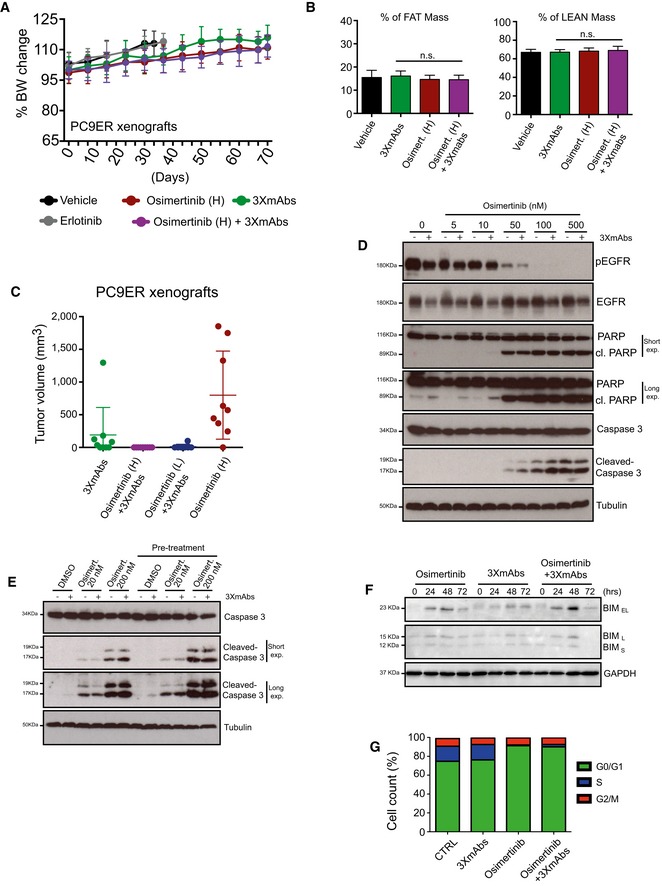
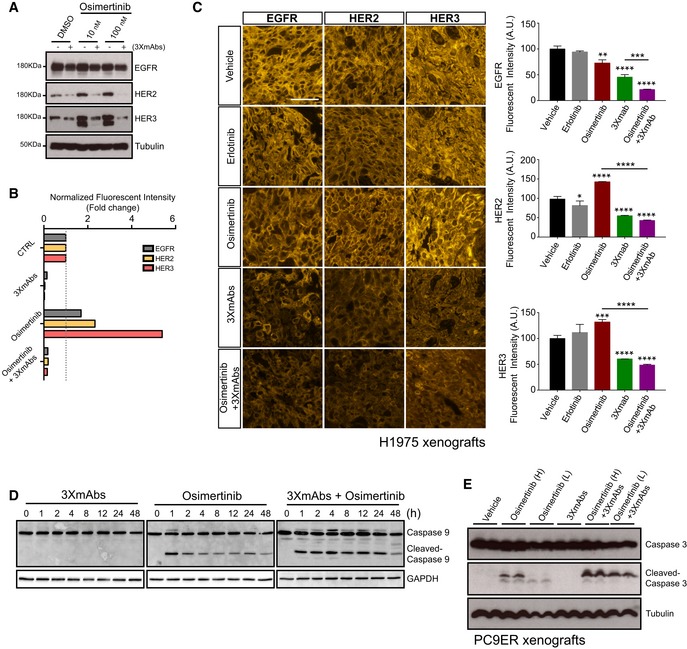
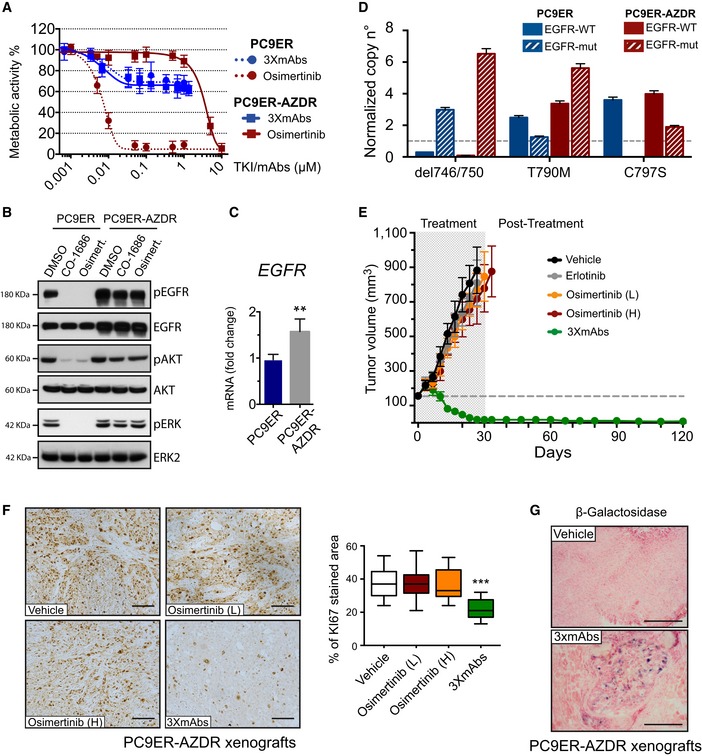
Epidermal growth factor receptor () mutations identify patients with lung cancer who derive benefit from kinase inhibitors. However, most patients eventually develop resistance, primarily due to the T790M second-site mutation. Irreversible inhibitors (e.g., osimertinib/AZD9291) inhibit T790M-EGFR, but several mechanisms, including a third-site mutation, C797S, confer renewed resistance. We previously reported that a triple mixture of monoclonal antibodies, 3×mAbs, simultaneously targeting EGFR, HER2, and HER3, inhibits T790M-expressing tumors. We now report that 3×mAbs, including a triplet containing cetuximab and trastuzumab, inhibits C797S-expressing tumors. Unlike osimertinib, which induces apoptosis, 3×mAbs promotes degradation of the three receptors and induces cellular senescence. Consistent with distinct mechanisms, treatments combining 3×mAbs plus sub-inhibitory doses of osimertinib synergistically and persistently eliminated tumors. Thus, oligoclonal antibodies, either alone or in combination with kinase inhibitors, might preempt repeated cycles of treatment and rapid emergence of resistance.
表皮生长因子受体 () 突变可识别出从激酶抑制剂中获益的肺癌患者。然而,大多数患者最终会产生耐药性,主要是由于 T790M 第二突变点。不可逆抑制剂(例如奥希替尼/阿兹替尼)抑制 T790M-EGFR,但包括 C797S 在内的几种机制会导致重新出现耐药性。我们之前报道过,同时针对 EGFR、HER2 和 HER3 的三种单克隆抗体混合物 3×mAbs 可抑制表达 T790M 的肿瘤。我们现在报告称,包括包含西妥昔单抗和曲妥珠单抗的三联体在内的 3×mAbs 可抑制表达 C797S 的肿瘤。与诱导细胞凋亡的奥希替尼不同,3×mAbs 促进三个受体的降解并诱导细胞衰老。与不同的机制一致,联合使用 3×mAbs 和亚抑制剂量的奥希替尼的治疗方法协同且持续地消除了肿瘤。因此,寡克隆抗体,无论是单独使用还是与激酶抑制剂联合使用,都可能预防反复的治疗周期和耐药性的迅速出现。