Zhang Hongqi, Meng Jian, Yu Haiyan
Department of Anesthesiology, Jining First People's Hospital, Jining, China.
Front Physiol. 2017 Nov 23;8:944. doi: 10.3389/fphys.2017.00944. eCollection 2017.
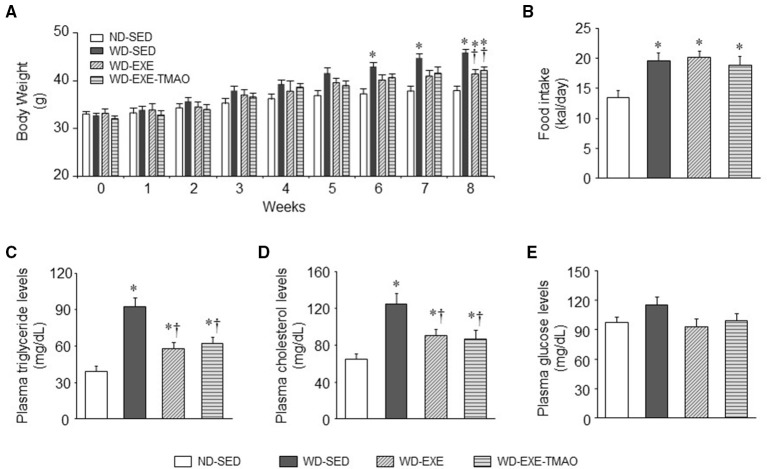
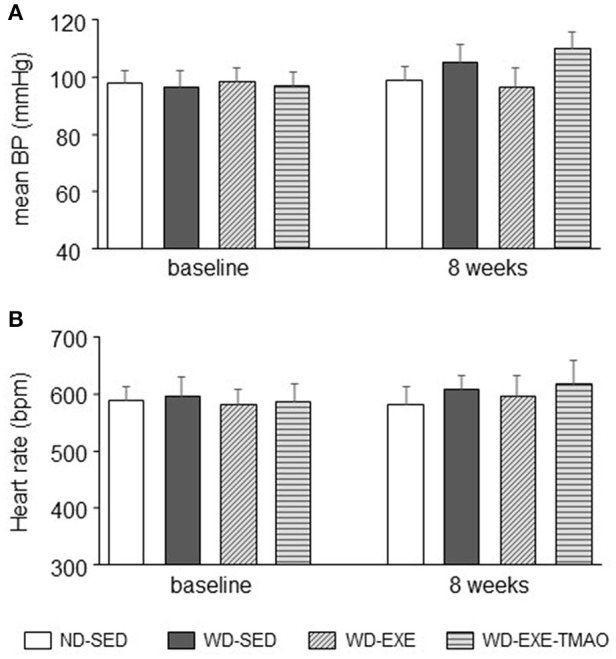
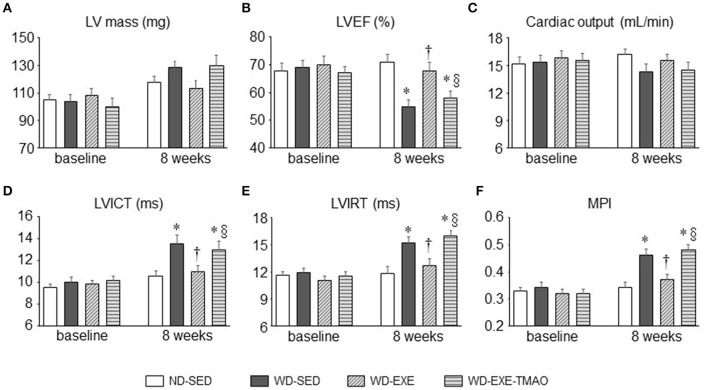
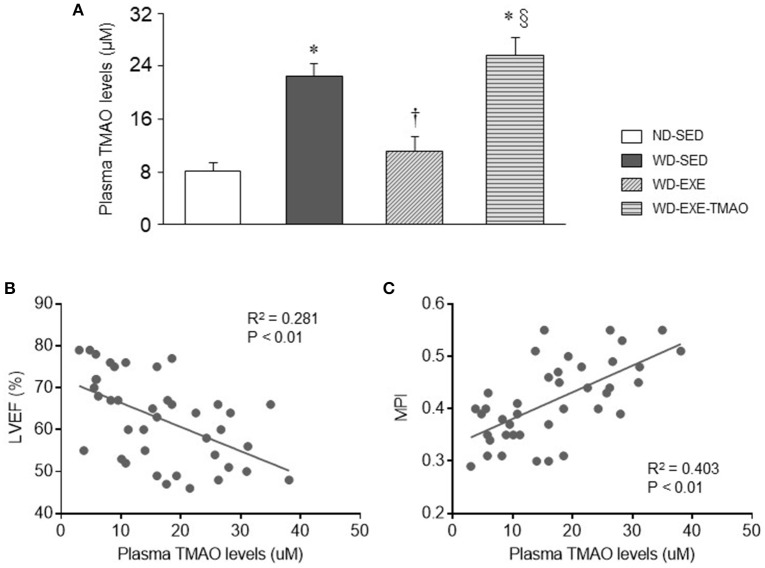
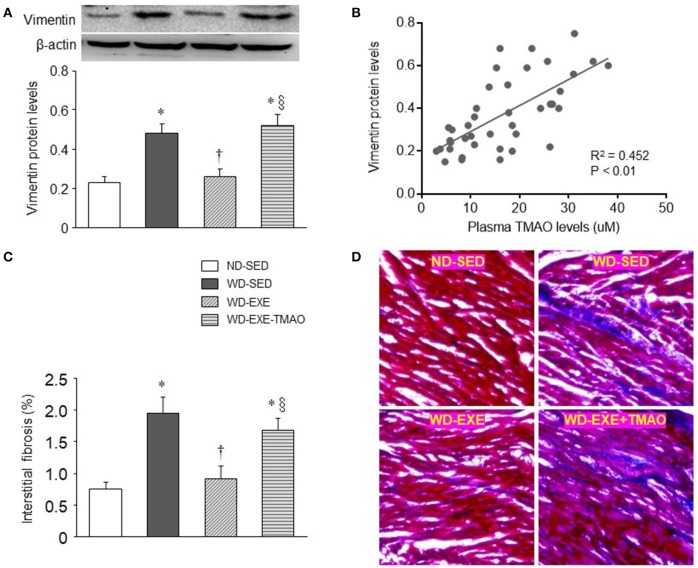
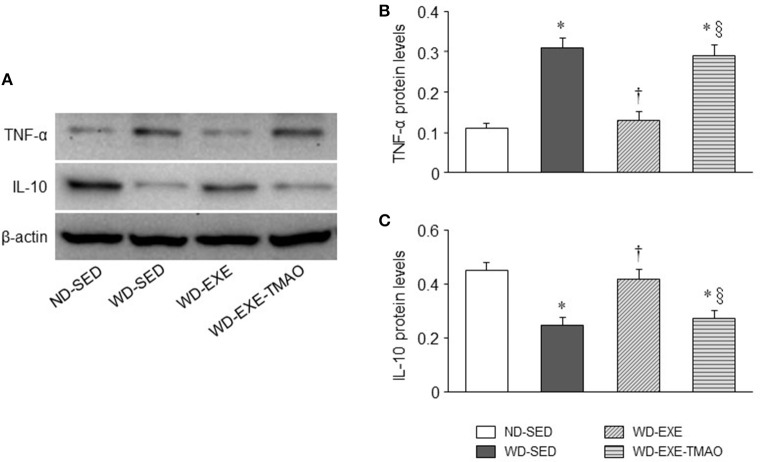
Excessive consumption of western diet (WD) induces obesity, resulting in cardiac dysfunction. Voluntary exercise ameliorates WD-induced obesity, but its effect on cardiac dysfunction remains unclear. Recent evidence suggests that elevated trimethylamine N-oxide (TMAO), a gut microbe-derived metabolite, can impair cardiac function in WD-induced obesity. We hypothesized that cardiac dysfunction in WD-induced obesity would be prevented by voluntary exercise but abolished by TMAO supplementation. Male CD1 mice fed a WD were assigned to sedentary, exercise or exercise with TMAO treatment for 8 weeks. Male CD1 mice fed a normal diet (ND) for 8 weeks were assigned to sedentary (control). Compared with ND-sedentary mice, WD-sedentary mice gained significantly more body weight and displayed metabolic abnormalities at the end of the experiment. Echocardiography showed significantly impaired cardiac systolic and diastolic function in WD-induced obese mice. Voluntary exercise partially attenuated weight gain and metabolic disorders, but completely prevented cardiac dysfunction in WD-induced obese mice. Molecular studies revealed that WD-sedentary mice had elevated plasma TMAO levels, along with increased myocardial inflammation and fibrosis, all of which were inhibited by voluntary exercise. Of note, concomitant administration of TMAO had no effects on body weight and metabolic disorders, but it abolished the beneficial effects of voluntary exercise on cardiac dysfunction, myocardial inflammation, and fibrosis in WD-induced obese mice. The results suggest that voluntary exercise prevents cardiac dysfunction in WD-induced obesity by inhibiting myocardial inflammation and fibrosis. Moreover, the cardioprotective effects of voluntary exercise in WD-induced obesity can be abolished by TMAO supplementation, which abrogates voluntary exercise-induced changes in myocardial inflammation and fibrosis.
过量食用西方饮食(WD)会导致肥胖,进而引发心脏功能障碍。自愿运动可改善WD诱导的肥胖,但对心脏功能障碍的影响尚不清楚。最近的证据表明,肠道微生物衍生的代谢产物三甲胺N-氧化物(TMAO)水平升高会损害WD诱导的肥胖中的心脏功能。我们假设,自愿运动可预防WD诱导的肥胖中的心脏功能障碍,但补充TMAO会消除这种作用。将喂食WD的雄性CD1小鼠分为久坐组、运动组或运动加TMAO治疗组,持续8周。将喂食正常饮食(ND)8周的雄性CD1小鼠分为久坐组(对照组)。与ND久坐组小鼠相比,WD久坐组小鼠在实验结束时体重显著增加,并出现代谢异常。超声心动图显示,WD诱导的肥胖小鼠的心脏收缩和舒张功能明显受损。自愿运动部分减轻了体重增加和代谢紊乱,但完全预防了WD诱导的肥胖小鼠的心脏功能障碍。分子研究表明,WD久坐组小鼠的血浆TMAO水平升高,同时心肌炎症和纤维化增加,而自愿运动可抑制所有这些情况。值得注意的是,同时给予TMAO对体重和代谢紊乱没有影响,但它消除了自愿运动对WD诱导的肥胖小鼠的心脏功能障碍、心肌炎症和纤维化的有益作用。结果表明,自愿运动通过抑制心肌炎症和纤维化来预防WD诱导的肥胖中的心脏功能障碍。此外,补充TMAO可消除自愿运动在WD诱导的肥胖中的心脏保护作用,这消除了自愿运动引起的心肌炎症和纤维化的变化。