UMR 8126, Paris Saclay University, Paris-Sud University, Institut Gustave Roussy, CNRS, Villejuif 94805, France; LIA 1066 LFR2O French-Russian Joint Cancer Research Laboratory, 94805 Villejuif, France, 119334 Moscow, Russia; Doctoral school of Sciences and Technology (EDST), Lebanese University, Hadath, Lebanon; Department of Life and Earth Sciences, Faculty of Sciences II/Doctoral School of Sciences and Technology (EDST), Lebanese University, Jdeidet El Metn-Fanar, Lebanon; Department of Chemistry and Biochemistry, Faculty of Sciences II/EDST, Lebanese University, Jdeidet El Metn-Fanar, Lebanon.
UMR 8126, Paris Saclay University, Paris-Sud University, Institut Gustave Roussy, CNRS, Villejuif 94805, France; LIA 1066 LFR2O French-Russian Joint Cancer Research Laboratory, 94805 Villejuif, France, 119334 Moscow, Russia.
Redox Biol. 2018 May;15:97-108. doi: 10.1016/j.redox.2017.11.024. Epub 2017 Dec 7.
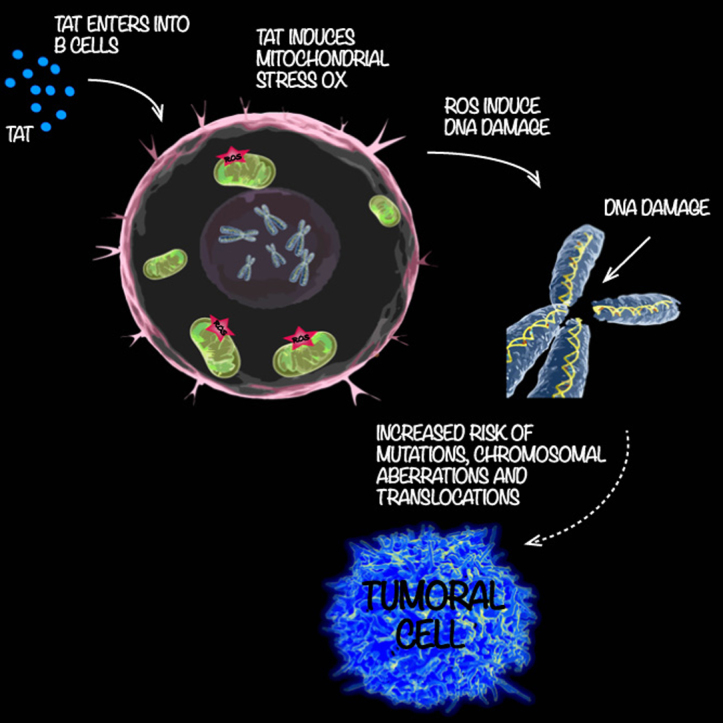
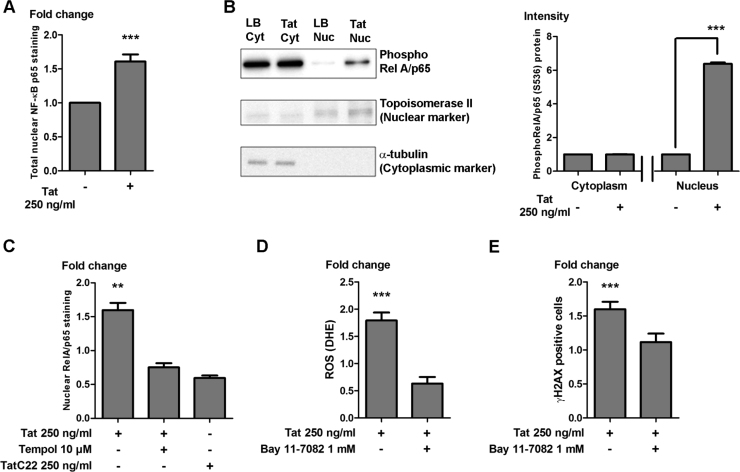
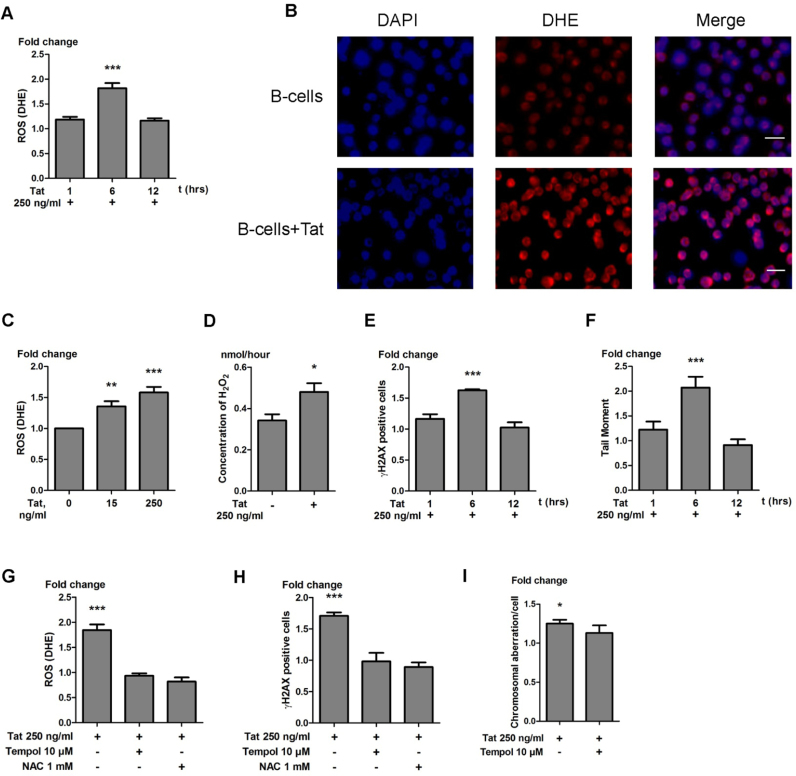
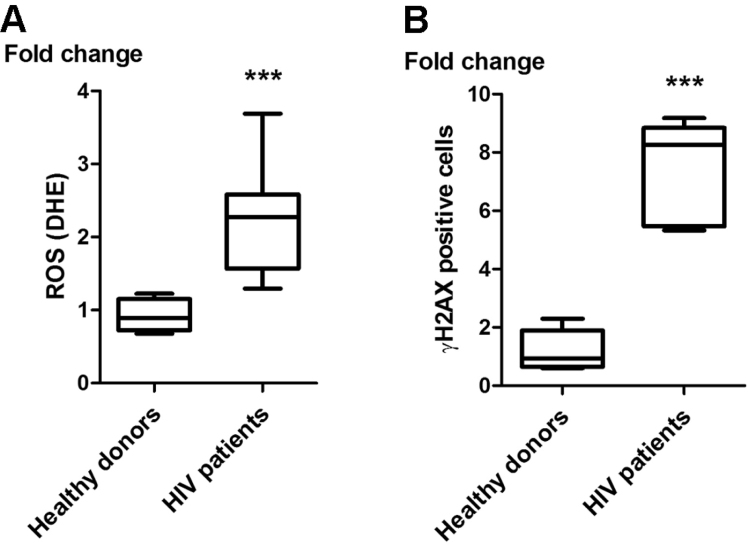
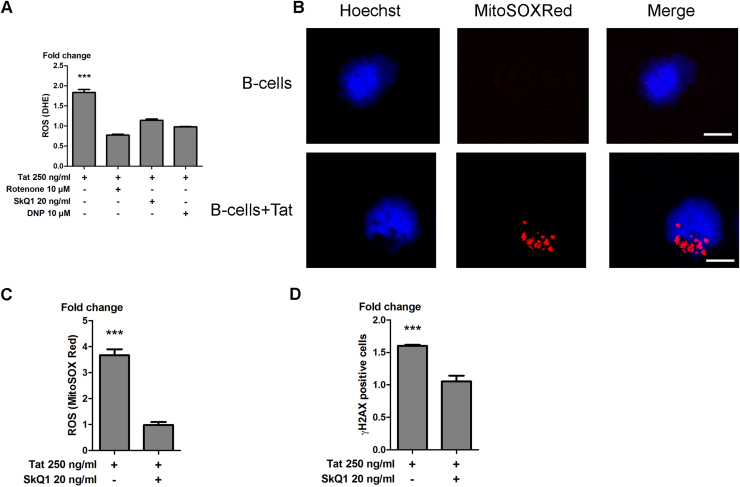
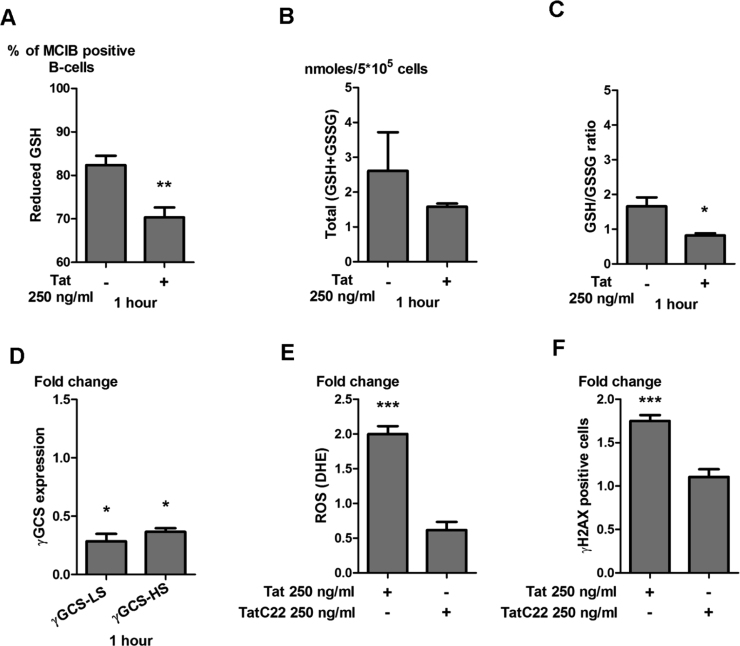
Human immunodeficiency virus (HIV) infection is associated with B-cell malignancies in patients though HIV-1 is not able to infect B-cells. The rate of B-cell lymphomas in HIV-infected individuals remains high even under the combined antiretroviral therapy (cART) that reconstitutes the immune function. Thus, the contribution of HIV-1 to B-cell oncogenesis remains enigmatic. HIV-1 induces oxidative stress and DNA damage in infected cells via multiple mechanisms, including viral Tat protein. We have detected elevated levels of reactive oxygen species (ROS) and DNA damage in B-cells of HIV-infected individuals. As Tat is present in blood of infected individuals and is able to transduce cells, we hypothesized that it could induce oxidative DNA damage in B-cells promoting genetic instability and malignant transformation. Indeed, incubation of B-cells isolated from healthy donors with purified Tat protein led to oxidative stress, a decrease in the glutathione (GSH) levels, DNA damage and appearance of chromosomal aberrations. The effects of Tat relied on its transcriptional activity and were mediated by NF-κB activation. Tat stimulated oxidative stress in B-cells mostly via mitochondrial ROS production which depended on the reverse electron flow in Complex I of respiratory chain. We propose that Tat-induced oxidative stress, DNA damage and chromosomal aberrations are novel oncogenic factors favoring B-cell lymphomas in HIV-1 infected individuals.
人类免疫缺陷病毒(HIV)感染与患者的 B 细胞恶性肿瘤有关,尽管 HIV-1 不能感染 B 细胞。即使在联合抗逆转录病毒疗法(cART)重建免疫功能的情况下,HIV 感染个体的 B 细胞淋巴瘤发生率仍然很高。因此,HIV-1 对 B 细胞致癌作用的贡献仍然是个谜。HIV-1 通过多种机制,包括病毒 Tat 蛋白,在感染细胞中诱导氧化应激和 DNA 损伤。我们已经检测到 HIV 感染个体的 B 细胞中活性氧(ROS)和 DNA 损伤水平升高。由于 Tat 存在于感染个体的血液中,并能够转导细胞,我们假设它可以在 B 细胞中诱导氧化 DNA 损伤,促进遗传不稳定性和恶性转化。事实上,用纯化的 Tat 蛋白孵育从健康供体中分离出的 B 细胞会导致氧化应激、谷胱甘肽(GSH)水平降低、DNA 损伤和染色体畸变。Tat 的作用依赖于其转录活性,并通过 NF-κB 激活介导。Tat 通过呼吸链复合物 I 中的反向电子流主要通过线粒体 ROS 产生来刺激 B 细胞中的氧化应激。我们提出,Tat 诱导的氧化应激、DNA 损伤和染色体畸变是促进 HIV-1 感染个体 B 细胞淋巴瘤的新型致癌因素。