Alzaheb Riyadh A, Al-Amer Osama
Department of Clinical Nutrition, Faculty of Applied Medical Sciences, University of Tabuk, Tabuk, Saudi Arabia.
Department of Medical Laboratory Technology, Faculty of Applied Medical Sciences, University of Tabuk, Tabuk, Saudi Arabia.
Clin Med Insights Womens Health. 2017 Dec 1;10:1179562X17745088. doi: 10.1177/1179562X17745088. eCollection 2017.
Prior data on iron deficiency anemia's (IDA) prevalence and associated risk factors among female university students are scarce in the Saudi Arabian context. This study therefore recruited a sample of female students at the University of Tabuk, Saudi Arabia, to investigate IDA prevalence and risk factors and fill the identified research gap.
A cross-sectional study of 200 apparently healthy female students aged between 19 and 25 years was performed between February and June 2016. Data on the participants' sociodemographics, diet, health, anthropometry, and hematological and biochemical iron status indices were gathered. A logistic regression analysis then revealed the IDA risk factors.
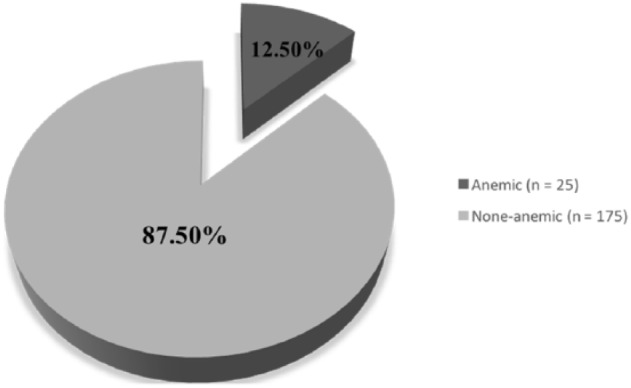
The IDA prevalence was 12.5%. The factors associated via logistic regression with an elevated anemia risk were inadequate iron and vitamin C intakes, infrequent (≤2 times per week) consumption of red meat, frequent (≥2 times per week) tea consumption, and a past personal history of IDA.
The findings suggest that focused education and awareness strategies are needed to improve nutritional habits by encouraging the consumption of rich dietary iron sources and by raising awareness of the food and drinks which facilitate or hinder the bioavailability of iron.
在沙特阿拉伯,关于缺铁性贫血(IDA)在女大学生中的患病率及相关风险因素的既往数据匮乏。因此,本研究招募了沙特阿拉伯塔布克大学的女学生样本,以调查IDA患病率及风险因素,并填补已发现的研究空白。
2016年2月至6月间,对200名年龄在19至25岁之间、表面健康的女学生进行了一项横断面研究。收集了参与者的社会人口统计学、饮食、健康、人体测量学以及血液学和生化铁状态指标的数据。随后进行逻辑回归分析,以揭示IDA风险因素。
IDA患病率为12.5%。通过逻辑回归分析,与贫血风险升高相关的因素包括铁和维生素C摄入不足、红肉食用频率低(每周≤2次)、茶饮用频率高(每周≥2次)以及既往个人IDA病史。
研究结果表明,需要制定有针对性的教育和宣传策略,通过鼓励食用富含铁的食物来源以及提高对促进或阻碍铁生物利用度的食物和饮料的认识,来改善营养习惯。