Malekizadeh Ali, Schenk Peer M
Food and Water Security Laboratory, School of Agriculture and Food Sciences, The University of Queensland, Brisbane, Queensland, 4072, Australia.
Sci Rep. 2017 Dec 12;7(1):17437. doi: 10.1038/s41598-017-17741-z.
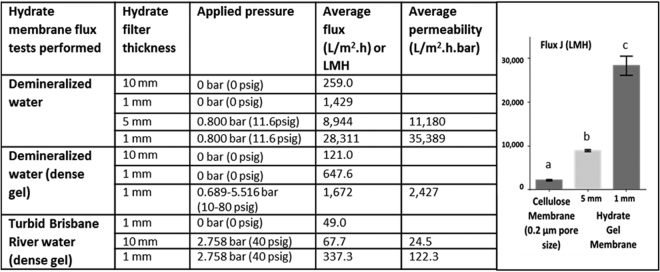
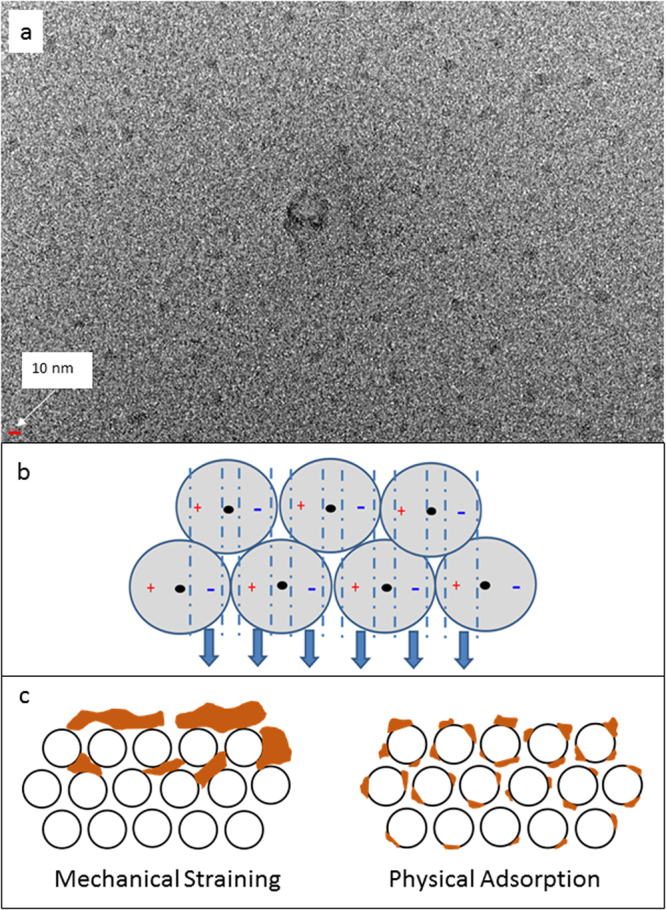
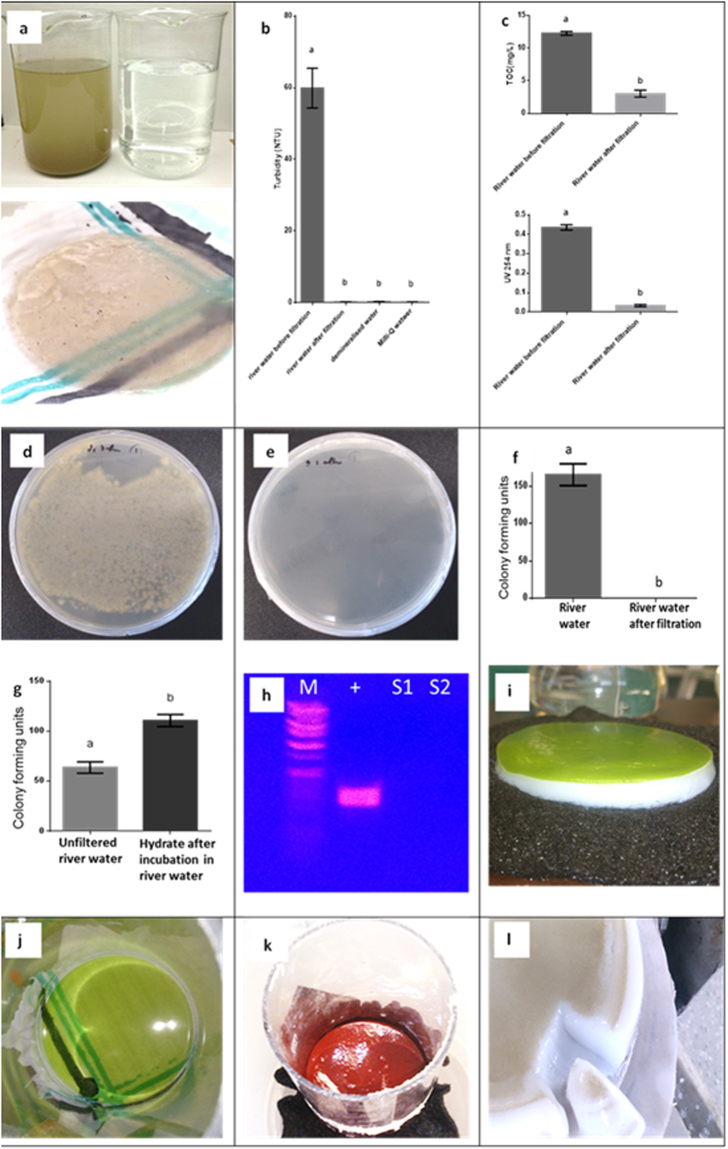
Filtration of aqueous liquids has wide implications, for example for provision of clean drinking water. Nevertheless, many people still lack access to safe water and suffer from preventable water-borne microbial diseases. This study reports a new ultrafiltration-range separation technology using a gelatinous layer of aluminium hydroxide polyhydrate as a secondary membrane on a retaining fabric that enables simple and cost-effective production of filtered water. Properties include at least 4-fold higher flux rates than currently available membranes, pressure-resistance, impenetrability to filtered particles, easy cleaning by backwashing and simple, cost-effective replacement by gel injection. Depending on the substrate, filtration is achieved through a packed bed of 1-2 nm hydrate gel globules, partly by mechanical straining with a size exclusion of approx. 10 nm and partly by physical adsorption. As a result, filtration of water (e.g. turbid river water) contaminated with colloids and microorganisms, including viruses, yields clear water that is free of measurable particles or detectable microorganisms. However, small water-soluble molecules (salts, sugars, proteins) remain in the filtrate. The findings demonstrate the potential for wide applicability of hydrate gels in high-flux and low-cost water purification devices.
水性液体的过滤具有广泛的意义,例如用于提供清洁的饮用水。然而,许多人仍然无法获得安全的水,并遭受可预防的水传播微生物疾病的折磨。本研究报告了一种新的超滤范围分离技术,该技术在保留织物上使用氢氧化铝多水合物凝胶层作为二级膜,能够简单且经济高效地生产过滤水。其特性包括通量率比目前可用的膜至少高4倍、耐压性、对过滤颗粒不可渗透、通过反冲洗易于清洁以及通过凝胶注入进行简单、经济高效的更换。根据基材的不同,过滤是通过1-2纳米水合物凝胶小球的填充床实现的,部分是通过尺寸排阻约为10纳米的机械筛分,部分是通过物理吸附。结果,对被胶体和微生物(包括病毒)污染的水(如浑浊的河水)进行过滤,可得到不含可测量颗粒或可检测微生物的清澈水。然而,小的水溶性分子(盐、糖、蛋白质)仍留在滤液中。这些发现表明水合物凝胶在高通量和低成本水净化装置中具有广泛应用的潜力。