Jafari Ali, Kamarehie Bahram, Ghaderpoori Mansour, Khoshnamvand Nahid, Birjandi Mehdi
Department of Environmental Health Engineering, School of Health and Nutrition, Lorestan University of Medical Sciences Khorramabad, Iran.
Department of Biostatistics, School of Health and Nutrition, Lorestan University of medical sciences, Khorramabad, Iran.
Data Brief. 2017 Nov 21;16:453-459. doi: 10.1016/j.dib.2017.11.057. eCollection 2018 Feb.
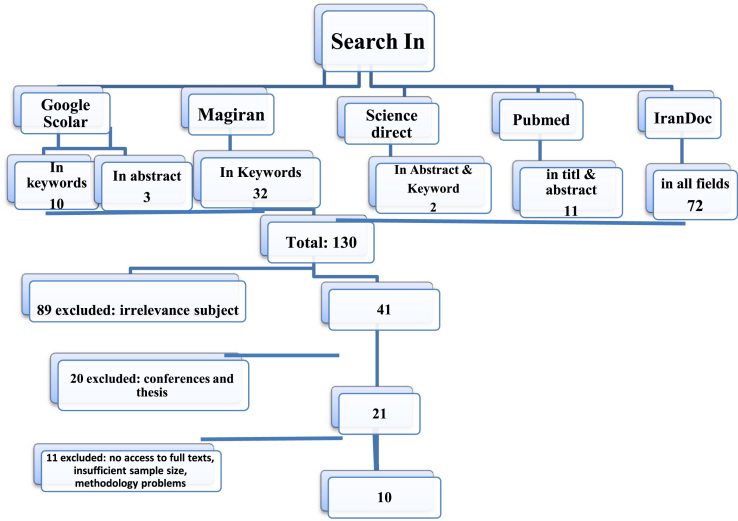
The aim of this study was to review the prevalence of rice contamination to heavy metals in Iranian grown and imported rice brands by conducting a systematic review and assess the related human health risk. Multiple keywords such as "rice, heavy metals, and Iran" were used to search in related databases. The average concentration of Cd, Pb, As, Cu, Zn, Cr, Ni and Co for Iranian grown/imported rice were calculated as 0.16±0.08/0.13±0.05, 0.196±0.16/0.55±0.56, 0.046±0.002/0.057±0.0035,0.29±0.05/0.61±0.31, 26.13±10.3/3.46±2.49, 0.22±0.04/0.76±0.101, 16±7.3/2.08±0.34 and 0.29±0.047/0.29±0.07 mg kg, respectively. Except Co, there were significant differences between Iranian and imported rice brands. Estimated weekly intake for none of the metals exceeds the provisional tolerable weekly intake value. Accordingly, the rice types consumed in Iran have no health hazard for consumers.
本研究旨在通过系统评价,回顾伊朗种植和进口大米品牌中重金属污染的流行情况,并评估相关的人类健康风险。使用了“大米、重金属和伊朗”等多个关键词在相关数据库中进行检索。伊朗种植/进口大米中镉、铅、砷、铜、锌、铬、镍和钴的平均浓度分别计算为0.16±0.08/0.13±0.05、0.196±0.16/0.55±0.56、0.046±0.002/0.057±0.0035、0.29±0.05/0.61±0.31、26.13±10.3/3.46±2.49、0.22±0.04/0.76±0.101、16±7.3/2.08±0.34和0.29±0.047/0.29±0.07毫克/千克。除钴外,伊朗大米品牌和进口大米品牌之间存在显著差异。所有金属的估计每周摄入量均未超过暂定每周耐受摄入量值。因此,伊朗消费的大米类型对消费者没有健康危害。