Graduate Program in Neuroscience, University of Minnesota-Twin Cities, Jackson Hall 6-145, 321 Church St SE, Minneapolis, MN, 55455, USA.
Department of Neuroscience, University of Minnesota-Twin Cities, WMBB 4-280, 2102 6th street SE, Minneapolis, MN, 55455, USA.
Nat Commun. 2017 Dec 13;8(1):2102. doi: 10.1038/s41467-017-02279-5.
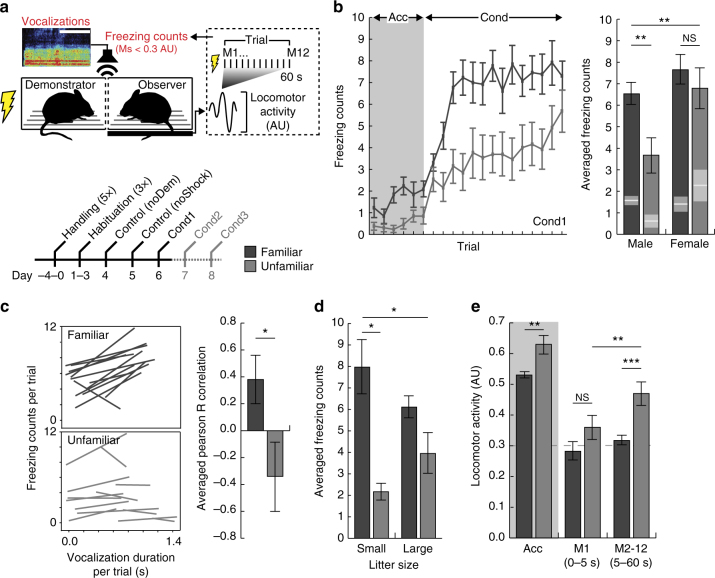
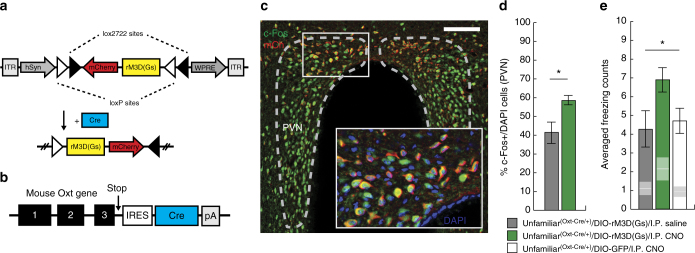
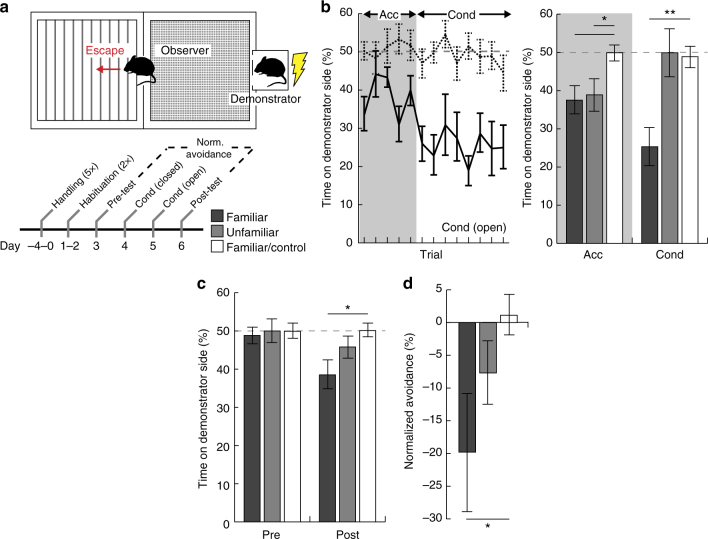
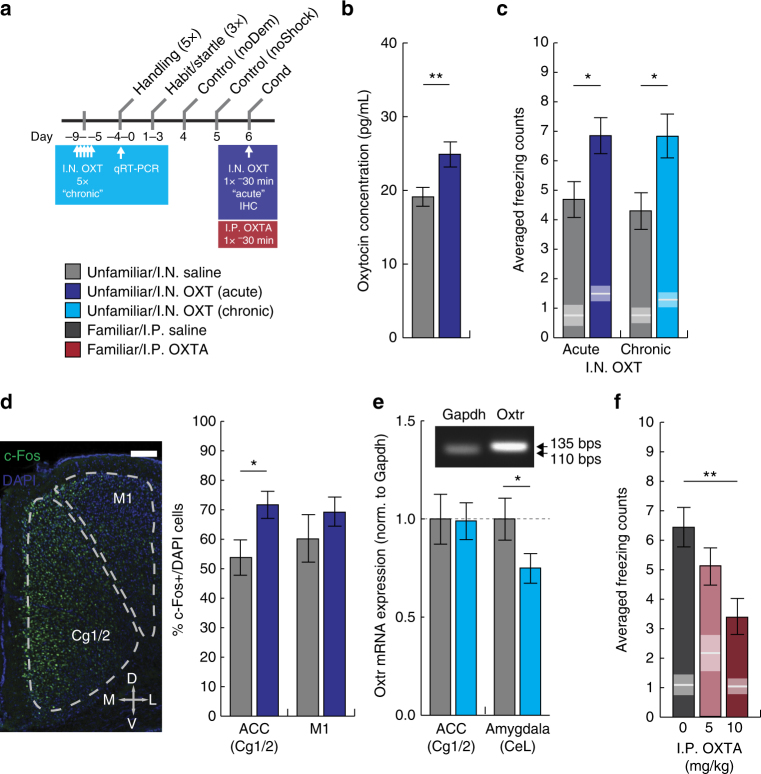
Empathy is fundamental to human relations, but its neural substrates remain largely unknown. Here we characterize the involvement of oxytocin in the capacity of mice to display emotional state-matching, an empathy-like behavior. When exposed to a familiar conspecific demonstrator in distress, an observer mouse becomes fearful, as indicated by a tendency to freeze and subsequent efforts to escape. Both intranasal oxytocin administration and chemogenetic stimulation of oxytocin neurons render males sensitive to the distress of an unfamiliar mouse. Acute intranasal oxytocin penetrates the brain and enhances cellular activity within the anterior cingulate cortex, whereas chronic administration produces long-term facilitation of observational fear and downregulates oxytocin receptor expression in the amygdala. None of these manipulations affect fear acquired as a result of direct experience with the stressor. Hence, these results implicate oxytocin in observational fear in mice (rather than fear itself) and provide new avenues for examining the neural substrates of empathy.
同理心是人际关系的基础,但同理心的神经基础在很大程度上仍是未知的。在这里,我们描述了催产素在小鼠表现出情绪状态匹配(一种类似同理心的行为)的能力中的作用。当观察到一只处于困境中的熟悉同种动物时,一只观察鼠会变得害怕,表现为倾向于冻结,然后试图逃脱。鼻内给予催产素和化学遗传刺激催产素神经元都使雄性老鼠对陌生老鼠的痛苦敏感。急性鼻内给予催产素可穿透大脑并增强扣带前皮质内的细胞活动,而慢性给予催产素会长期促进观察恐惧,并下调杏仁核中的催产素受体表达。这些操作都不会影响因直接接触应激源而获得的恐惧。因此,这些结果表明催产素参与了小鼠的观察性恐惧(而不是恐惧本身),并为研究同理心的神经基础提供了新的途径。