Cao Peng, Liu Ying, Ni Ziyun, Zhang Mingjun, Wei Hong-Rui, Liu An, Guo Jin-Rong, Yang Yumeng, Xu Zheng, Guo Yuyu, Zhang Zhi, Tao Wenjuan, Wang Likui
Department of Anesthesiology, The First Affiliated Hospital of USTC, Hefei National Laboratory for Physical Sciences at the Microscale, Division of Life Sciences and Medicine, University of Science and Technology of China, Hefei 230026, China.
Department of Physiology, School of Basic Medical Sciences, Anhui Medical University, Hefei 230022, China.
Sci Adv. 2025 Jan 24;11(4):eadq3874. doi: 10.1126/sciadv.adq3874. Epub 2025 Jan 22.
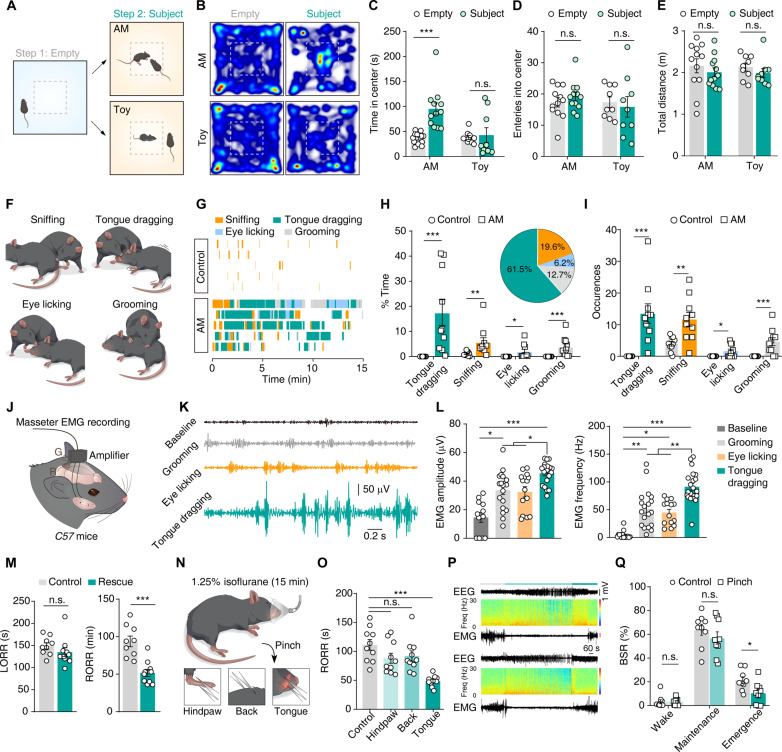
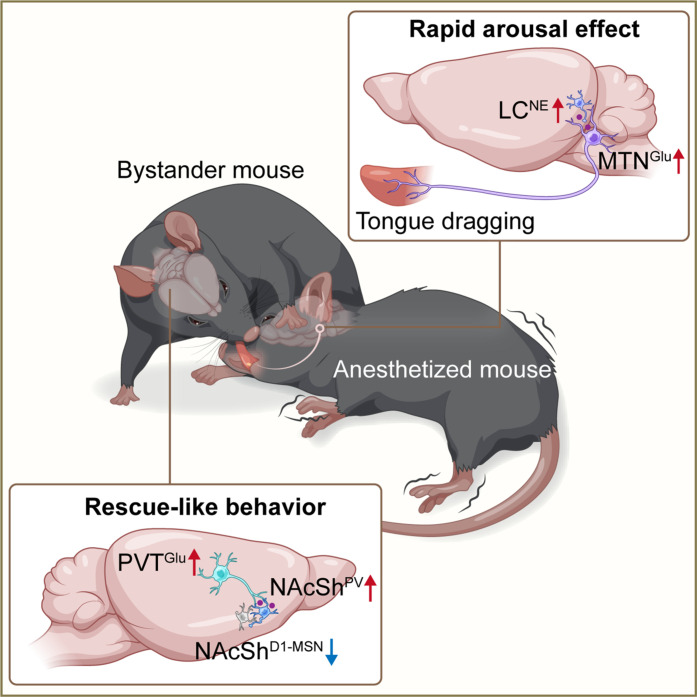
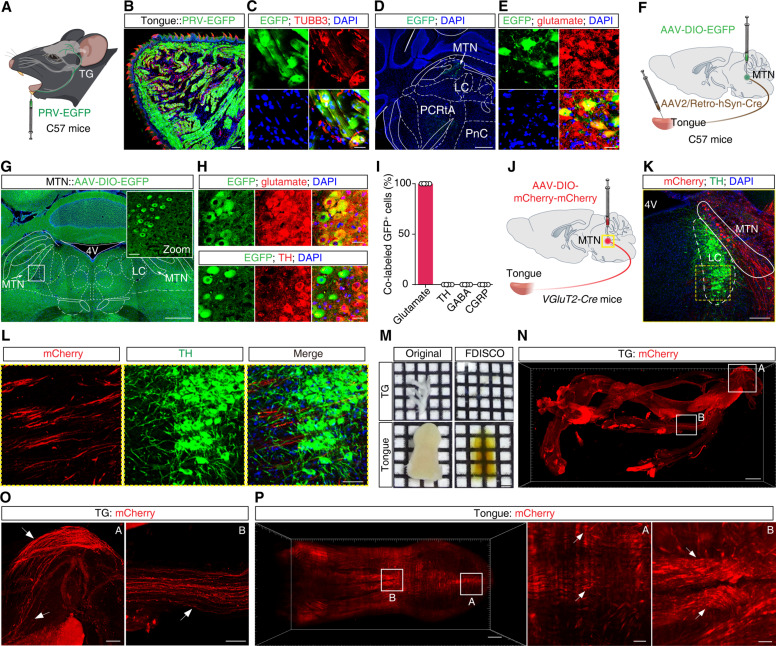
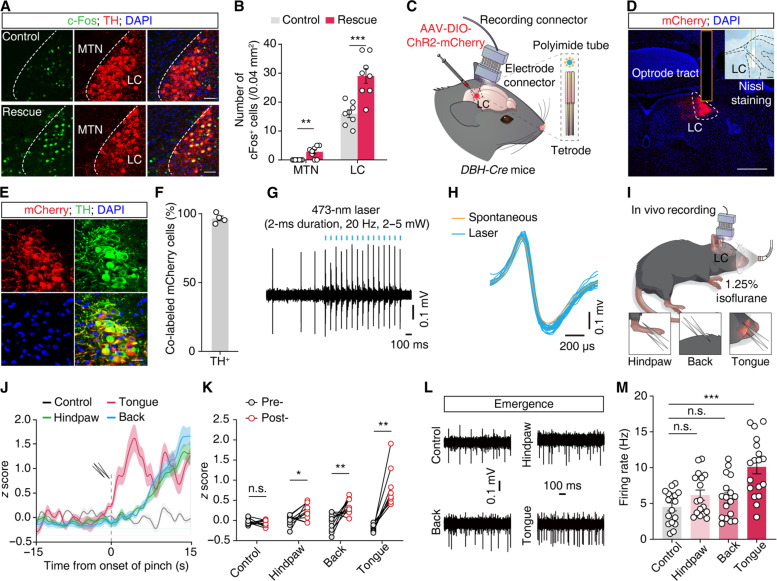
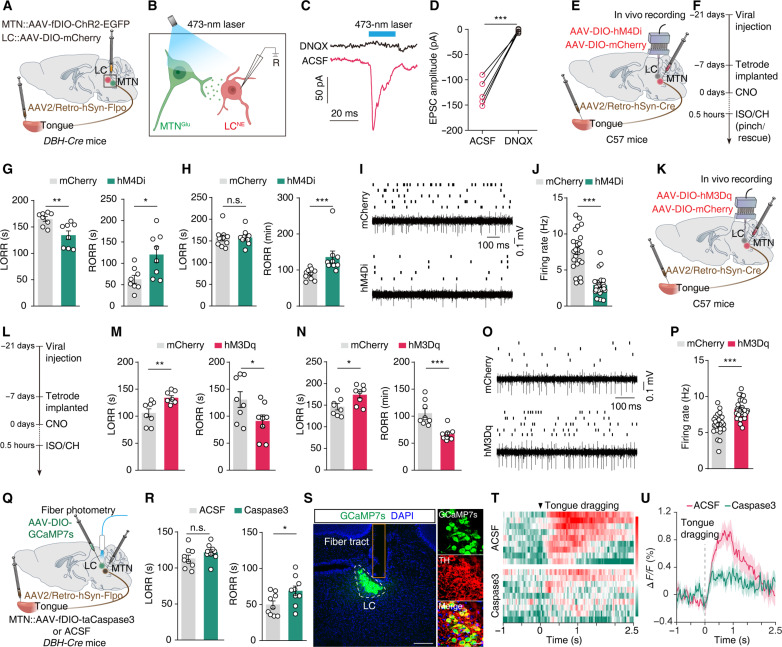
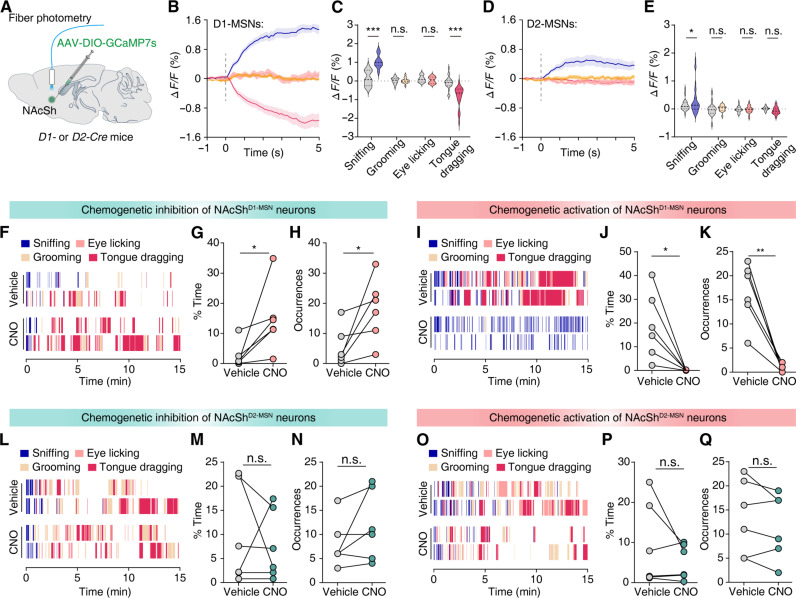
Prosocial behaviors are advantageous to social species, but the neural mechanism(s) through which others receive benefit remain unknown. Here, we found that bystander mice display rescue-like behavior (tongue dragging) toward anesthetized cagemates and found that this tongue dragging promotes arousal from anesthesia through a direct tongue-brain circuit. We found that a direct circuit from the tongue → glutamatergic neurons in the mesencephalic trigeminal nucleus (MTN) → noradrenergic neurons in the locus coeruleus (LC) drives rapid arousal in the anesthetized mice that receive the rescue-like behavior from bystanders. Artificial inhibition of this circuit abolishes the rapid arousal effect induced by the rescue-like behavior. Further, we revealed that glutamatergic neurons in the paraventricular nucleus of the thalamus (PVT) that project to the nucleus accumbens shell (NAcSh) mediate the rescue-like behavior. These findings reveal a tongue-brain connection underlying the rapid arousal effects induced by rescue-like behavior and the circuit basis governing this specific form of prosocial behavior.
亲社会行为对群居物种有益,但他人从中受益的神经机制尚不清楚。在这里,我们发现旁观小鼠对麻醉的同笼伙伴表现出类似救援的行为(拖舌头),并且发现这种拖舌头行为通过直接的舌-脑回路促进从麻醉中苏醒。我们发现从舌头→中脑三叉神经核(MTN)中的谷氨酸能神经元→蓝斑(LC)中的去甲肾上腺素能神经元的直接回路驱动接受旁观者类似救援行为的麻醉小鼠快速苏醒。人工抑制该回路可消除类似救援行为诱导的快速苏醒效应。此外,我们发现投射到伏隔核壳(NAcSh)的丘脑室旁核(PVT)中的谷氨酸能神经元介导了类似救援的行为。这些发现揭示了类似救援行为诱导的快速苏醒效应背后的舌-脑连接以及控制这种特定形式亲社会行为的回路基础。