Institute of Structural and Molecular Biology, Birkbeck College, London, WC1E 7HX, UK.
Centre for Integrative Biology, Department of Integrated Structural Biology, Institute of Genetics and of Molecular and Cellular Biology, 1 rue Laurent Fries, Illkirch, France.
Nat Commun. 2017 Dec 13;8(1):2110. doi: 10.1038/s41467-017-02241-5.
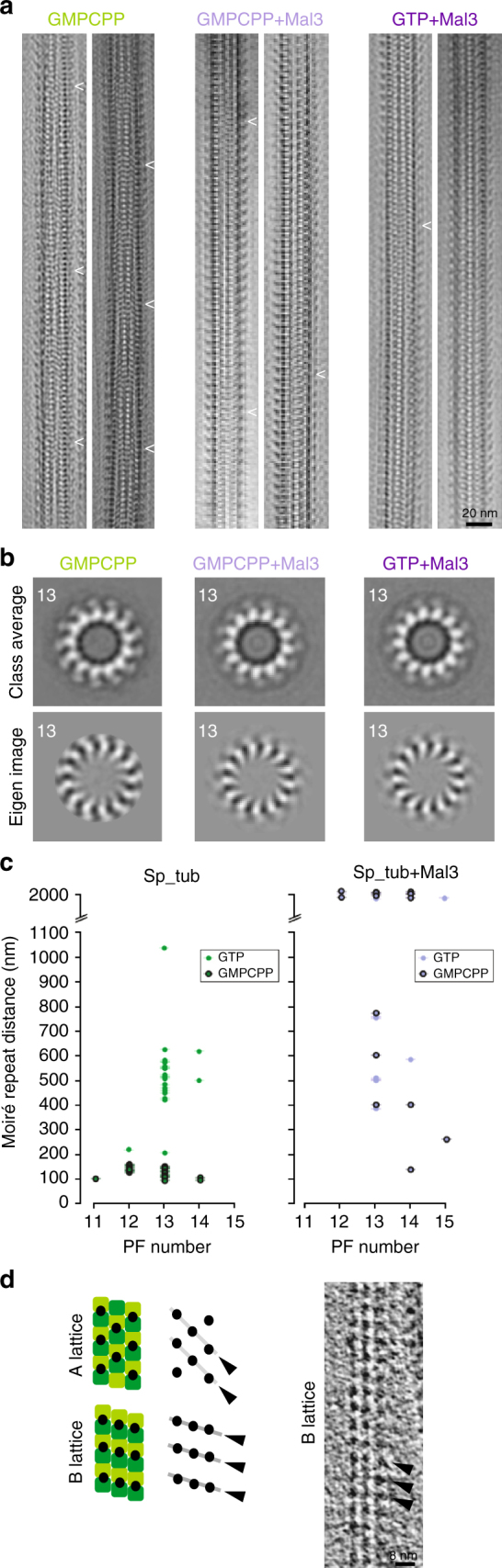
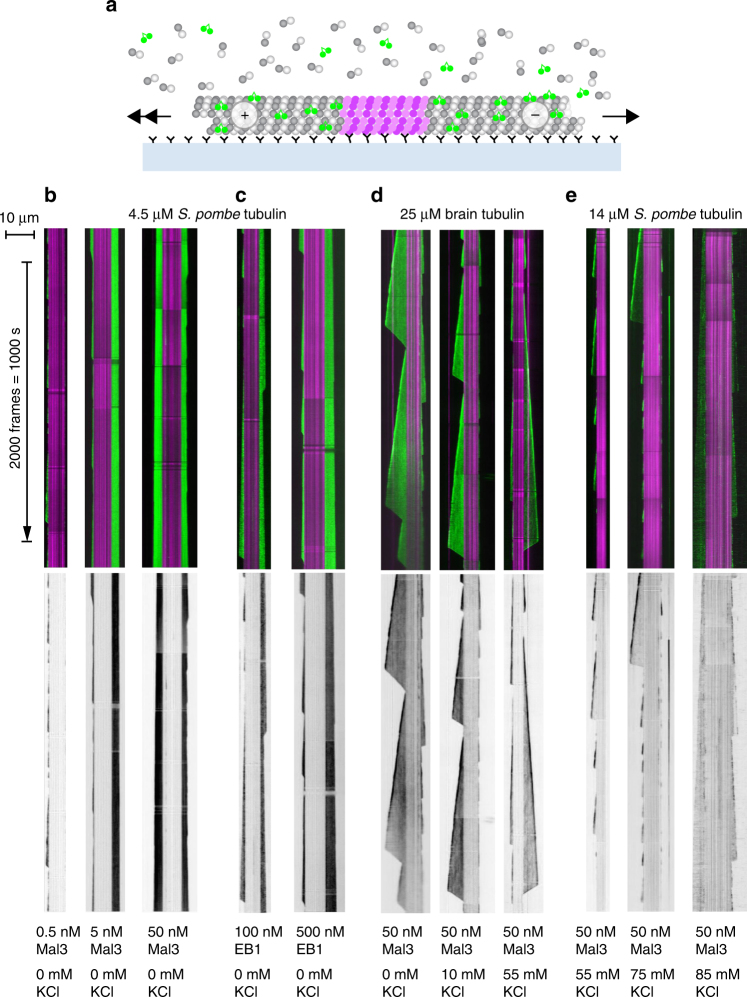
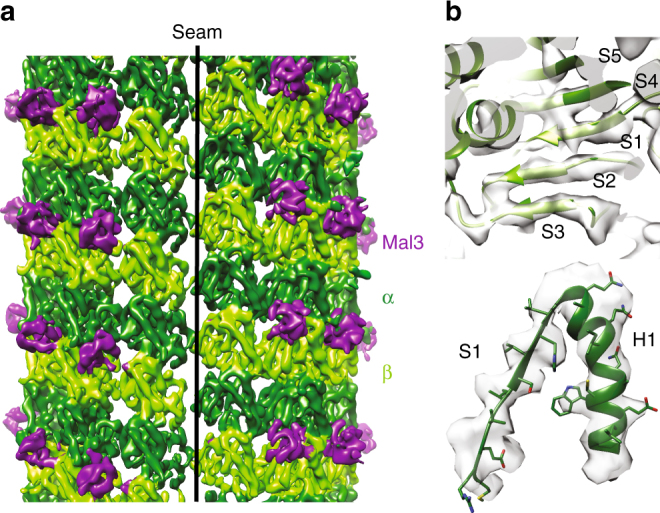
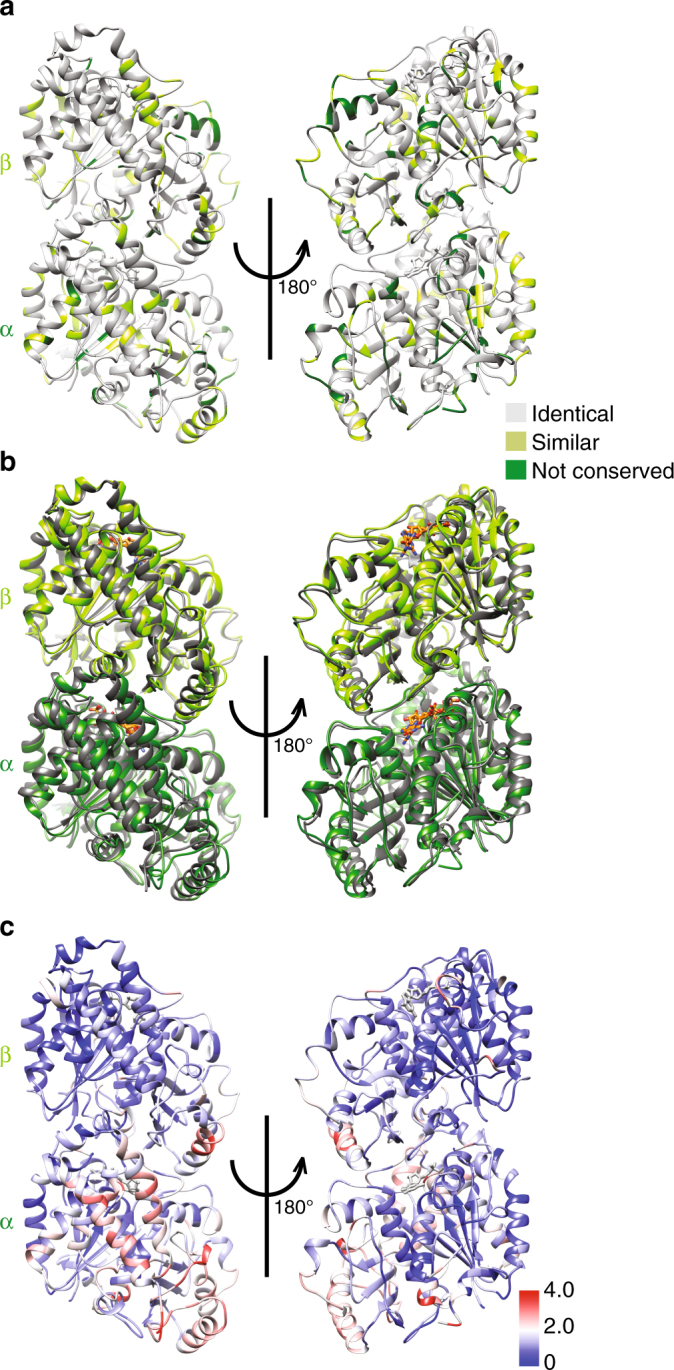
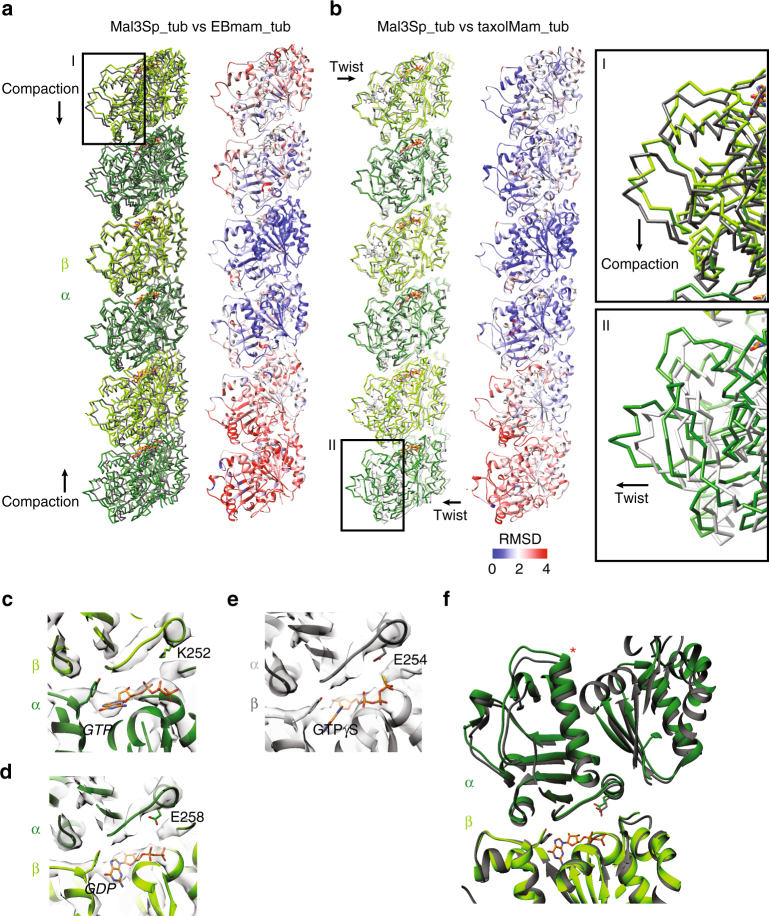
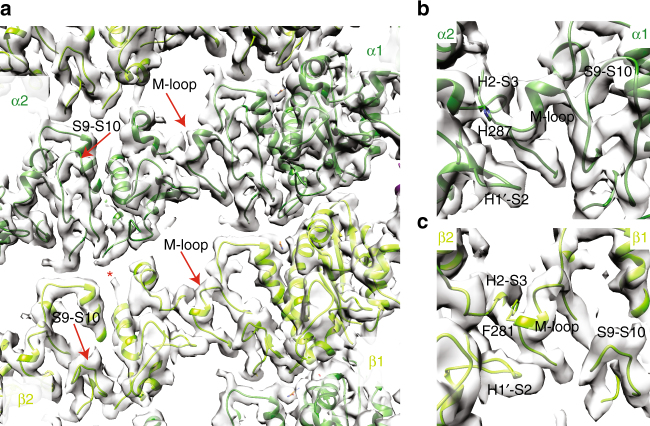
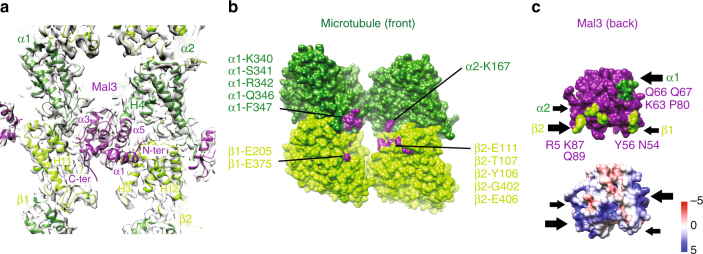
Using cryo-electron microscopy, we characterize the architecture of microtubules assembled from Schizosaccharomyces pombe tubulin, in the presence and absence of their regulatory partner Mal3. Cryo-electron tomography reveals that microtubules assembled from S. pombe tubulin have predominantly B-lattice interprotofilament contacts, with protofilaments skewed around the microtubule axis. Copolymerization with Mal3 favors 13 protofilament microtubules with reduced protofilament skew, indicating that Mal3 adjusts interprotofilament interfaces. A 4.6-Å resolution structure of microtubule-bound Mal3 shows that Mal3 makes a distinctive footprint on the S. pombe microtubule lattice and that unlike mammalian microtubules, S. pombe microtubules do not show the longitudinal lattice compaction associated with EB protein binding and GTP hydrolysis. Our results firmly support a structural plasticity view of microtubule dynamics in which microtubule lattice conformation is sensitive to a variety of effectors and differently so for different tubulins.
利用冷冻电子显微镜,我们描绘了丝裂酵母微管在有和没有其调节伙伴 Mal3 的情况下组装的结构。冷冻电子断层扫描揭示了由丝裂酵母微管组装的微管主要具有 B 晶格的原纤维间接触,原纤维围绕微管轴倾斜。与 Mal3 的共聚合有利于具有减少的原纤维倾斜的 13 个原纤维微管,表明 Mal3 调节原纤维间的界面。微管结合 Mal3 的 4.6 Å 分辨率结构表明 Mal3 在丝裂酵母微管晶格上留下了独特的足迹,与哺乳动物微管不同,丝裂酵母微管不显示与 EB 蛋白结合和 GTP 水解相关的纵向晶格紧缩。我们的结果有力地支持了微管动力学的结构可塑性观点,其中微管晶格构象对各种效应物敏感,并且对于不同的微管蛋白而言敏感程度不同。