Levine Corri B, Bayle Julie, Biourge Vincent, Wakshlag Joseph J
Department of Clinical Sciences,Veterinary Medical Center C2-009, Cornell University College of Veterinary Medicine, Ithaca, NY, 14853, USA.
Royal Canin Research Center, Airmargues, France.
BMC Vet Res. 2017 Dec 13;13(1):388. doi: 10.1186/s12917-017-1302-2.
The use of nutraceuticals is gaining in popularity in human and canine oncology with a relatively limited understanding of the effects in the vastly different tumor types seen in canine oncology. We have previously shown that turmeric root (TE) and rosemary leaf (RE) extracts can work synergistically to reduce neoplastic cell growth, but the mechanisms are poorly understood and require further elucidation.
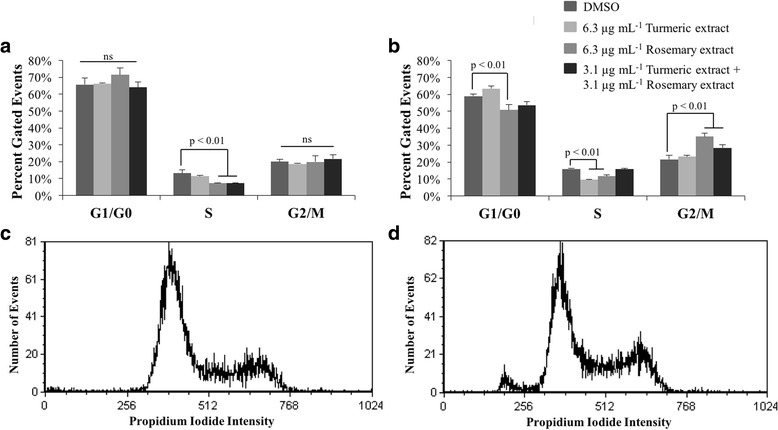
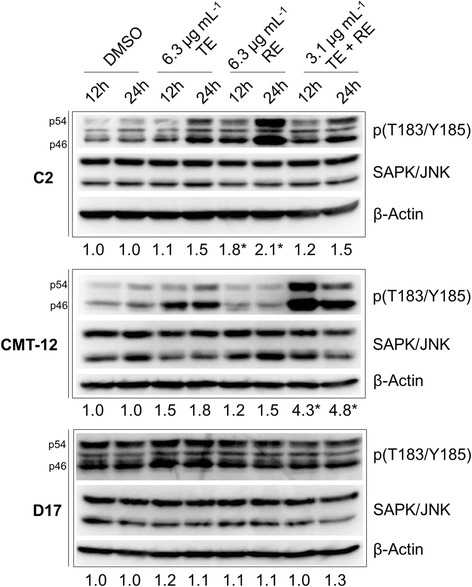
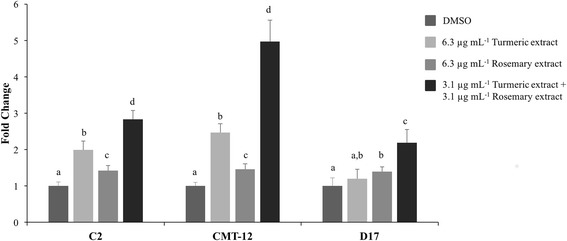
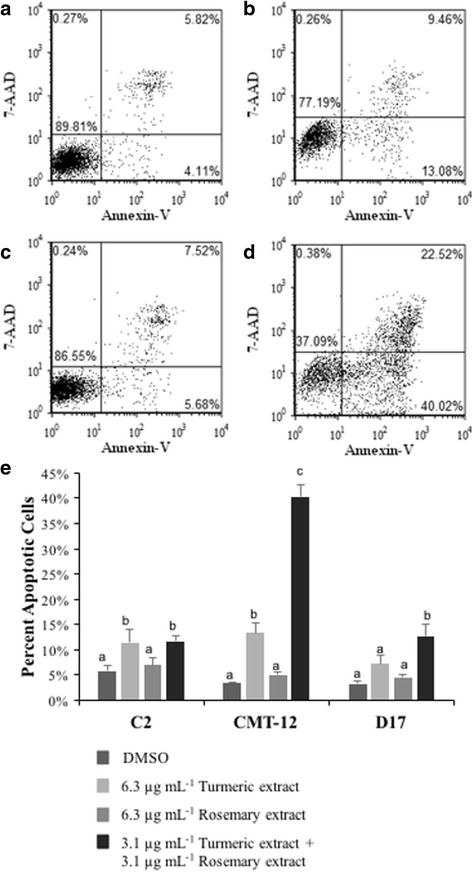
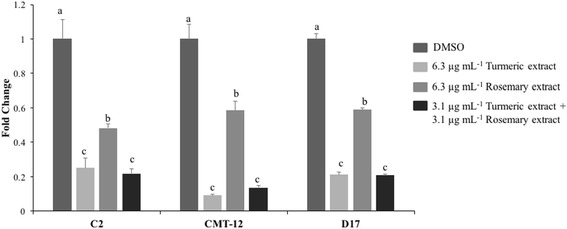
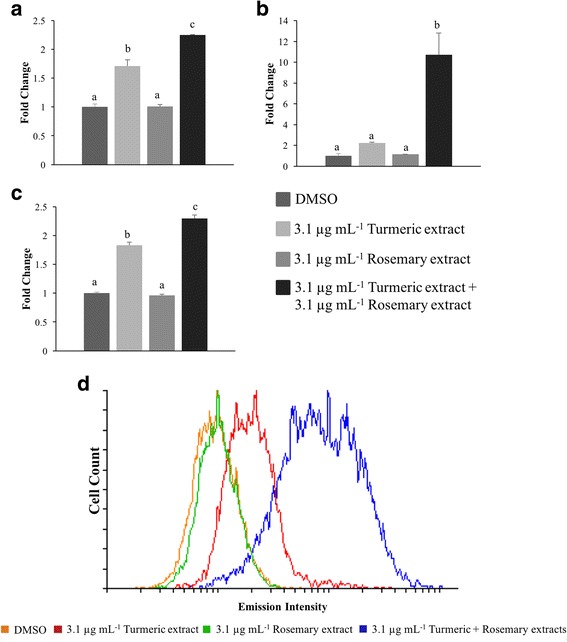
Three different canine cell lines (C2 mastocytoma, and CMT-12 mammary carcinoma, D17 osteosarcoma) were treated with 6.3 μg mL extract individually, or 3.1 μg mL of each extract in combination based on studies showing synergy of these two extracts. Apoptosis, antioxidant effects, cellular accumulation of curcumin, and perturbation of signaling pathways were assessed. The TE + RE combination treatment resulted in Caspase 3/7 activation and apoptosis in all cell lines, beyond the effects of TE alone with the CMT-12 cell line being most susceptible. Both extracts had antioxidant effects with RE reducing reactive oxygen species (ROS) by 40-50% and TE reducing ROS by 80-90%. In addition RE treatment enhanced the c-jun N-terminal kinase (JNK) activity in the C2 cell line and TE + RE exposure increased activated JNK by 4-5 times in the CMT-12 cell line. Upon further examination, it was found that RE treatment caused a significant increase in the cellular accumulation of curcumin by approximately 30% in the C2 and D17 cell lines, and by 4.8-fold in the CMT-12 cell line. This increase in intracellular curcumin levels may play a role in the synergy exhibited when using TE and RE in combination.
The use of RE in combination with TE induces a synergistic response to induce apoptosis which is better than either extract alone. This appears to be related to a variable increased TE uptake in cells and activation of pathways involved in the apoptotic response.
营养保健品在人类和犬类肿瘤学中的应用越来越广泛,但对于犬类肿瘤学中所见的截然不同的肿瘤类型,其效果的了解相对有限。我们之前已经表明,姜黄根(TE)和迷迭香叶(RE)提取物可以协同作用以减少肿瘤细胞生长,但其机制尚不清楚,需要进一步阐明。
根据显示这两种提取物具有协同作用的研究,三种不同的犬类细胞系(C2肥大细胞瘤、CMT - 12乳腺癌、D17骨肉瘤)分别用6.3μg/mL提取物处理,或每种提取物3.1μg/mL联合处理。评估了细胞凋亡、抗氧化作用、姜黄素的细胞积累以及信号通路的扰动。TE + RE联合处理导致所有细胞系中Caspase 3/7激活和细胞凋亡,CMT - 12细胞系单独使用TE时效果最佳,最易受影响。两种提取物都具有抗氧化作用,RE可将活性氧(ROS)减少40 - 50%,TE可将ROS减少80 - 90%。此外,RE处理增强了C2细胞系中的c - jun N末端激酶(JNK)活性,而TE + RE处理使CMT - 12细胞系中活化的JNK增加了4 - 5倍。进一步研究发现,RE处理导致C2和D17细胞系中姜黄素的细胞积累显著增加约30%,在CMT - 12细胞系中增加了4.8倍。细胞内姜黄素水平的这种增加可能在联合使用TE和RE时表现出的协同作用中发挥作用。
RE与TE联合使用可诱导协同反应以诱导细胞凋亡,这比单独使用任何一种提取物都要好。这似乎与细胞中TE摄取的可变增加以及凋亡反应中涉及的信号通路激活有关。