Aguirre Patricia Estefania Ayala, Coelho Melina Martins, Rios Daniela, Machado Maria Aparecida Andrade Moreira, Cruvinel Agnes Fátima Pereira, Cruvinel Thiago
Department of Pediatric Dentistry, Orthodontics and Public Health, Bauru School of Dentistry, University of São Paulo, Bauru, Brazil.
Discipline of Public Health, School of Medicine, Federal University of Fronteira Sul, Chapecó, Brazil.
J Med Internet Res. 2017 Dec 13;19(12):e415. doi: 10.2196/jmir.7681.
Dental caries is the most common chronic oral disease, affecting 2.4 billion people worldwide who on average have 2.11 decayed, missing, or filled teeth. It impacts the quality of life of patients, socially and economically. However, the comprehension of dental caries may be difficult for most people, as it involves a multifactorial etiology with the interplay between the tooth surface, the dental biofilm, dietary fermentable carbohydrates, and genetic and behavioral factors. Therefore, the production of effective materials addressed to the education and counseling of patients for the prevention of dental caries requires a high level of specialization. In this regard, the dental caries-related contents produced by laypersons and their availability on the Internet may be low-quality information.
The aim of this study was to assess the readability and the quality of dental caries-related information on Brazilian websites.
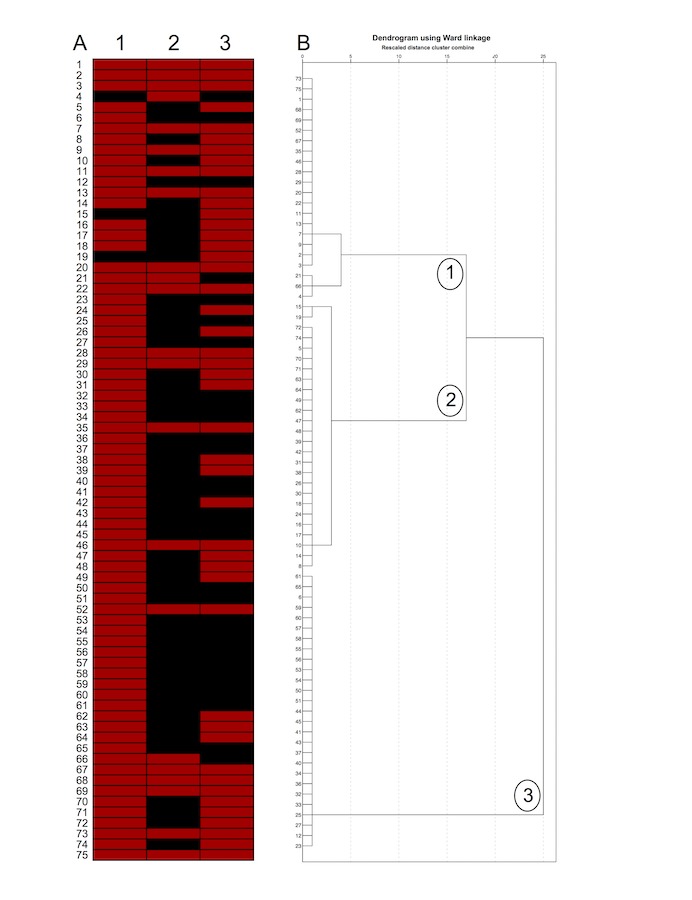
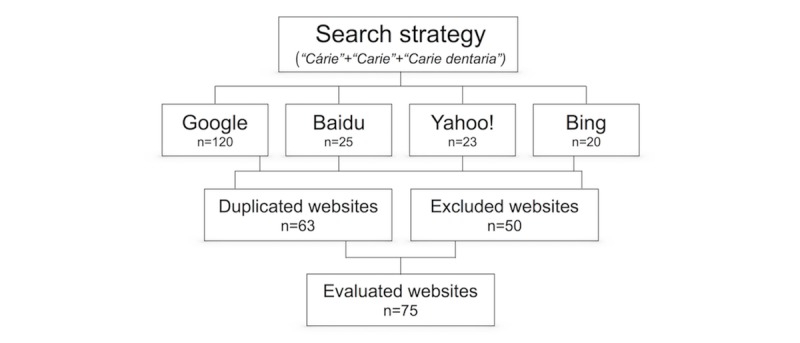
A total of 75 websites were selected through Google, Bing, Yahoo!, and Baidu. The websites were organized in rankings according to their order of appearance in each one of the 4 search engines. Furthermore, 2 independent examiners evaluated the quality of websites using the DISCERN questionnaire and the Journal of American Medical Association (JAMA) benchmark criteria. The readability of the websites was assessed by the Flesch Reading Ease adapted to Brazilian Portuguese (FRE-BP). In addition, the information presented on the websites was categorized as etiology, prevention, and treatment of dental caries. The statistical analysis was performed using Spearman rank correlation coefficient, Mann-Whitney U test, hierarchical clustering analysis by Ward minimum variance method, Kruskal-Wallis test, and post hoc Dunn test. P<.05 was considered significant.
The Web contents were considered to be of poor quality by DISCERN (mean 33.48, standard deviation, SD 9.06) and JAMA (mean 1.12, SD 0.97) scores, presenting easy reading levels (FRE-BP: mean 62.93, SD 10.15). The rankings of the websites presented by Google (ρ=-.22, P=.08), Baidu (ρ=-.19, P=.53), Yahoo! (ρ=.22, P=.39), and Bing (ρ=-.36, P=.23) were not correlated with DISCERN scores. Moreover, the quality of websites with health- and nonhealth-related authors was similar (P=.27 for DISCERN and P=.47 for JAMA); however, the pages with a greater variety of dental caries information showed significantly higher quality scores than those with limited contents (P=.009).
On the basis of this sample, dental caries-related contents available on Brazilian websites were considered simple, accessible, and of poor quality, independent of their authorship. These findings indicate the need for the development of specific policies focused on the stimulus for the production and publication of Web health information, encouraging dentists to guide their patients in searching for recommended oral health websites.
龋齿是最常见的慢性口腔疾病,全球有24亿人受其影响,平均每人有2.11颗牙齿出现龋坏、缺失或已填充。它在社会和经济方面影响患者的生活质量。然而,大多数人可能难以理解龋齿,因为其病因是多因素的,涉及牙面、牙菌斑、可发酵碳水化合物饮食以及遗传和行为因素之间的相互作用。因此,制作针对患者预防龋齿教育和咨询的有效材料需要高度专业化。在这方面,非专业人士制作的与龋齿相关的内容及其在互联网上的可得性可能是低质量信息。
本研究旨在评估巴西网站上与龋齿相关信息的可读性和质量。
通过谷歌、必应、雅虎和百度共选择了75个网站。这些网站根据其在4个搜索引擎中各自出现的顺序进行排名。此外,两名独立审查员使用DISCERN问卷和美国医学会(JAMA)基准标准评估网站质量。网站的可读性通过适用于巴西葡萄牙语(FRE-BP)的弗莱什易读性公式进行评估。此外,网站上呈现的信息分为龋齿的病因、预防和治疗。使用斯皮尔曼等级相关系数、曼-惠特尼U检验、沃德最小方差法进行层次聚类分析、克鲁斯卡尔-沃利斯检验和事后邓恩检验进行统计分析。P<0.05被认为具有统计学意义。
根据DISCERN评分(均值33.48,标准差SD 9.06)和JAMA评分(均值1.12,SD 0.97),网页内容质量较差,呈现出易读水平(FRE-BP:均值62.93,SD 10.15)。谷歌(ρ=-.22,P=.08)、百度(ρ=-.19,P=.53)、雅虎(ρ=.22,P=.39)和必应(ρ=-.36,P=.23)呈现的网站排名与DISCERN评分不相关。此外,有健康相关和非健康相关作者的网站质量相似(DISCERN评分为P=.(此处原文有误,应为P=.27),JAMA评分为P=.47);然而,包含更多龋齿信息的页面的质量得分显著高于内容有限的页面(P=.009)。
基于该样本,巴西网站上与龋齿相关的内容被认为简单、易获取但质量较差,与作者身份无关。这些发现表明需要制定具体政策,重点激励网络健康信息的制作和发布,鼓励牙医指导患者搜索推荐的口腔健康网站。