Department of Pharmacology, Yong Loo Lin School of Medicine, National University Health System, National University of Singapore, 16 Medical Drive, Singapore, 117600, Singapore.
Neurobiology and Ageing Programme, Life Sciences Institute, Centre for Life Sciences, National University of Singapore, 28 Medical Drive, Singapore, 117456, Singapore.
Cell Death Differ. 2018 Mar;25(4):663-678. doi: 10.1038/s41418-017-0005-3. Epub 2017 Dec 13.
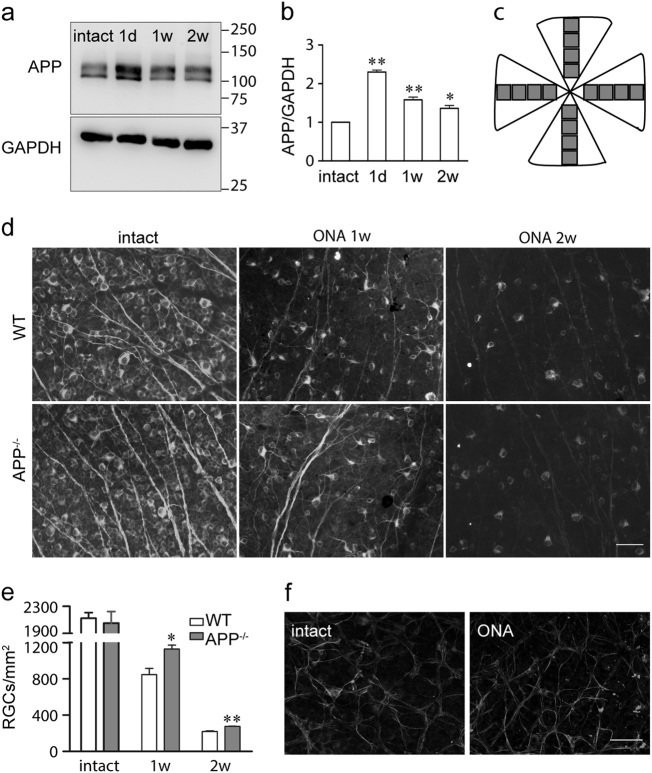
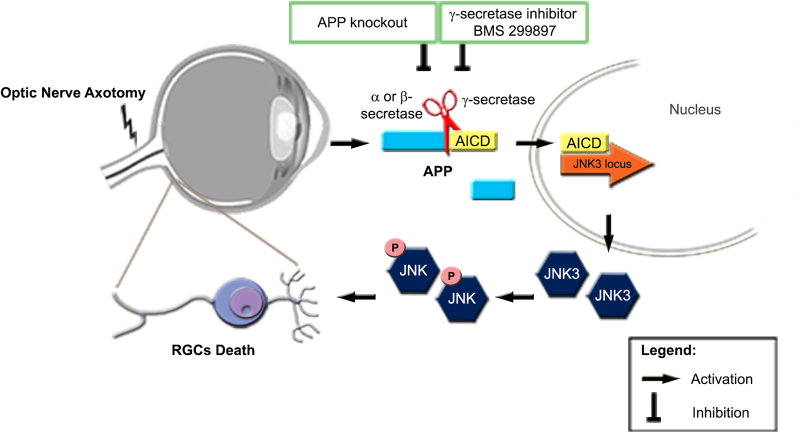
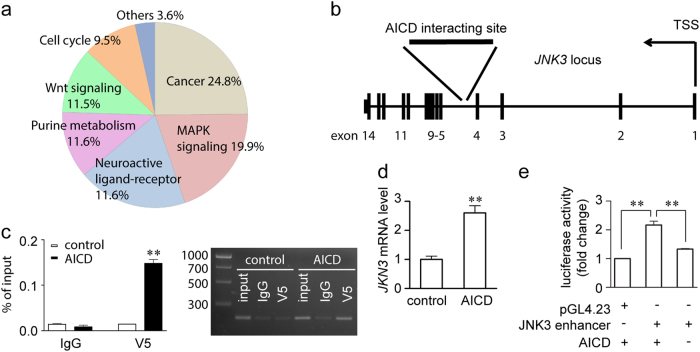
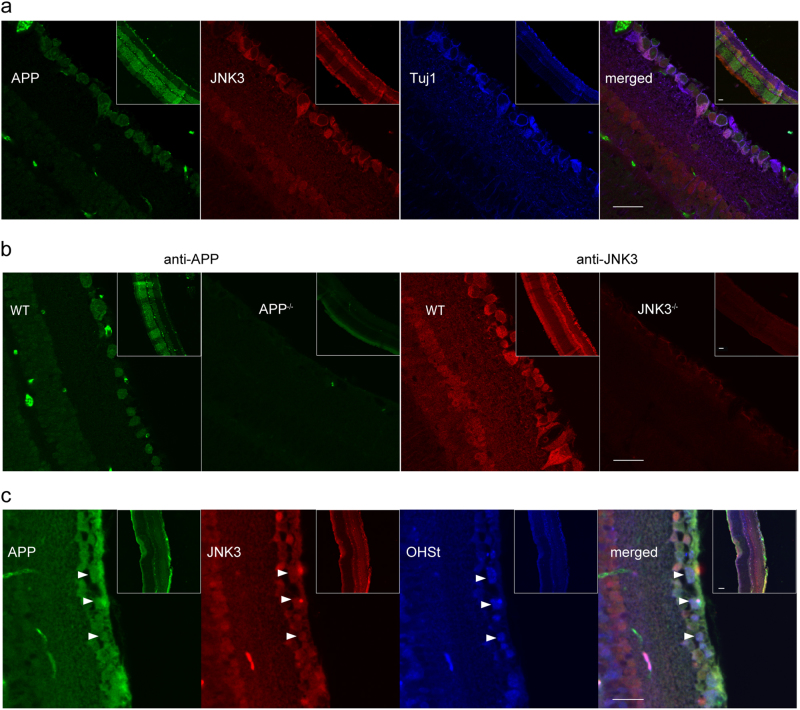
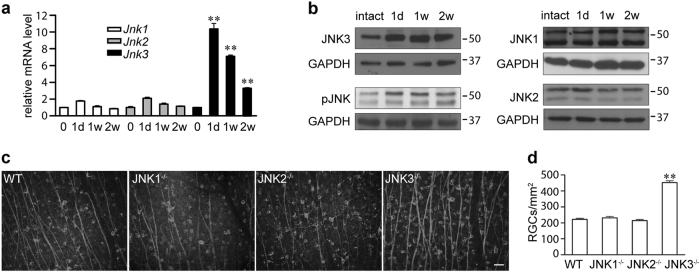
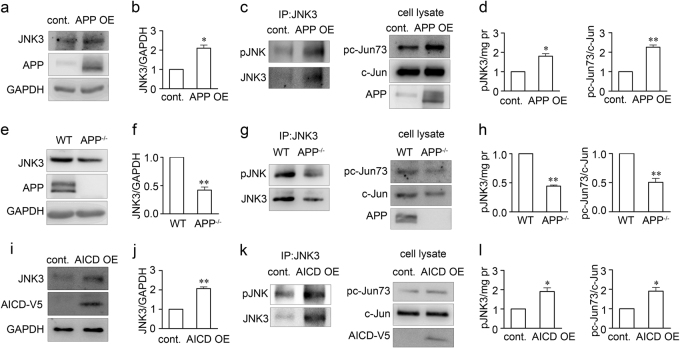
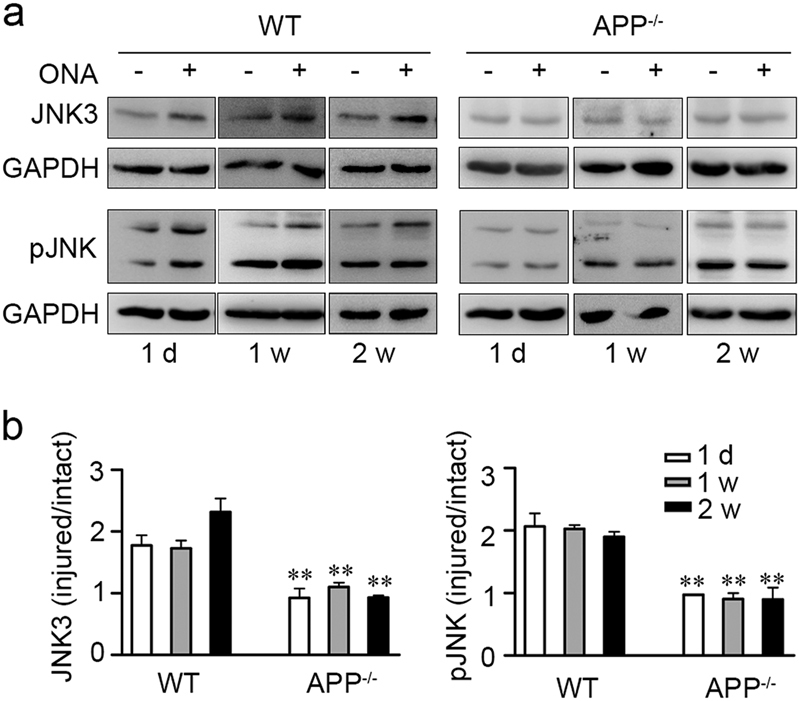
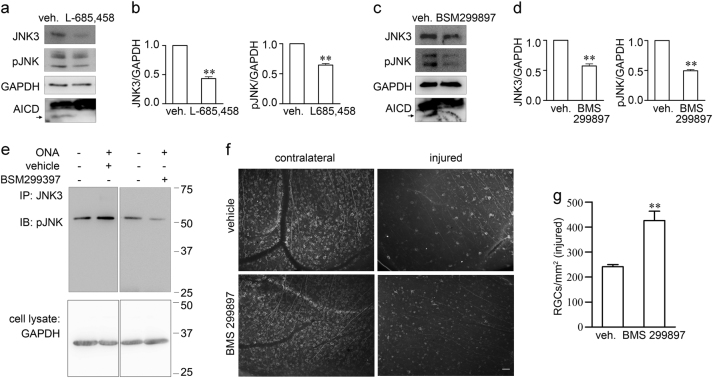
Axonal injury is a common feature of central nervous system insults. Upregulation of amyloid precursor protein (APP) is observed following central nervous system neurotrauma and is regarded as a marker of central nervous system axonal injury. However, the underlying mechanism by which APP mediates neuronal death remains to be elucidated. Here, we used mouse optic nerve axotomy (ONA) to model central nervous system axonal injury replicating aspects of retinal ganglion cell (RGC) death in optic neuropathies. APP and APP intracellular domain (AICD) were upregulated in retina after ONA and APP knockout reduced Tuj1 RGC loss. Pathway analysis of microarray data combined with chromatin immunoprecipitation and a luciferase reporter assay demonstrated that AICD interacts with the JNK3 gene locus and regulates JNK3 expression. Moreover, JNK3 was found to be upregulated after ONA and to contribute to Tuj1 RGC death. APP knockout reduced the ONA-induced enhanced expression of JNK3 and phosphorylated JNK (pJNK). Gamma-secretase inhibitors prevented production of AICD, reduced JNK3 and pJNK expression similarly, and protected Tuj1 RGCs from ONA-induced cell death. Together these data indicate that ONA induces APP expression and that gamma-secretase cleavage of APP releases AICD, which upregulates JNK3 leading to RGC death. This pathway may be a novel target for neuronal protection in optic neuropathies and other forms of neurotrauma.
轴突损伤是中枢神经系统损伤的常见特征。中枢神经系统神经创伤后,淀粉样前体蛋白(APP)的上调被观察到,被认为是中枢神经系统轴突损伤的标志物。然而,APP 介导神经元死亡的潜在机制仍有待阐明。在这里,我们使用小鼠视神经切断术(ONA)来模拟中枢神经系统轴突损伤,复制视神经病变中视网膜神经节细胞(RGC)死亡的某些方面。ONA 后,APP 和 APP 细胞内结构域(AICD)在视网膜中上调,APP 敲除可减少 Tuj1 RGC 丢失。微阵列数据的通路分析结合染色质免疫沉淀和荧光素酶报告基因测定表明,AICD 与 JNK3 基因座相互作用并调节 JNK3 表达。此外,ONA 后发现 JNK3 上调,并导致 Tuj1 RGC 死亡。APP 敲除减少了 ONA 诱导的 JNK3 和磷酸化 JNK(pJNK)的增强表达。γ-分泌酶抑制剂可阻止 AICD 的产生,对 JNK3 和 pJNK 的表达也有类似的抑制作用,并可防止 Tuj1 RGC 因 ONA 诱导的细胞死亡。这些数据表明,ONA 诱导 APP 表达,APP 的 γ-分泌酶切割释放 AICD,AICD 上调 JNK3 导致 RGC 死亡。该通路可能是视神经病变和其他形式的神经创伤中神经元保护的新靶点。