Fatiregun Akinola Ayoola, Isere Elvis Efe
State Coordinator, World Health Organization, Akure, Ondo State, Nigeria.
Cluster Coordinator, World Health Organization, Akure, Ondo State, Nigeria.
Niger Med J. 2017 Jan-Feb;58(1):1-6. doi: 10.4103/0300-1652.218414.
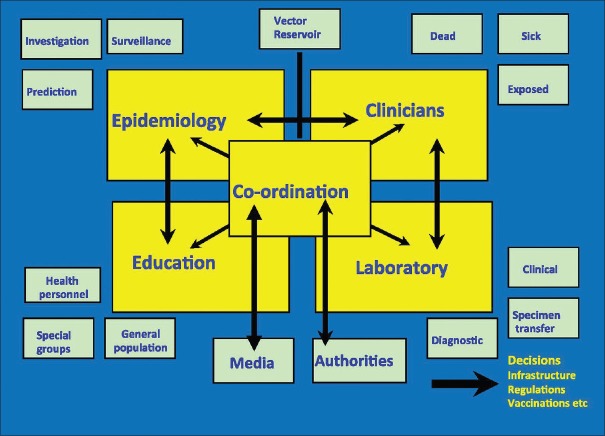
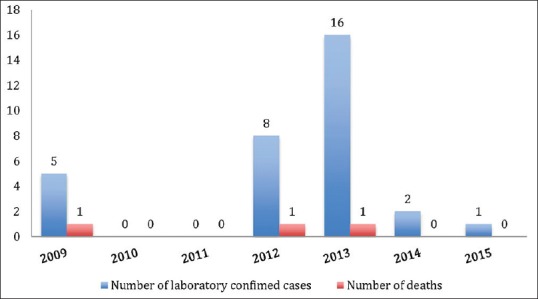
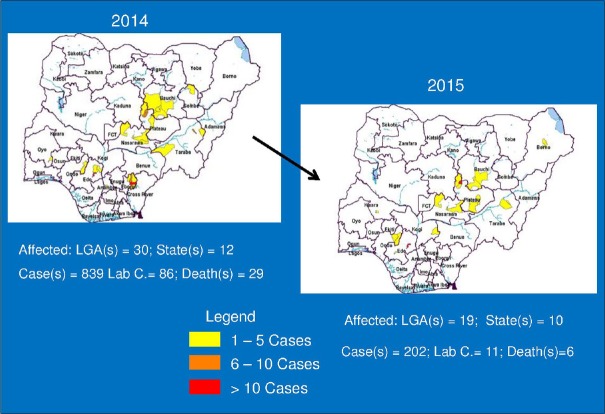
Epidemic prone diseases threaten public health security. These include diseases such as cholera, meningitis, and hemorrhagic fevers, especially Lassa fever for which Nigeria reports considerable morbidity and mortality annually. Interestingly, where emergency epidemic preparedness plans are in place, timely detection of outbreaks is followed by a prompt and appropriate response. Furthermore, due to the nature of spread of Lassa fever in an outbreak setting, there is the need for health-care workers to be familiar with the emerging epidemic management framework that has worked in other settings for effective preparedness and response. This paper, therefore, discussed the principles of epidemic management using an emergency operating center model, review the epidemiology of Lassa fever in Nigeria, and provide guidance on what is expected to be done in preparing for epidemic of the disease at the health facilities, local and state government levels in line with the Integrated Disease Surveillance and Response strategy.
易流行疾病威胁着公共卫生安全。这些疾病包括霍乱、脑膜炎和出血热等,尤其是拉沙热,尼日利亚每年报告的该疾病发病率和死亡率都相当高。有趣的是,在制定了应急疫情准备计划的地方,疫情一旦被及时发现,就能迅速做出恰当应对。此外,由于拉沙热在疫情环境中的传播特性,医护人员需要熟悉在其他环境中有效的新兴疫情管理框架,以便做好充分准备和应对。因此,本文讨论了使用应急行动中心模式进行疫情管理的原则,回顾了尼日利亚拉沙热的流行病学情况,并根据综合疾病监测与应对战略,就卫生设施、地方和州政府层面在为该疾病疫情做准备时应采取的措施提供指导。