Li Boyu, Ma Huachong, Wang Zhenjun, Liu Lihong
Department of Pharmacy Department of General Surgery, Beijing Chao-Yang Hospital, Capital Medical University, Beijing, China.
Medicine (Baltimore). 2017 Dec;96(49):e9089. doi: 10.1097/MD.0000000000009089.
Clostridium difficile infection (CDI) is a symptomatic infection due to the spore-forming bacterium, C. difficile. Asymptomatic C. difficile colonization is the stage in absence of symptoms, with a prevalence of 1.4% to 21% on hospital admission. Proton-pump inhibitors (PPIs) was implicated as a novel potential contributor to CDI. PPIs injection could make asymptomatic C. difficile colonization progress to C. difficile associated diarrhea (CDAD).
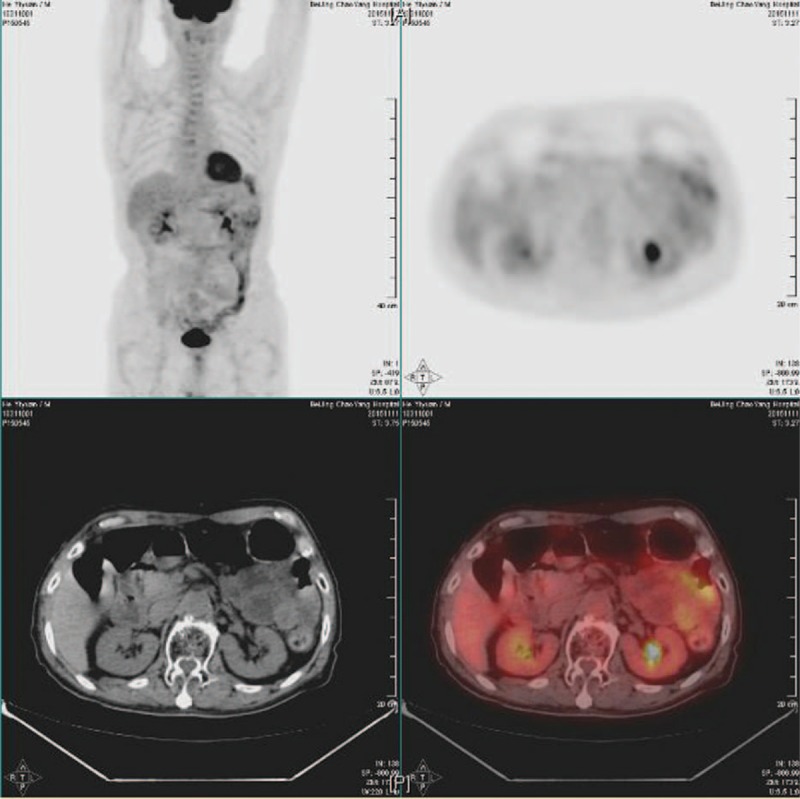
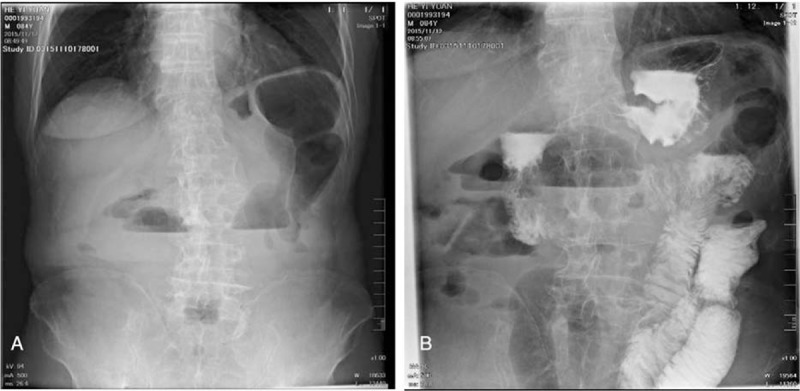
A postoperative colon cancer patient, who had been taking omeprazole for 4 years after operation, got asymptomatic C. difficile colonization. When he developed clinical symptoms of digestive tract, tumor recurrence was first suspected and intravenous omeprazole was prescribed, which ultimately led to progression to symptomatic CDI. In this report, we tell the confusing differential diagnosis of cancer-associated diseases and CDAD, and discuss the possibility of solving the PPIs overuse problem by making clinical pathway of PPIs use in Chinese hospitals.
CDAD, incomplete intestinal obstruction, postoperation of colon cancer.
Electrolyte replacement and rehydration. Parenteral nutrition support. Omeprazole was prescribed but withdrawn later, and oral vancomycin was given at a dose of 0.25 g 4 times per day for 10 days.
Diarrhea was resolved, so long as the acid reflux and vomiting.
We have 2 lessons here: Be aware of PPIs induced CDI, especially the asymptomatic C. difficile colonization. Making clinical pathway specified on PPIs use by pharmacists could be a practical way to solve the problem of PPIs overuse.
艰难梭菌感染(CDI)是由产芽孢细菌艰难梭菌引起的有症状感染。无症状艰难梭菌定植是指在无相关症状阶段,入院时的患病率为1.4%至21%。质子泵抑制剂(PPIs)被认为是CDI一种新的潜在促成因素。注射PPIs可使无症状艰难梭菌定植发展为艰难梭菌相关性腹泻(CDAD)。
一名结肠癌术后患者,术后服用奥美拉唑4年,出现无症状艰难梭菌定植。当他出现消化道临床症状时,首先怀疑肿瘤复发并开具了静脉用奥美拉唑,这最终导致进展为有症状的CDI。在本报告中,我们讲述了癌症相关疾病与CDAD令人困惑的鉴别诊断,并讨论了通过制定中国医院PPIs使用临床路径来解决PPIs过度使用问题的可能性。
CDAD、不完全性肠梗阻、结肠癌术后。
电解质补充及补液。肠外营养支持。开具了奥美拉唑但随后停用,给予口服万古霉素,剂量为0.25克,每日4次,共10天。
腹泻得以缓解,反酸和呕吐症状也随之缓解。
我们在此得到两点经验教训:要警惕PPIs诱发的CDI,尤其是无症状艰难梭菌定植。由药剂师制定PPIs使用的具体临床路径可能是解决PPIs过度使用问题的一种切实可行的方法。