Gupta Anisha, Quijano Elias, Liu Yanfeng, Bahal Raman, Scanlon Susan E, Song Eric, Hsieh Wei-Che, Braddock Demetrios E, Ly Danith H, Saltzman W Mark, Glazer Peter M
Department of Therapeutic Radiology, Yale University, New Haven, CT 06510, USA.
Department of Biomedical Engineering, Yale University, New Haven, CT 06520, USA.
Mol Ther Nucleic Acids. 2017 Dec 15;9:111-119. doi: 10.1016/j.omtn.2017.09.001. Epub 2017 Sep 12.
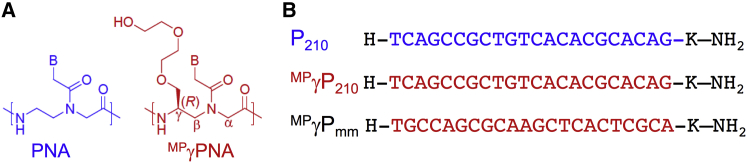
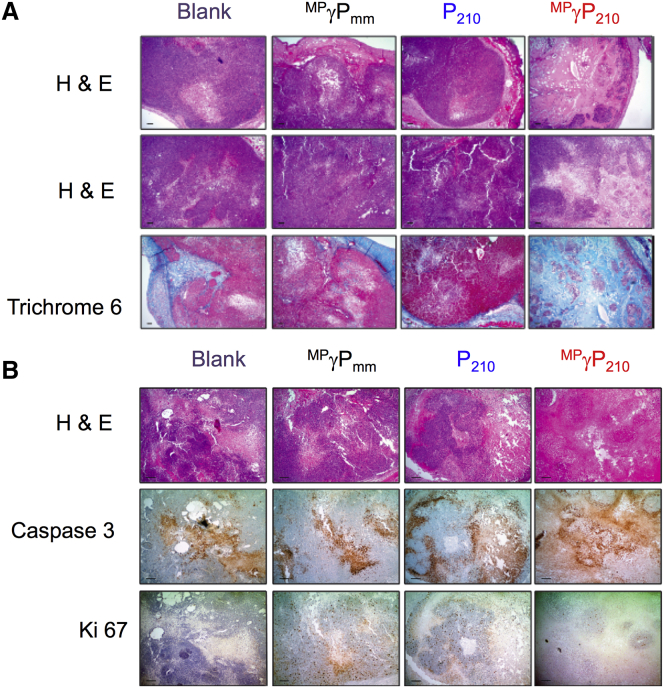
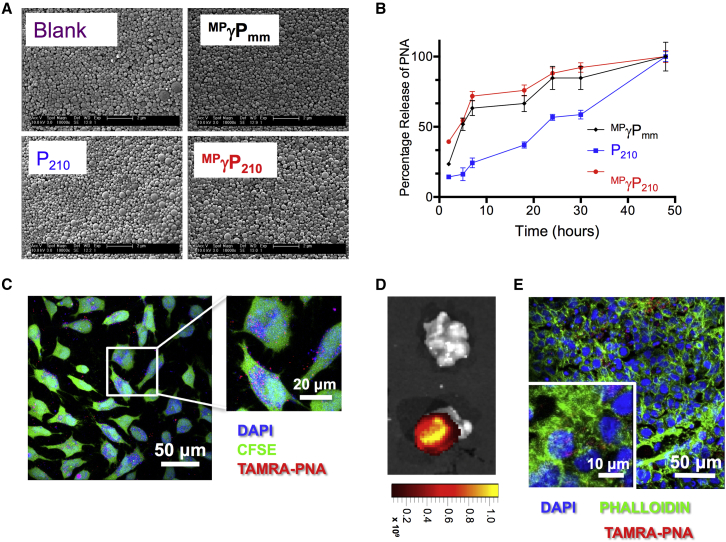
MicroRNAs (miRs) are frequently overexpressed in human cancers. In particular, miR-210 is induced in hypoxic cells and acts to orchestrate the adaptation of tumor cells to hypoxia. Silencing oncogenic miRs such as miR-210 may therefore offer a promising approach to anticancer therapy. We have developed a miR-210 inhibition strategy based on a new class of conformationally preorganized antisense γ peptide nucleic acids (γPNAs) that possess vastly superior RNA-binding affinity, improved solubility, and favorable biocompatibility. For cellular delivery, we encapsulated the γPNAs in poly(lactic-co-glycolic acid) (PLGA) nanoparticles (NPs). Our results show that γPNAs targeting miR-210 cause significant delay in growth of a human tumor xenograft in mice compared to conventional PNAs. Further, histopathological analyses show considerable necrosis, fibrosis, and reduced cell proliferation in γPNA-treated tumors compared to controls. Overall, our work provides a chemical framework for a novel anti-miR therapeutic approach using γPNAs that should facilitate rational design of agents to potently inhibit oncogenic microRNAs.
微小RNA(miRs)在人类癌症中经常过度表达。特别是,miR - 210在缺氧细胞中被诱导,并在协调肿瘤细胞对缺氧的适应过程中发挥作用。因此,沉默诸如miR - 210等致癌性miRs可能为抗癌治疗提供一种有前景的方法。我们基于一类新型的构象预组织反义γ肽核酸(γPNAs)开发了一种miR - 210抑制策略,这类γPNAs具有极其优越的RNA结合亲和力、改善的溶解性和良好的生物相容性。为了实现细胞递送,我们将γPNAs封装在聚乳酸 - 乙醇酸共聚物(PLGA)纳米颗粒(NPs)中。我们的结果表明,与传统肽核酸相比,靶向miR - 210的γPNAs可显著延缓小鼠体内人肿瘤异种移植瘤的生长。此外,组织病理学分析显示,与对照组相比,γPNA处理的肿瘤中出现了大量坏死、纤维化,细胞增殖减少。总体而言,我们的工作为使用γPNAs的新型抗miR治疗方法提供了一个化学框架,这应该有助于合理设计能够有效抑制致癌性微小RNA的药物。