Institute of Experimental Hematology, Hannover Medical School, Carl-Neuberg-Strasse 1, 30625 Hannover, Germany; REBIRTH Cluster of Excellence, Hannover Medical School, 30625 Hannover, Germany.
REBIRTH Cluster of Excellence, Hannover Medical School, 30625 Hannover, Germany; Leibniz Research Laboratories for Biotechnology and Artificial Organs (LEBAO), Department of Cardiothoracic, Transplantation and Vascular Surgery, Hannover Medical School, 30625 Hannover, Germany; Biomedical Research in Endstage and Obstructive Lung Disease (BREATH), German Center for Lung Research, 30625 Hannover, Germany.
Stem Cell Reports. 2018 Jan 9;10(1):7-16. doi: 10.1016/j.stemcr.2017.11.011. Epub 2017 Dec 14.
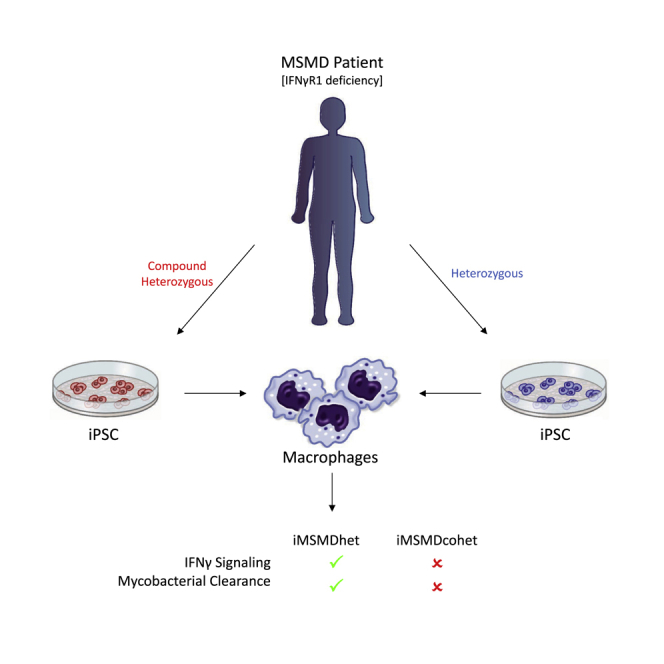
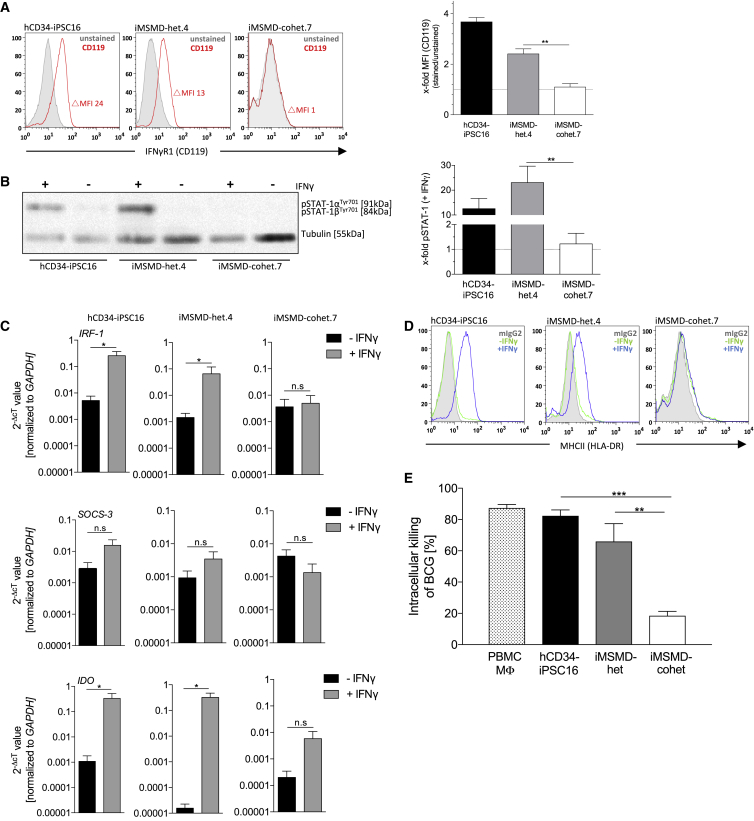
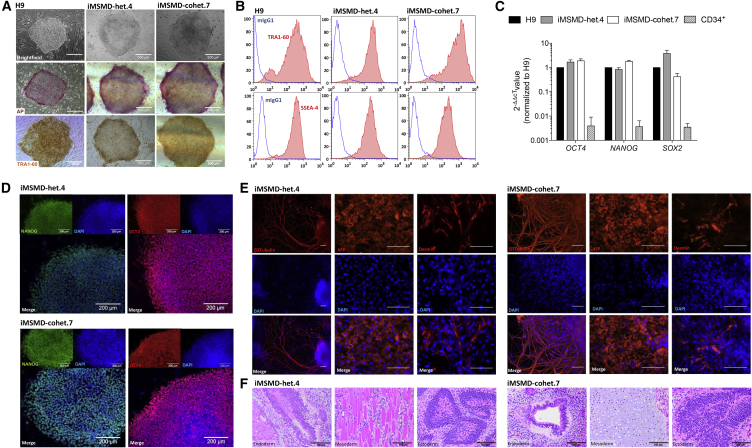
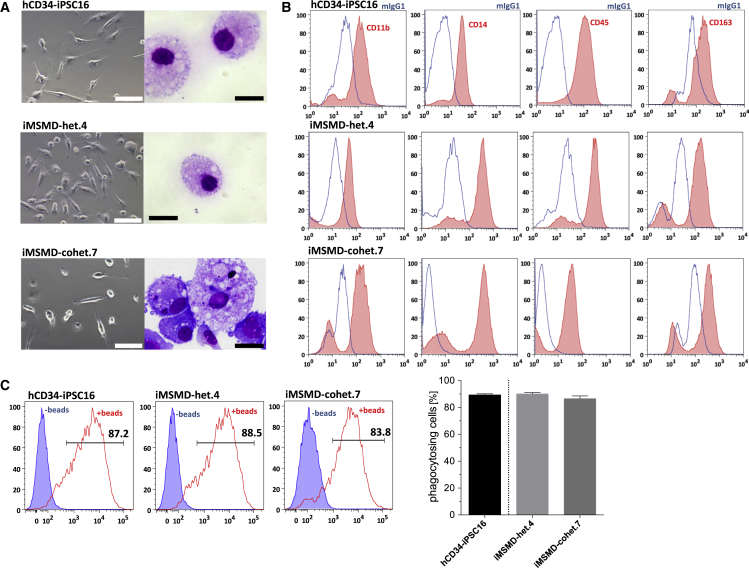
Mendelian susceptibility to mycobacterial disease (MSMD) is caused by inborn errors of interferon gamma (IFNγ) immunity and is characterized by severe infections by weakly virulent mycobacteria. Although IFNγ is the macrophage-activating factor, macrophages from these patients have never been studied. We demonstrate the generation of heterozygous and compound heterozygous (iMSMD-cohet) induced pluripotent stem cells (iPSCs) from a single chimeric patient, who suffered from complete autosomal recessive IFNγR1 deficiency and received bone-marrow transplantation. Loss of IFNγR1 expression had no influence on the macrophage differentiation potential of patient-specific iPSCs. In contrast, lack of IFNγR1 in iMSMD-cohet macrophages abolished IFNγ-dependent phosphorylation of STAT1 and induction of IFNγ-downstream targets such as IRF-1, SOCS-3, and IDO. As a consequence, iMSMD-cohet macrophages show impaired upregulation of HLA-DR and reduced intracellular killing of Bacillus Calmette-Guérin. We provide a disease-modeling platform that might be suited to investigate novel treatment options for MSMD and to gain insights into IFNγ signaling in macrophages.
孟德尔氏易感性分枝杆菌病(MSMD)是由干扰素γ(IFNγ)免疫的先天缺陷引起的,其特征是对弱毒分枝杆菌的严重感染。虽然 IFNγ 是巨噬细胞激活因子,但这些患者的巨噬细胞从未被研究过。我们从一名患有完全常染色体隐性 IFNγR1 缺陷并接受骨髓移植的嵌合患者中生成了杂合子和复合杂合子(iMSMD-cohet)诱导多能干细胞(iPSC)。IFNγR1 表达的缺失对患者特异性 iPSC 的巨噬细胞分化潜能没有影响。相比之下,iMSMD-cohet 巨噬细胞中 IFNγR1 的缺失消除了 IFNγ 依赖性 STAT1 磷酸化以及 IFNγ 下游靶标(如 IRF-1、SOCS-3 和 IDO)的诱导。结果,iMSMD-cohet 巨噬细胞显示 HLA-DR 的上调受损,并且对卡介苗的细胞内杀伤减少。我们提供了一个疾病建模平台,该平台可能适合研究 MSMD 的新治疗选择,并深入了解巨噬细胞中的 IFNγ 信号传导。