REBIRTH Cluster of Excellence, Institute of Experimental Hematology, Hannover Medical School (MHH), 30625 Hannover, Germany.
Laboratory of Human Genetics of Infectious Diseases, Necker Branch, Inserm U1163, Necker Hospital for Sick Children, 75015 Paris, France.
Cells. 2020 Feb 19;9(2):483. doi: 10.3390/cells9020483.
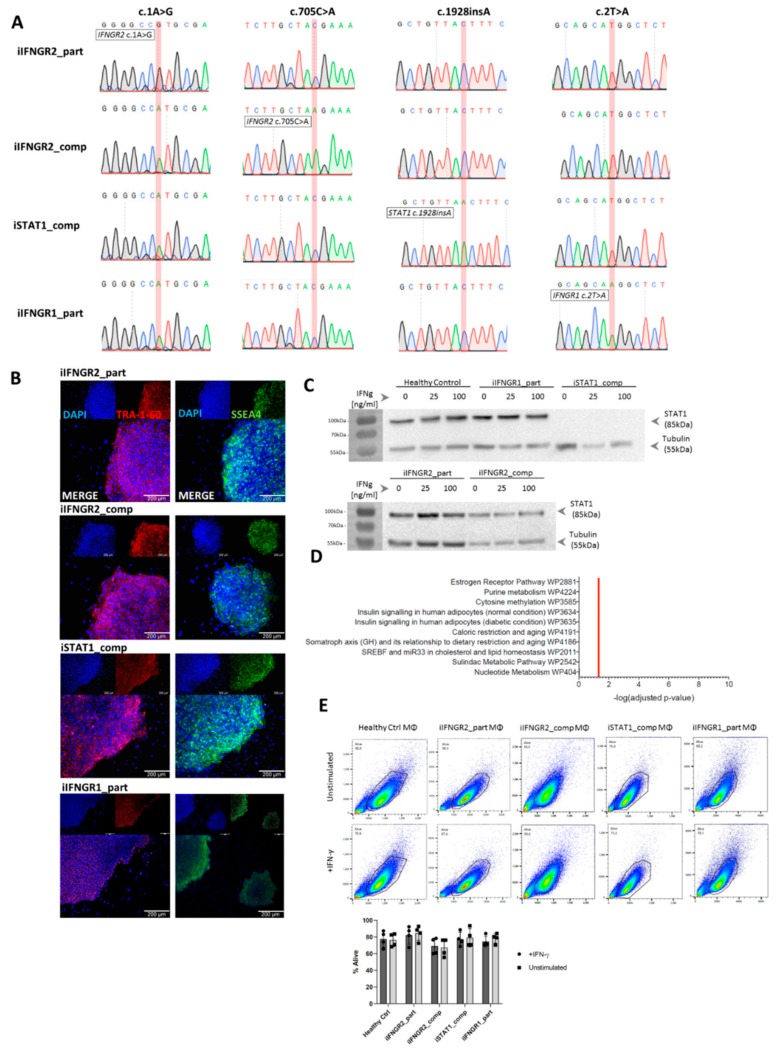
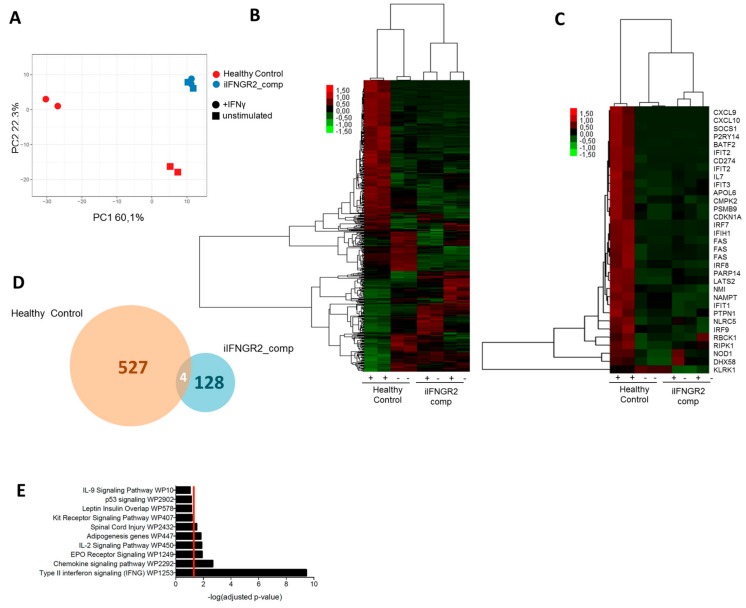
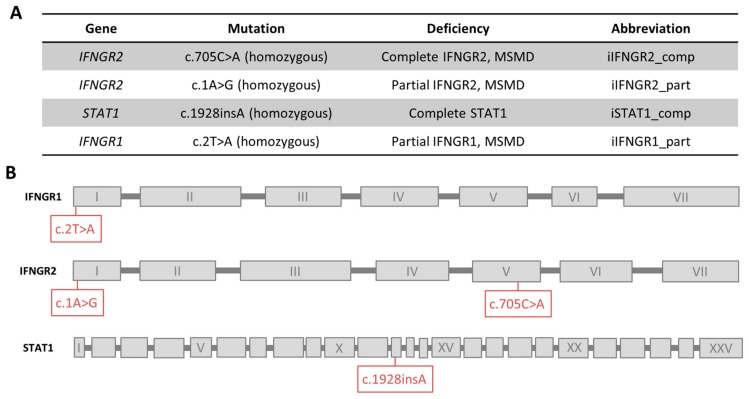
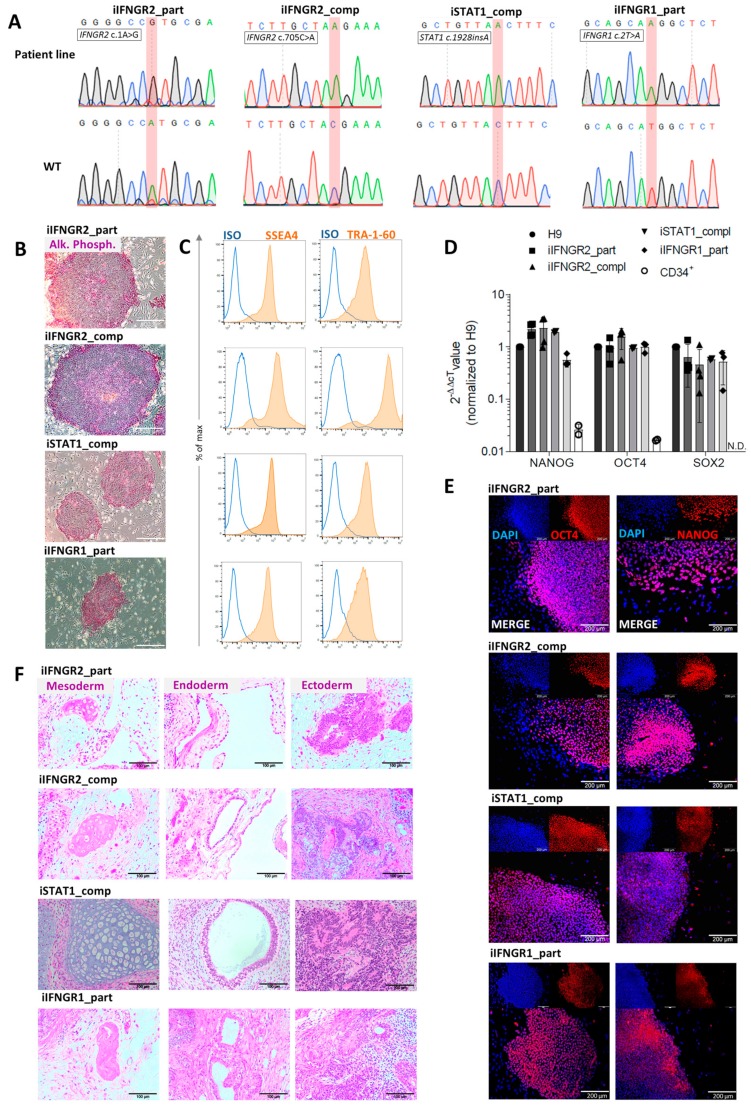
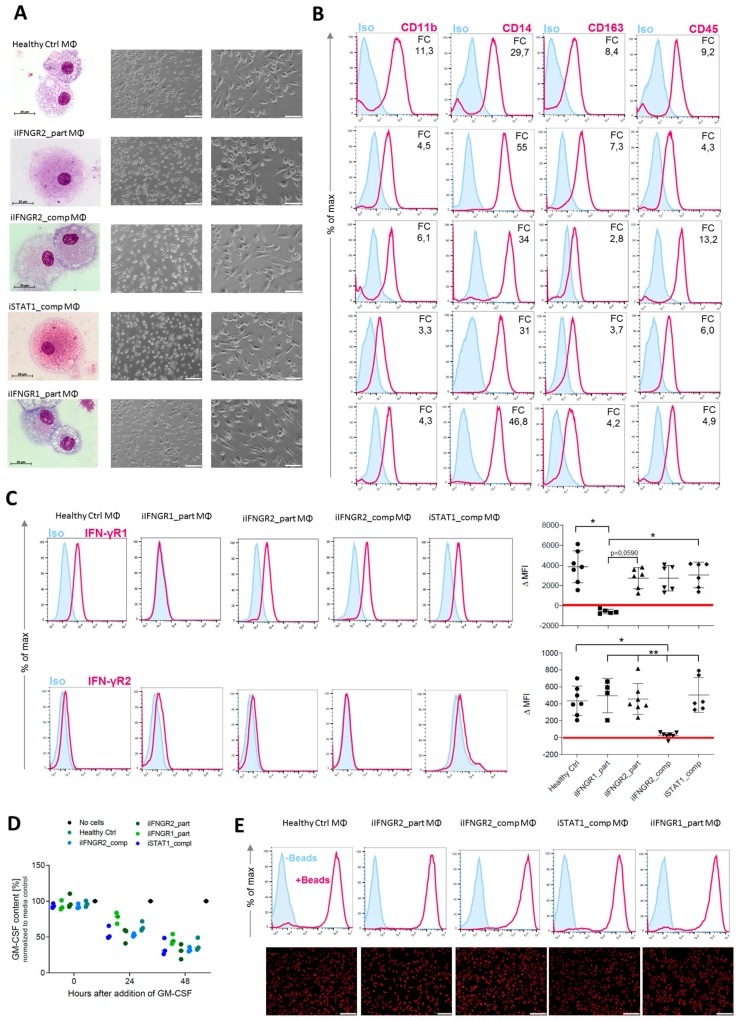
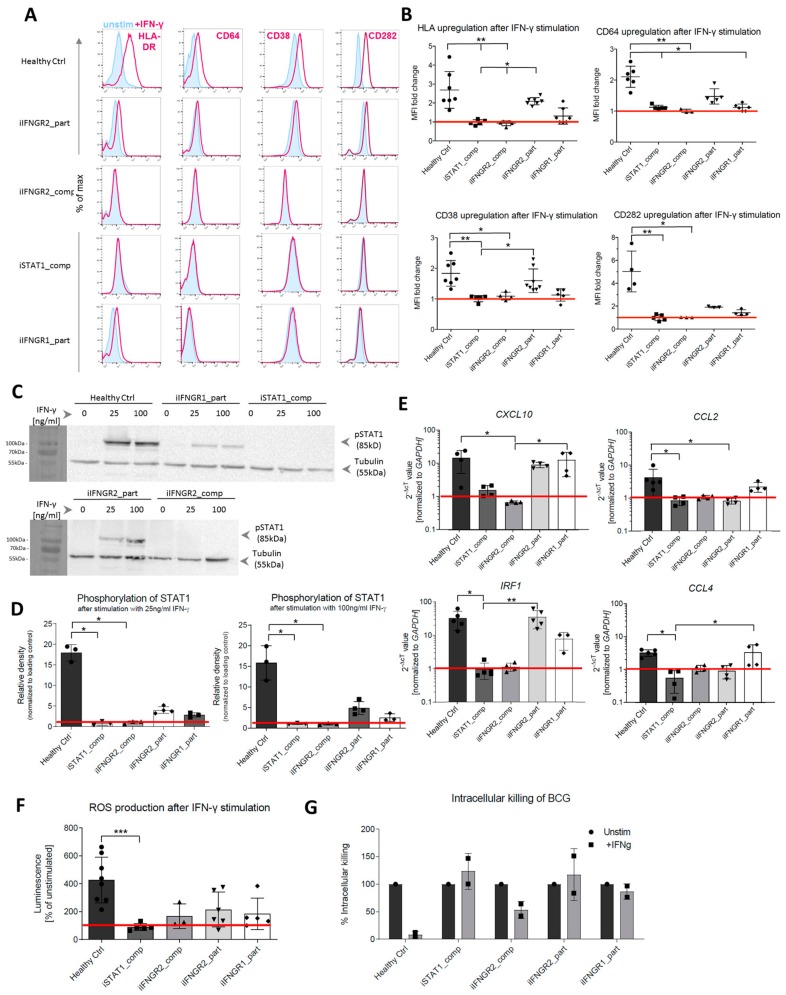
Interferon γ (IFN-γ) was shown to be a macrophage activating factor already in 1984. Consistently, inborn errors of IFN-γ immunity underlie Mendelian Susceptibility to Mycobacterial Disease (MSMD). MSMD is characterized by genetic predisposition to disease caused by weakly virulent mycobacterial species. Paradoxically, macrophages from patients with MSMD were little tested. Here, we report a disease modeling platform for studying IFN-γ related pathologies using macrophages derived from patient specific induced pluripotent stem cells (iPSCs). We used iPSCs from patients with autosomal recessive complete- and partial IFN-γR2 deficiency, partial IFN-γR1 deficiency and complete STAT1 deficiency. Macrophages from all patient iPSCs showed normal morphology and IFN-γ-independent functionality like phagocytic uptake of bioparticles and internalization of cytokines. For the IFN-γ-dependent functionalities, we observed that the deficiencies played out at various stages of the IFN-γ pathway, with the complete IFN-γR2 and complete STAT1 deficient cells showing the most severe phenotypes, in terms of upregulation of surface markers and induction of downstream targets. Although iPSC-derived macrophages with partial IFN-γR1 and IFN-γR2 deficiency still showed residual induction of downstream targets, they did not reduce the mycobacterial growth when challenged with Bacillus Calmette-Guérin. Taken together, we report a disease modeling platform to study the role of macrophages in patients with inborn errors of IFN-γ immunity.
干扰素 γ (IFN-γ) 早在 1984 年就被证明是一种巨噬细胞激活因子。一致地,IFN-γ 免疫的先天性缺陷是孟德尔对分枝杆菌病易感性 (MSMD) 的基础。MSMD 的特征是遗传易感性导致由弱毒分枝杆菌引起的疾病。矛盾的是,对 MSMD 患者的巨噬细胞进行了很少的测试。在这里,我们报告了一种使用源自患者特异性诱导多能干细胞 (iPSC) 的巨噬细胞研究 IFN-γ 相关病理学的疾病建模平台。我们使用来自常染色体隐性完全和部分 IFN-γR2 缺陷、部分 IFN-γR1 缺陷和完全 STAT1 缺陷患者的 iPSC。所有患者 iPSC 衍生的巨噬细胞均表现出正常形态和 IFN-γ 非依赖性功能,如生物颗粒的吞噬摄取和细胞因子的内化。对于 IFN-γ 依赖性功能,我们观察到缺陷在 IFN-γ 途径的各个阶段发挥作用,完全 IFN-γR2 和完全 STAT1 缺陷细胞在表面标志物上调和下游靶标的诱导方面表现出最严重的表型。尽管具有部分 IFN-γR1 和 IFN-γR2 缺陷的 iPSC 衍生巨噬细胞仍显示出下游靶标的残留诱导,但当用卡介苗挑战时,它们并未减少分枝杆菌的生长。总之,我们报告了一种疾病建模平台,用于研究 IFN-γ 免疫先天性缺陷患者中巨噬细胞的作用。