Dhakarey Rohit, Raorane Manish L, Treumann Achim, Peethambaran Preshobha K, Schendel Rachel R, Sahi Vaidurya P, Hause Bettina, Bunzel Mirko, Henry Amelia, Kohli Ajay, Riemann Michael
Molecular Cell Biology, Institute of Botany, Karlsruhe Institute of Technology, Karlsruhe, Germany.
International Rice Research Institute, Los Baños, Philippines.
Front Plant Sci. 2017 Nov 10;8:1903. doi: 10.3389/fpls.2017.01903. eCollection 2017.
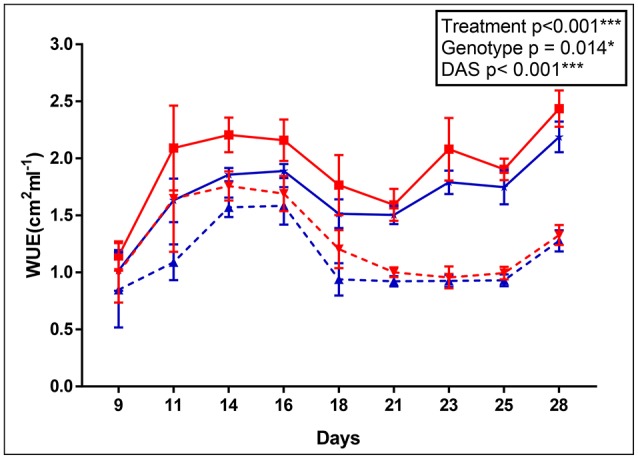
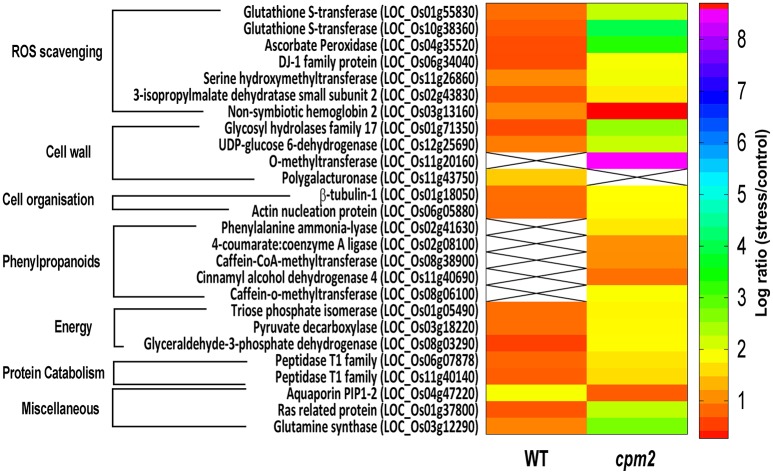
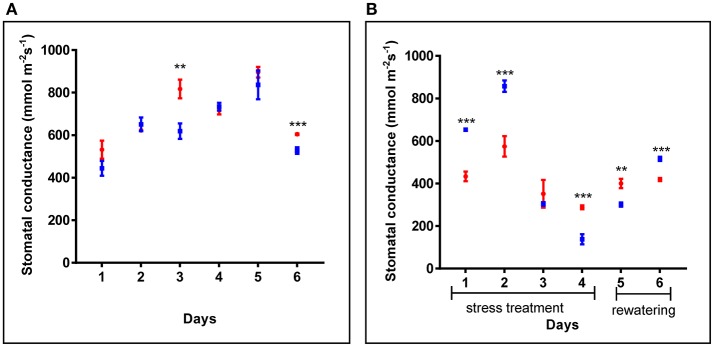
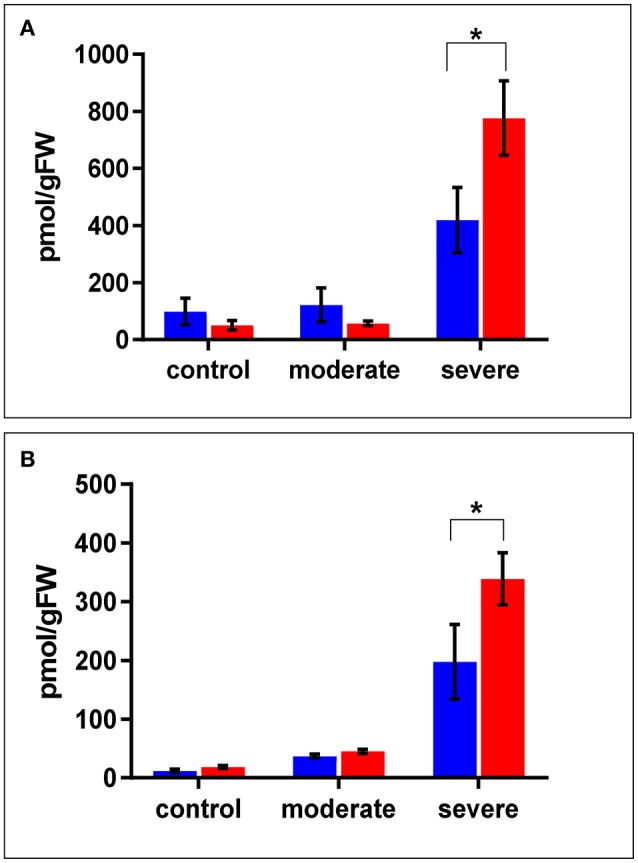
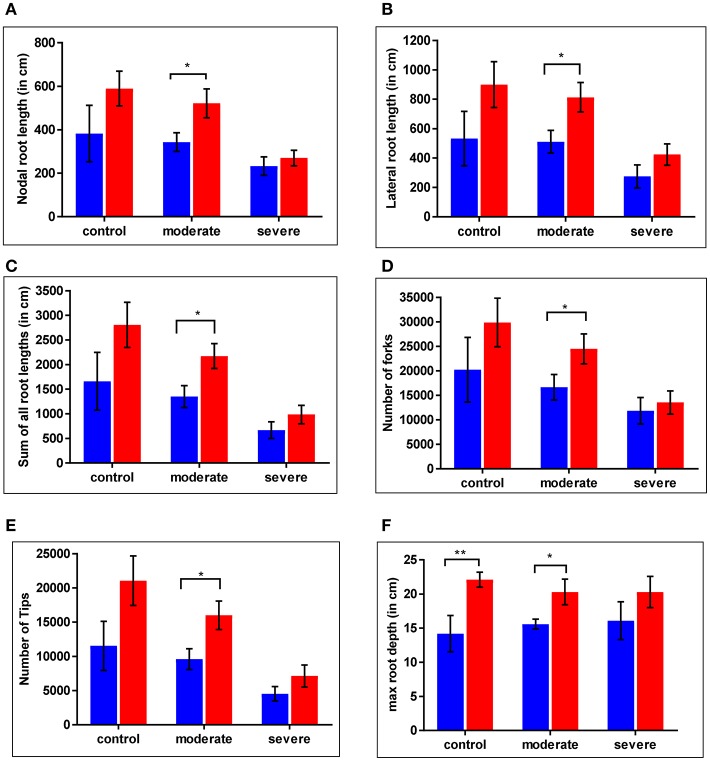
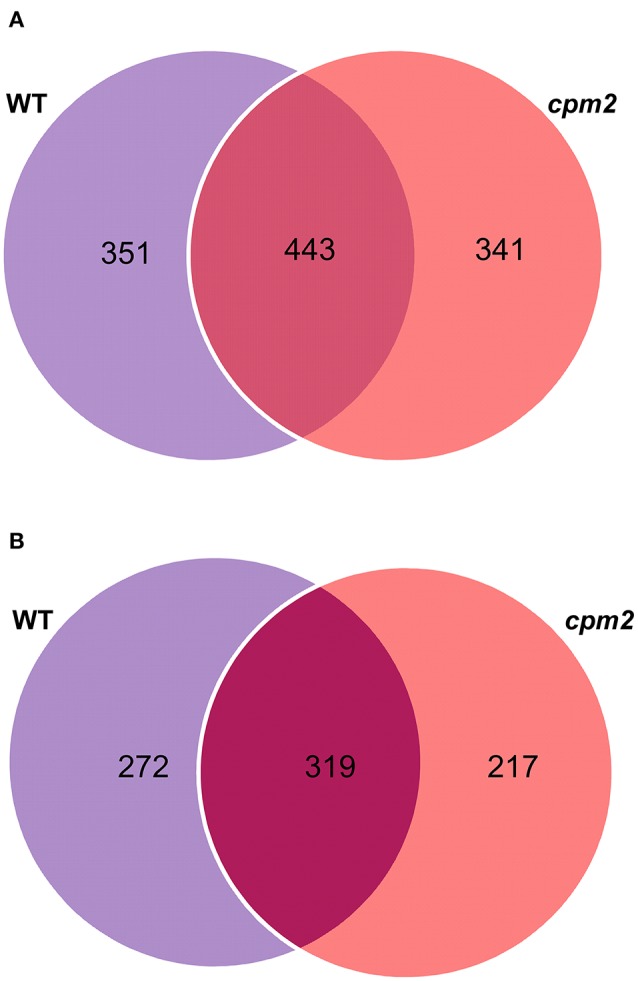
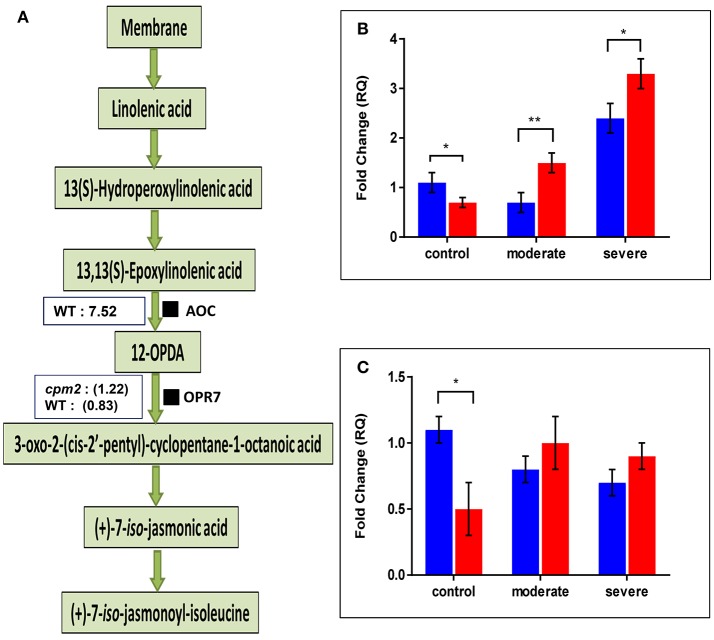
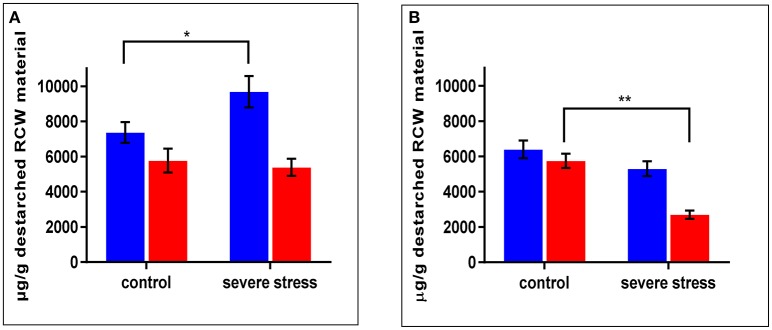
It is widely known that numerous adaptive responses of drought-stressed plants are stimulated by chemical messengers known as phytohormones. Jasmonic acid (JA) is one such phytohormone. But there are very few reports revealing its direct implication in drought related responses or its cross-talk with other phytohormones. In this study, we compared the morpho-physiological traits and the root proteome of a wild type (WT) rice plant with its JA biosynthesis mutant (, disrupted in the allene oxide cyclase (AOC) gene, for insights into the role of JA under drought. The mutant had higher stomatal conductance, higher water use efficiency and higher shoot ABA levels under severe drought as compared to the WT. Notably, roots of were better developed compared to the WT under both, control and drought stress conditions. Root proteome was analyzed using the Tandem Mass Tag strategy to better understand this difference at the molecular level. Expectedly, AOC was unique but notably highly abundant under drought in the WT. Identification of other differentially abundant proteins (DAPs) suggested increased energy metabolism (i.e., increased mobilization of resources) and reactive oxygen species scavenging in under drought. Additionally, various proteins involved in secondary metabolism, cell growth and cell wall synthesis were also more abundant in roots. Proteome-guided transcript, metabolite, and histological analyses provided further insights into the favorable adaptations and responses, most likely orchestrated by the lack of JA, in the roots. Our results in are discussed in the light of JA crosstalk to other phytohormones. These results together pave the path for understanding the precise role of JA during drought stress in rice.
众所周知,干旱胁迫植物的许多适应性反应是由被称为植物激素的化学信使刺激产生的。茉莉酸(JA)就是这样一种植物激素。但很少有报道揭示其在干旱相关反应中的直接作用或与其他植物激素的相互作用。在本研究中,我们比较了野生型(WT)水稻植株与其茉莉酸生物合成突变体(在丙二烯氧化物环化酶(AOC)基因中被破坏)的形态生理特征和根系蛋白质组,以深入了解茉莉酸在干旱条件下的作用。与野生型相比,该突变体在严重干旱条件下具有更高的气孔导度、更高的水分利用效率和更高的地上部脱落酸水平。值得注意的是,在对照和干旱胁迫条件下,该突变体的根系都比野生型发育得更好。使用串联质量标签策略分析根系蛋白质组,以在分子水平上更好地理解这种差异。不出所料,AOC是独特的,但在野生型干旱条件下显著丰富。其他差异丰富蛋白质(DAPs)的鉴定表明,在干旱条件下,该突变体的能量代谢增加(即资源动员增加)和活性氧清除增加。此外,参与次生代谢、细胞生长和细胞壁合成的各种蛋白质在该突变体根系中也更为丰富。蛋白质组引导的转录、代谢物和组织学分析进一步深入了解了该突变体根系中可能由缺乏茉莉酸协调的有利适应和反应。我们结合茉莉酸与其他植物激素的相互作用讨论了该突变体的结果。这些结果共同为理解茉莉酸在水稻干旱胁迫期间的精确作用铺平了道路。