Department of Epidemiology, Jonathan and Karin Fielding School of Public Health, University of California, Los Angeles.
Blood Systems Research Institute, and Department of Laboratory Medicine, University of California, San Francisco.
J Infect Dis. 2018 Jan 4;217(2):223-231. doi: 10.1093/infdis/jix584.
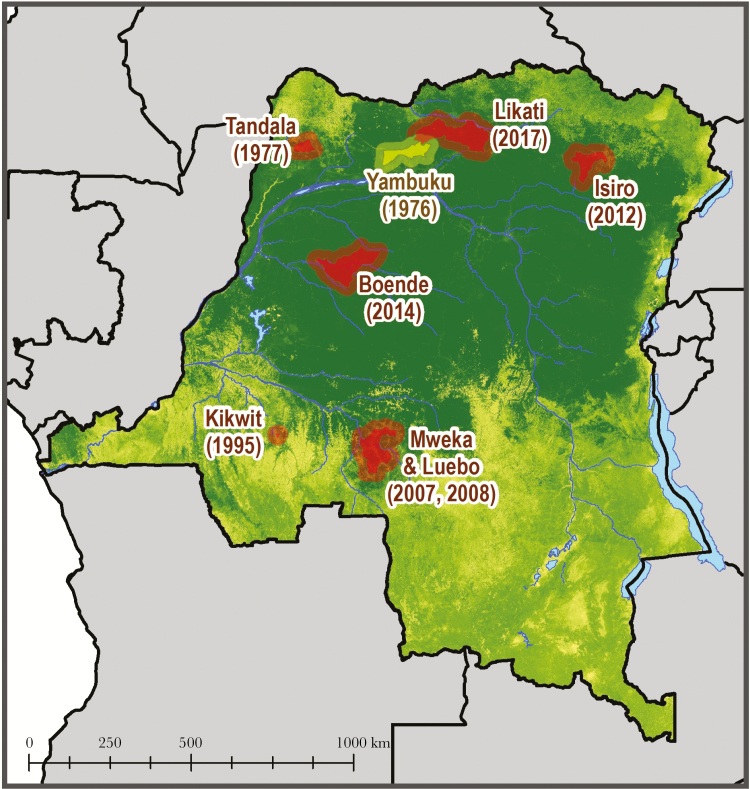
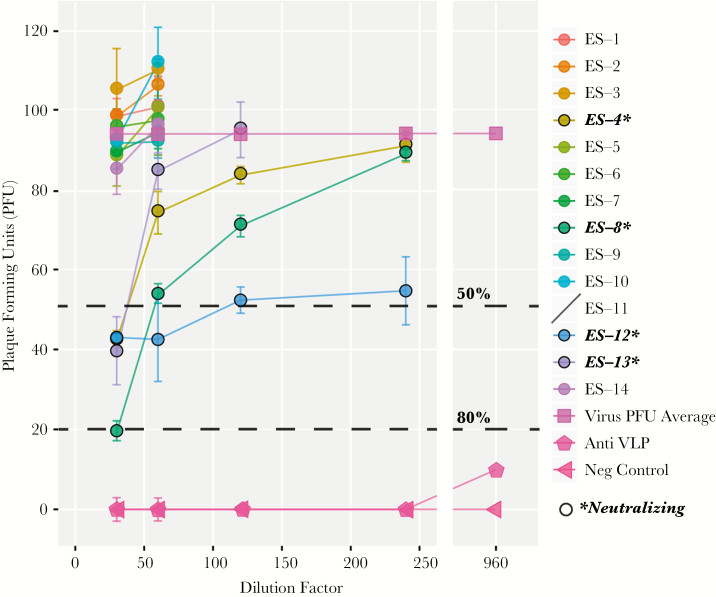
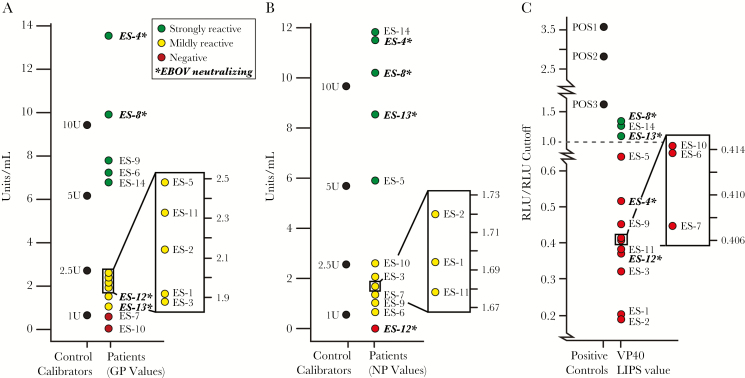
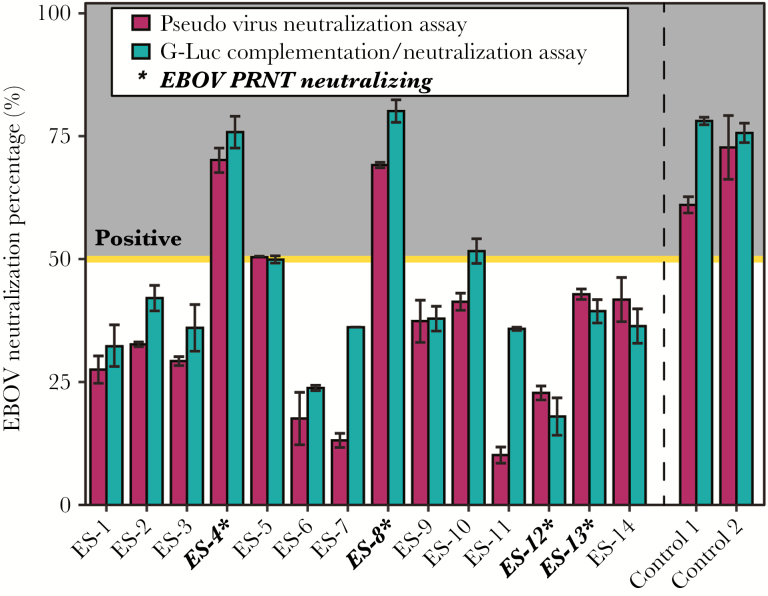
The first reported outbreak of Ebola virus disease occurred in 1976 in Yambuku, Democratic Republic of Congo. Antibody responses in survivors 11 years after infection have been documented. However, this report is the first characterization of anti-Ebola virus antibody persistence and neutralization capacity 40 years after infection. Using ELISAs we measured survivor's immunological response to Ebola virus Zaire (EBOV) glycoprotein and nucleoprotein, and assessed VP40 reactivity. Neutralization of EBOV was measured using a pseudovirus approach and plaque reduction neutralization test with live EBOV. Some survivors from the original EBOV outbreak still harbor antibodies against all 3 measures. Interestingly, a subset of these survivors' serum antibodies could still neutralize live virus 40 years postinitial infection. These data provide the longest documentation of both anti-Ebola serological response and neutralization capacity within any survivor cohort, extending the known duration of response from 11 years postinfection to at least 40 years after symptomatic infection.
首例埃博拉病毒病疫情于 1976 年在刚果民主共和国的扬布库爆发。感染 11 年后,幸存者的抗体反应已被记录在案。然而,这是在感染 40 年后首次对埃博拉病毒抗体的持久性和中和能力进行描述。我们使用 ELISA 法测量了幸存者对埃博拉病毒扎伊尔型(EBOV)糖蛋白和核蛋白的免疫反应,并评估了 VP40 的反应性。使用假病毒方法和用活的 EBOV 进行噬菌斑减少中和试验来测量 EBOV 的中和作用。最初的 EBOV 爆发中的一些幸存者仍然拥有针对所有 3 种措施的抗体。有趣的是,这些幸存者的血清抗体中的一部分仍能在初始感染后 40 年中和活病毒。这些数据提供了在任何幸存者群体中最长的埃博拉血清反应和中和能力的记录,将已知的反应持续时间从感染后 11 年延长至症状感染后至少 40 年。