Hematology/Oncology Fellowship Program, Division of Cancer Medicine, Houston, Texas, USA.
Department of Gastrointestinal Medical Oncology, Division of Cancer Medicine, Houston, Texas, USA.
Oncologist. 2018 Mar;23(3):277-e26. doi: 10.1634/theoncologist.2017-0568. Epub 2017 Dec 19.
Panitumumab has no clinical activity in metastatic RAS wild-type small bowel adenocarcinoma (SBA) and ampullary adenocarcinoma (AAC), possibly due to the foregut and midgut derivation of small bowel and ampulla.These results, along with findings from genomic characterization of SBA, suggest that SBA represents a unique intestinal malignancy and treatments should not be habitually extrapolated from colorectal cancer.Further studies evaluating the benefit of targeted therapies exclusively in SBA and AAC are warranted.
Given the benefit of epidermal growth factor receptor (EGFR) monoclonal antibodies in colorectal cancer (CRC), we sought to evaluate the efficacy of panitumumab in metastatic RAS wild-type small bowel adenocarcinoma (SBA) and ampullary adenocarcinoma (AAC).
We conducted a single-center, open-label, single-arm, Bayesian phase II trial. The primary objective was response rate (RR). Panitumumab was administered at a dose of 6 mg/kg intravenously (IV) every 14 days.
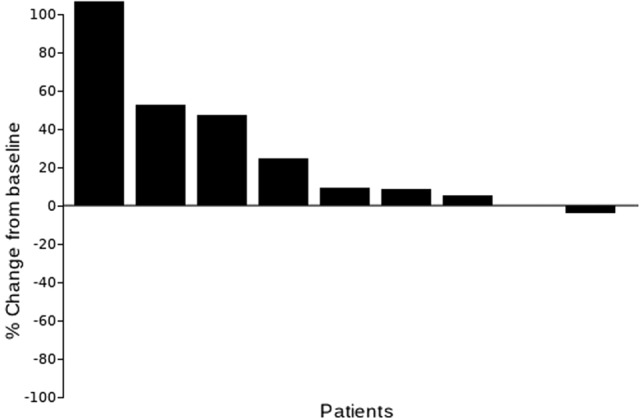
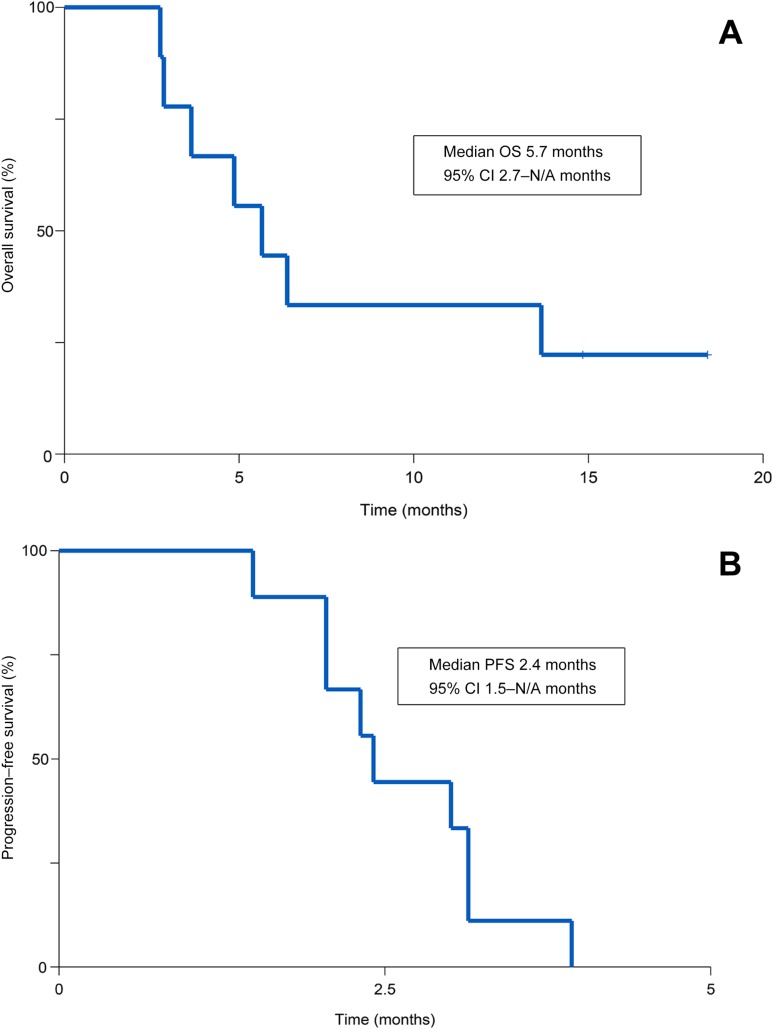
Nine patients (male/female 7:2, median age: 61 years [range: 40-74], Eastern Cooperative Oncology Group [ECOG] performance status 0/1: 2/7) were enrolled from September 2013 to October 2015. One patient had AAC (pancreaticobiliary subtype) and eight patients had SBA (three duodenal, five jejunal/ileal). Acneiform rash was the most common toxicity. The study was stopped early due to futility with no responses, stable disease (SD) in two patients, and progression of disease (PD) in seven patients. Median progression-free survival (PFS) and overall survival (OS) were 2.4 and 5.7 months, respectively. No patients had extended RAS mutations (exons 2/3/4), but two patients had BRAF G469A and one patient had PIK3CA H1074R mutations.
Panitumumab had no clinically meaningful activity in patients with metastatic RAS wild-type SBA and AAC. Our findings may relate to the primarily midgut and foregut derivation of the small bowel and ampulla.
帕尼单抗在转移性 RAS 野生型小肠腺癌(SBA)和壶腹腺癌(AAC)中没有临床活性,这可能是由于小肠和壶腹源自前肠和中肠。这些结果以及 SBA 的基因组特征分析结果表明,SBA 代表一种独特的肠道恶性肿瘤,治疗方法不应习惯性地从结直肠癌外推。进一步研究评估专门针对 SBA 和 AAC 的靶向治疗的获益是有必要的。
鉴于表皮生长因子受体(EGFR)单克隆抗体在结直肠癌(CRC)中的获益,我们试图评估帕尼单抗在转移性 RAS 野生型小肠腺癌(SBA)和壶腹腺癌(AAC)中的疗效。
我们进行了一项单中心、开放标签、单臂、贝叶斯二期试验。主要终点是缓解率(RR)。帕尼单抗以 6mg/kg 静脉(IV)每 14 天一次的剂量给药。
从 2013 年 9 月至 2015 年 10 月,共纳入 9 名患者(男/女 7:2,中位年龄:61 岁[范围:40-74],东部合作肿瘤学组[ECOG]表现状态 0/1:2/7)。1 例为 AAC(胰胆管亚型),8 例为 SBA(3 例十二指肠,5 例空肠/回肠)。痤疮样皮疹是最常见的毒性反应。由于无应答、2 例患者病情稳定(SD)和 7 例患者病情进展(PD),研究提前停止,结果无效。中位无进展生存期(PFS)和总生存期(OS)分别为 2.4 和 5.7 个月。没有患者存在扩展 RAS 突变(外显子 2/3/4),但 2 例患者存在 BRAF G469A 突变,1 例患者存在 PIK3CA H1074R 突变。
帕尼单抗在转移性 RAS 野生型 SBA 和 AAC 患者中无临床意义的活性。我们的发现可能与小肠和壶腹主要源自中肠和前肠有关。