Dana-Farber Cancer Institute, Boston, MA, 02215, USA.
Broad Institute of Harvard and MIT, Cambridge, MA, 02142, USA.
Nat Commun. 2017 Dec 19;8(1):2193. doi: 10.1038/s41467-017-02320-7.
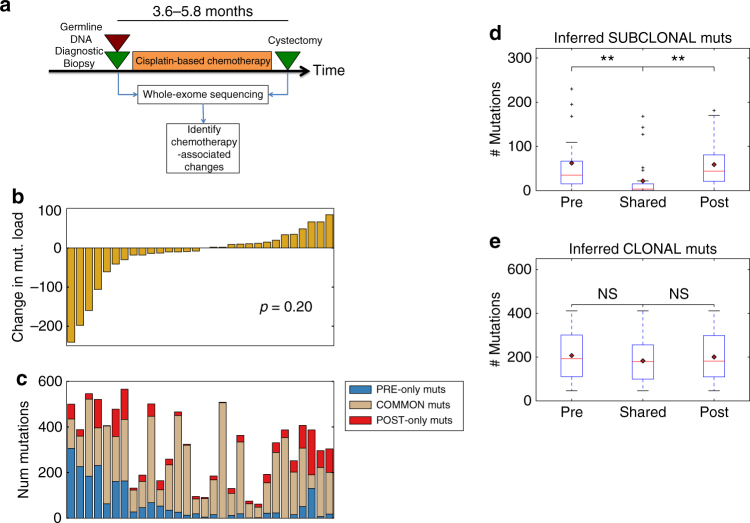
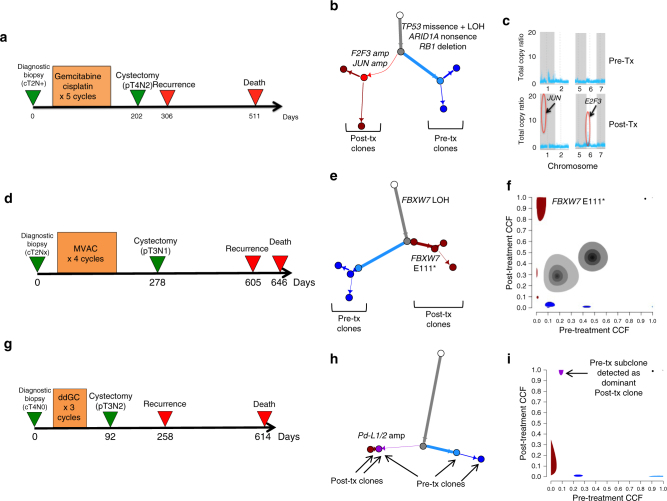
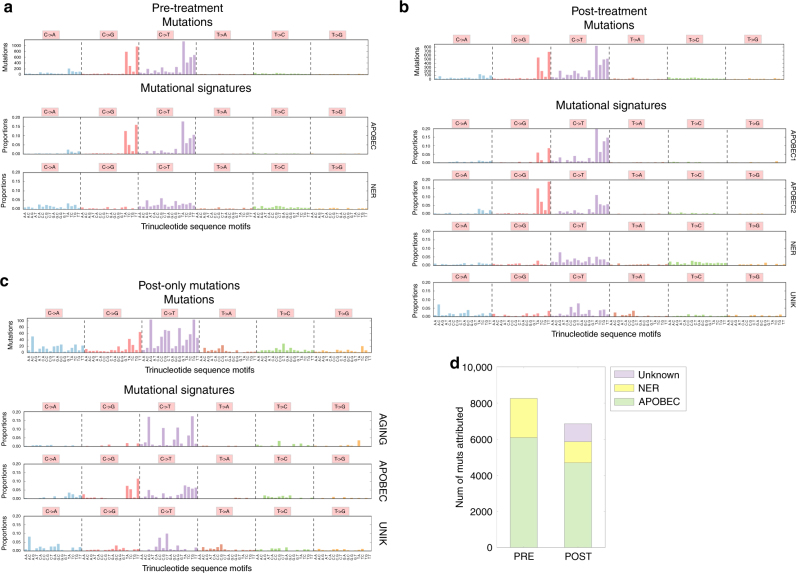
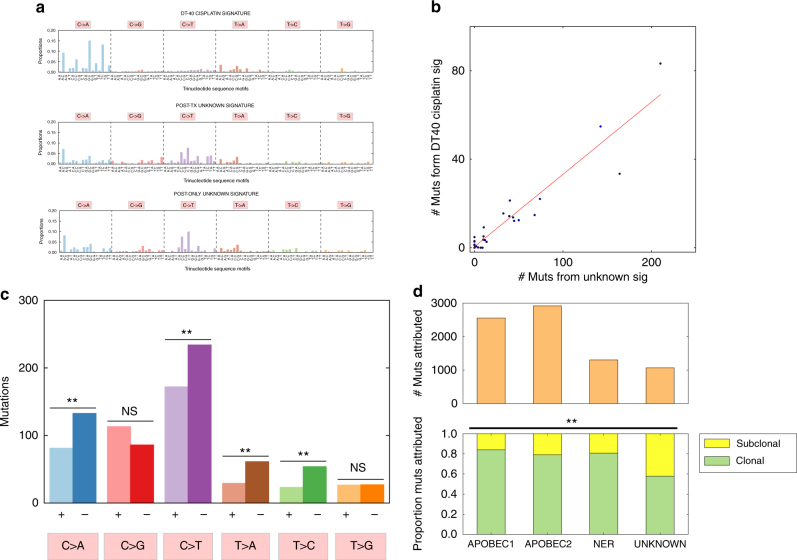
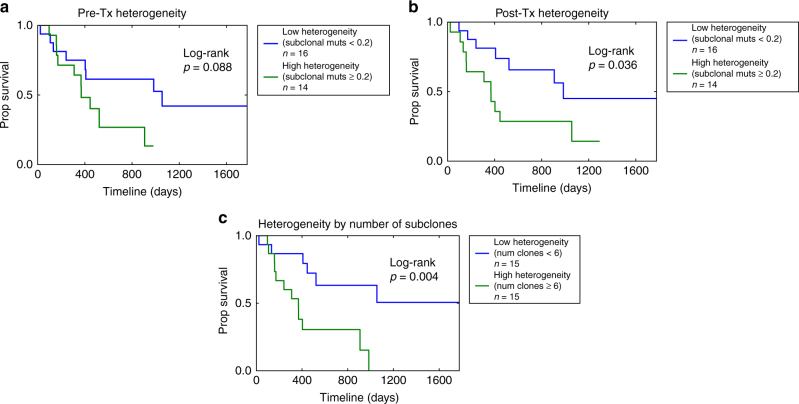
Despite continued widespread use, the genomic effects of cisplatin-based chemotherapy and implications for subsequent treatment are incompletely characterized. Here, we analyze whole exome sequencing of matched pre- and post-neoadjuvant cisplatin-based chemotherapy primary bladder tumor samples from 30 muscle-invasive bladder cancer patients. We observe no overall increase in tumor mutational burden post-chemotherapy, though a significant proportion of subclonal mutations are unique to the matched pre- or post-treatment tumor, suggesting chemotherapy-induced and/or spatial heterogeneity. We subsequently identify and validate a novel mutational signature in post-treatment tumors consistent with known characteristics of cisplatin damage and repair. We find that post-treatment tumor heterogeneity predicts worse overall survival, and further observe alterations in cell-cycle and immune checkpoint regulation genes in post-treatment tumors. These results provide insight into the clinical and genomic dynamics of tumor evolution with cisplatin-based chemotherapy, suggest mechanisms of clinical resistance, and inform development of clinically relevant biomarkers and trials of combination therapies.
尽管顺铂为基础的化疗仍被广泛应用,但这种治疗对基因组的影响及其对后续治疗的影响还不完全清楚。在这里,我们分析了 30 名肌层浸润性膀胱癌患者的新辅助顺铂化疗前后配对的原发性膀胱癌样本的外显子组测序。我们观察到化疗后肿瘤突变负担没有总体增加,尽管亚克隆突变的很大一部分是治疗前或后肿瘤所特有的,提示化疗诱导和/或空间异质性。随后,我们在治疗后的肿瘤中鉴定并验证了一个新的突变特征,与顺铂损伤和修复的已知特征一致。我们发现治疗后肿瘤异质性预测总体生存率较差,并且在治疗后的肿瘤中进一步观察到细胞周期和免疫检查点调节基因的改变。这些结果为基于顺铂的化疗治疗肿瘤进化的临床和基因组动态提供了深入了解,提示了临床耐药的机制,并为开发临床相关的生物标志物和联合治疗试验提供了信息。