Tono Toshihiro, Aihara Satoko, Hoshiyama Takayuki, Arinuma Yoshiyuki, Nagai Tatsuo, Hirohata Shunsei
Department of Rheumatology and Infectious Diseases, Kitasato University School of Medicine, 1-15-1 Kitasato, Minami-ku, Sagamihara, Kanagawa 252-0374 Japan.
Inflamm Regen. 2017 Nov 6;37:24. doi: 10.1186/s41232-017-0054-5. eCollection 2017.
Abatacept, a CTLA4-Ig fusion protein attenuates T cell activation by inhibiting the CD80/86-CD28 costimulatory pathway that is required for the proper T cell activation and thus displays beneficial effects in the treatment of rheumatoid arthritis (RA). Although some studies have disclosed the in vitro effects of this biological agent on the immune-competent cells, the precise mechanisms of action in RA still remain unclear. The current studies were therefore undertaken to explore the effects of abatacept on monocytes in detail.
Monocytes from healthy donors were cultured in the presence of staphylococcal enterotoxin B (SEB) with pharmacologically attainable concentrations of abatacept or control IgG-Fc. The expression of CD80 and CD86 and the induction of apoptosis of monocytes were measured by flow cytometry. The expression of CD80 and CD86 messenger RNA (mRNA) was determined by quantitative RT-PCR.
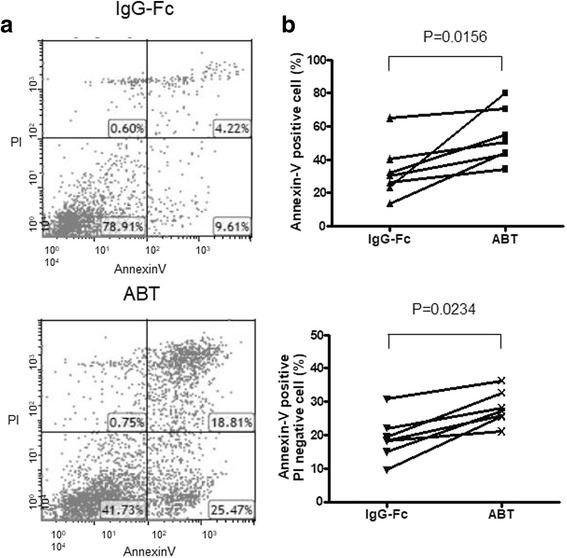
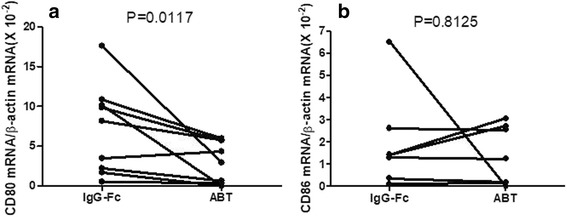
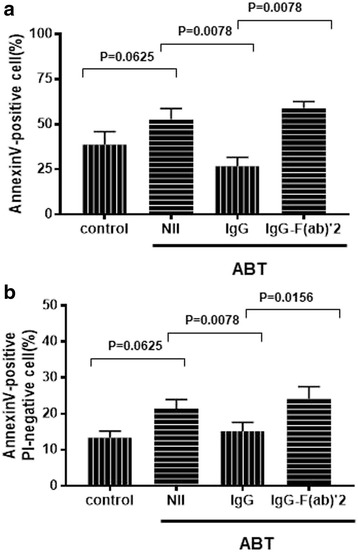
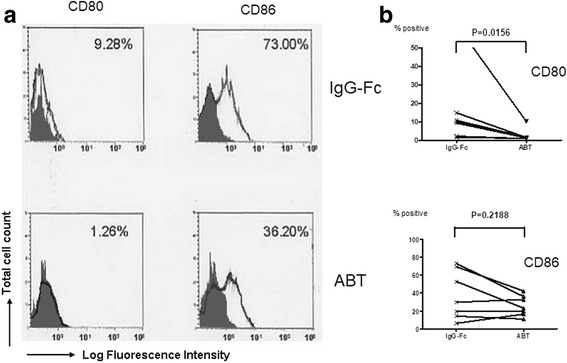
Abatacept promoted apoptosis of SEB-stimulated monocytes. The induction of apoptosis of monocytes by these biological agents was reversed by the addition of IgG, but not IgG-F(ab') fragments. Furthermore, abatacept significantly suppressed the expression of CD80, but not that of CD86 at protein levels. Finally, abatacept significantly suppressed the expression of mRNA for CD80 of monocytes stimulated with SEB, but not that of CD86.
These results demonstrate that one of the mechanisms of action of abatacept involves the induction of apoptosis of monocytes, which involves interaction with Fc receptor on monocytes. Moreover, the data also demonstrate that abatacept selectively suppresses the expression of CD80 at mRNA levels.
阿巴西普是一种CTLA4-Ig融合蛋白,通过抑制CD80/86-CD28共刺激途径来减弱T细胞活化,而该途径是T细胞正常活化所必需的,因此在类风湿关节炎(RA)治疗中显示出有益效果。尽管一些研究已揭示了这种生物制剂对免疫活性细胞的体外作用,但在RA中的精确作用机制仍不清楚。因此,开展了当前这些研究以详细探讨阿巴西普对单核细胞的影响。
将来自健康供体的单核细胞在存在金黄色葡萄球菌肠毒素B(SEB)的情况下,用药理学上可达到的阿巴西普浓度或对照IgG-Fc进行培养。通过流式细胞术测量CD80和CD86的表达以及单核细胞凋亡的诱导情况。通过定量RT-PCR测定CD80和CD86信使核糖核酸(mRNA)的表达。
阿巴西普促进了SEB刺激的单核细胞凋亡。添加IgG可逆转这些生物制剂对单核细胞凋亡的诱导,但添加IgG-F(ab')片段则不能。此外,阿巴西普在蛋白质水平上显著抑制了CD80的表达,但未抑制CD86的表达。最后,阿巴西普显著抑制了SEB刺激的单核细胞中CD80的mRNA表达,但未抑制CD86的mRNA表达。
这些结果表明,阿巴西普的作用机制之一涉及诱导单核细胞凋亡,这涉及与单核细胞上的Fc受体相互作用。此外,数据还表明阿巴西普在mRNA水平上选择性抑制CD80的表达。