Sosa-Barrios R Haridian, Burguera Victor, Rodriguez-Mendiola Nuria, Galeano Cristina, Elias Sandra, Ruiz-Roso Gloria, Jimenez-Alvaro Sara, Liaño Fernando, Rivera-Gorrin Maite
Nephrology Department. Ramon y Cajal University Hospital, Madrid, Spain.
Spanish Group of Diagnostic and Interventional Nephrology, Spanish Society of Nephrology, Madrid, Spain.
BMC Nephrol. 2017 Dec 20;18(1):365. doi: 10.1186/s12882-017-0786-0.
Percutaneous renal biopsy (PRB) is an important technique providing relevant information to guide diagnosis and treatment in renal disease. As an invasive procedure it has complications. Most studies up to date have analysed complications related to bleeding. We report the largest single-center experience on routine Doppler ultrasound (US) assessment post PRB, showing incidence and natural history of arteriovenous fistulae (AVF) post PRB.
We retrospectively analysed 327 consecutive adult PRB performed at Ramon Cajal University Hospital between January 2011 and December 2014. All biopsies were done under real-time US guidance by a trained nephrologist. Routine Doppler mapping and kidney US was done within 24 h post biopsy regardless of symptoms. Comorbidities, full blood count, clotting, bleeding time and blood pressure were recorded at the time of biopsy. Post biopsy protocol included vitals and urine void checked visually for haematuria. Logistic regression was used to investigate links between AVF, needle size, correcting for potential confounding variables.
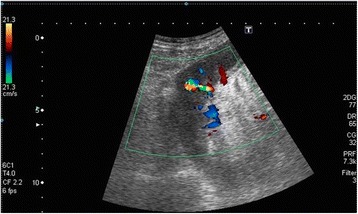
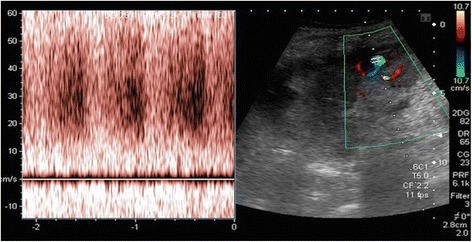
46,5% were kidney transplants and 53,5% were native biopsies. Diagnostic material was obtained in 90,5% (142 grafts and 154 native). Forty-seven AVF's (14.37%) were identified with routine kidney Doppler mapping, 95% asymptomatic (n = 45), 28 in grafts (18.4%) and 17 natives (9.7%) (p-value 0.7). Both groups were comparable in terms of comorbidities, passes, cylinders or biopsy yield (p-value NS). 80% were <1 cm in size and 46.6% closed spontaneously in less than 30 days (range 3-151). Larger AVF's (1-2 cm) took a mean of 52 days to closure (range 13-151). Needle size was not statistically significant factor for AVF (p-value 0.71).
Contrary to historical data published, AVF's are a common complication post PRB that can be easily missed. Routine US Doppler mapping performed by trained staff is a cost-effective, non-invasive tool to diagnose and follow up AVF's, helping to assess management.
经皮肾活检(PRB)是一项重要技术,可为肾脏疾病的诊断和治疗提供相关信息。作为一种侵入性操作,它存在并发症。迄今为止,大多数研究分析了与出血相关的并发症。我们报告了关于PRB术后常规多普勒超声(US)评估的最大单中心经验,展示了PRB术后动静脉瘘(AVF)的发生率和自然病程。
我们回顾性分析了2011年1月至2014年12月在拉蒙·卡哈尔大学医院连续进行的327例成人PRB。所有活检均在经过培训的肾病学家实时超声引导下进行。无论有无症状,均在活检后24小时内进行常规多普勒成像和肾脏超声检查。在活检时记录合并症、全血细胞计数、凝血、出血时间和血压。活检后方案包括检查生命体征和肉眼观察尿液中是否有血尿。采用逻辑回归分析来研究AVF、针大小之间的联系,并校正潜在的混杂变量。
46.5%为肾移植患者,53.5%为自体肾活检患者。90.5%(142例移植肾和154例自体肾)获取到了诊断材料。通过常规肾脏多普勒成像发现47例AVF(14.37%),95%无症状(n = 45),其中28例在移植肾中(18.4%),17例在自体肾中(9.7%)(p值0.7)。两组在合并症、穿刺次数、柱状组织或活检取材率方面具有可比性(p值无统计学意义)。80%的AVF大小<1 cm,46.6%在30天内(范围3 - 151天)自发闭合。较大的AVF(1 - 2 cm)平均52天闭合(范围13 - 151天)。针大小对AVF而言不是统计学上的显著因素(p值0.71)。
与已发表的历史数据相反,AVF是PRB术后常见的并发症,很容易被漏诊。由经过培训的人员进行常规超声多普勒成像,是诊断和随访AVF的一种经济有效的非侵入性工具,有助于评估治疗管理。