Weddell Jared C, Chen Si, Imoukhuede P I
Department of Bioengineering, University of Illinois at Urbana-Champaign, Urbana, IL 61801 USA.
NPJ Syst Biol Appl. 2017 Dec 19;4:1. doi: 10.1038/s41540-017-0037-9. eCollection 2018.
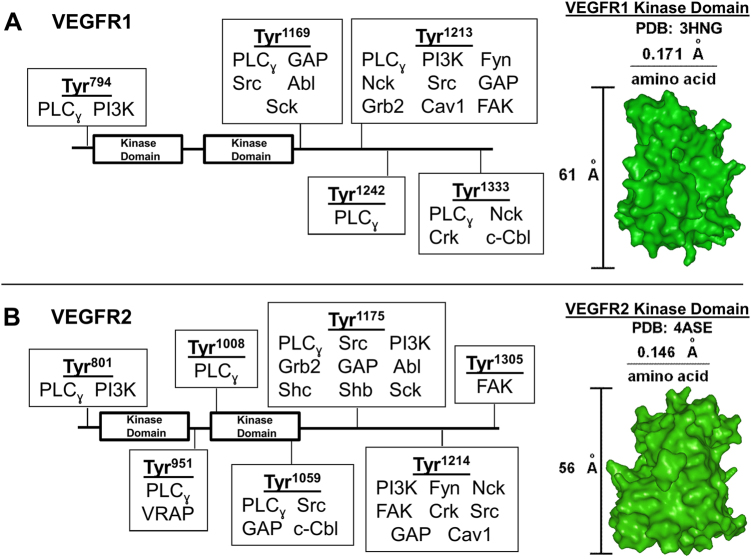
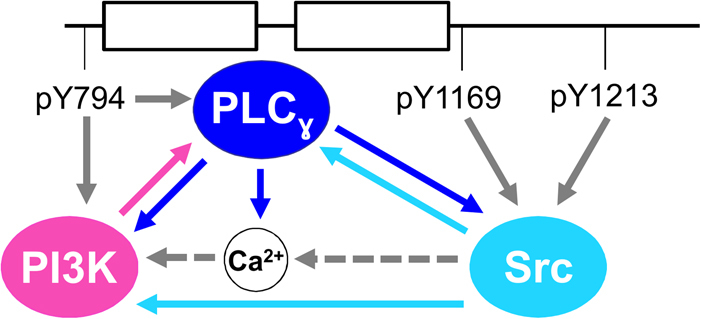
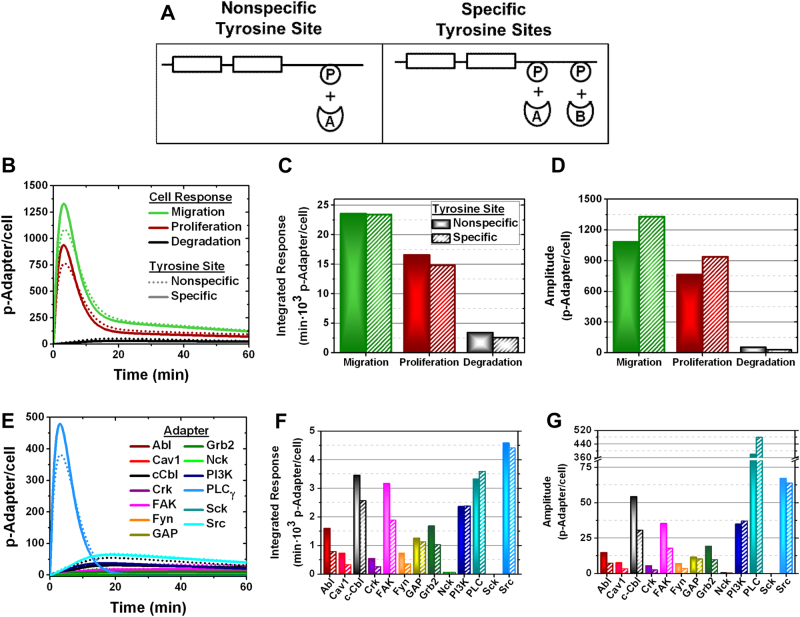
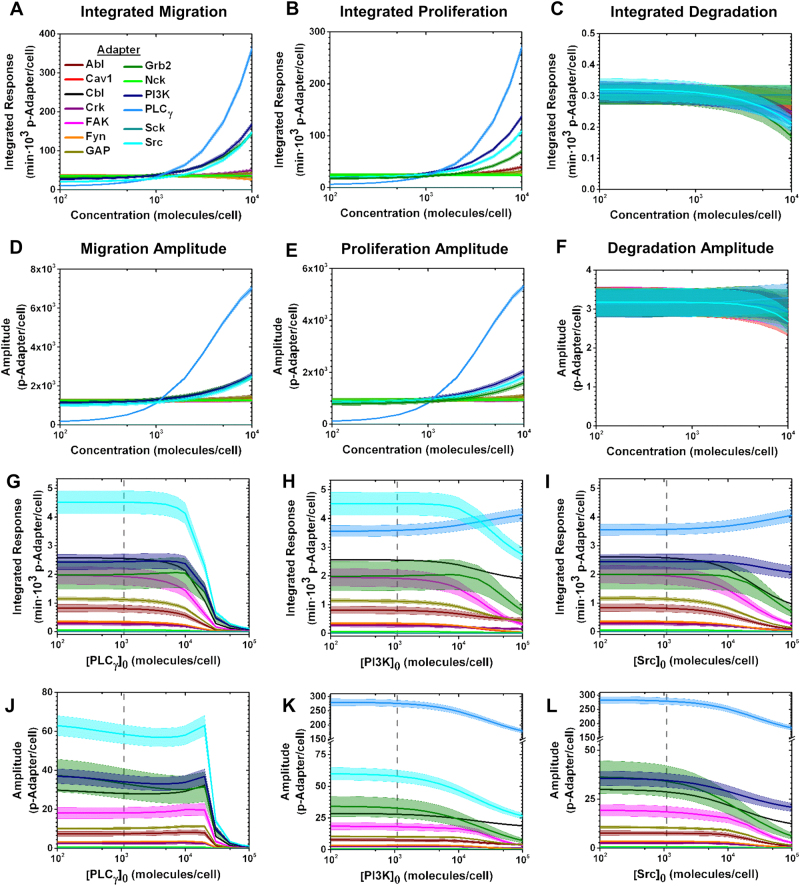
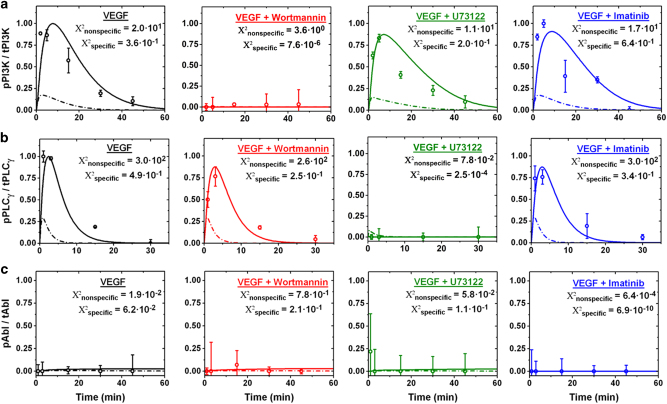
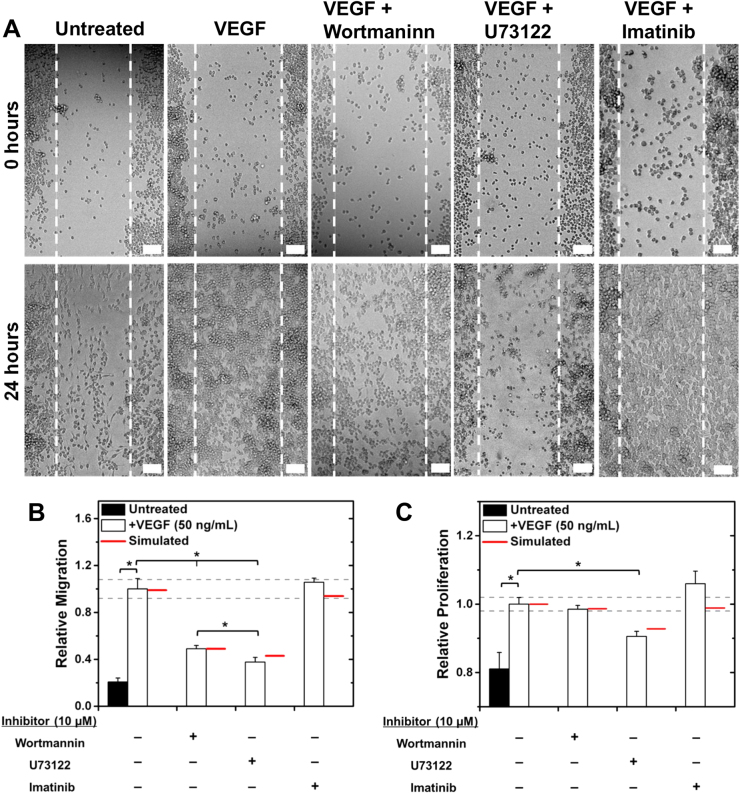
The ability to control vascular endothelial growth factor (VEGF) signaling offers promising therapeutic potential for vascular diseases and cancer. Despite this promise, VEGF-targeted therapies are not clinically effective for many pathologies, such as breast cancer. VEGFR1 has recently emerged as a predictive biomarker for anti-VEGF efficacy, implying a functional VEGFR1 role beyond its classically defined decoy receptor status. Here we introduce a computational approach that accurately predicts cellular responses elicited via VEGFR1 signaling. Aligned with our model prediction, we show empirically that VEGFR1 promotes macrophage migration through PLC and PI3K pathways and promotes macrophage proliferation through a PLC pathway. These results provide new insight into the basic function of VEGFR1 signaling while offering a computational platform to quantify signaling of any receptor.
控制血管内皮生长因子(VEGF)信号传导的能力为血管疾病和癌症提供了有前景的治疗潜力。尽管有此前景,但VEGF靶向疗法对许多病症(如乳腺癌)在临床上并不有效。VEGFR1最近已成为抗VEGF疗效的预测生物标志物,这意味着VEGFR1的功能超出了其经典定义的诱饵受体状态。在此,我们介绍一种计算方法,该方法可准确预测通过VEGFR1信号传导引发的细胞反应。与我们的模型预测一致,我们通过实验表明,VEGFR1通过PLC和PI3K途径促进巨噬细胞迁移,并通过PLC途径促进巨噬细胞增殖。这些结果为VEGFR1信号传导的基本功能提供了新的见解,同时提供了一个计算平台来量化任何受体的信号传导。