Colombo Daniele F, Burger Lukas, Baubec Tuncay, Schübeler Dirk
Friedrich Miescher Institute for Biomedical Research, Basel, Switzerland.
Faculty of Science, University of Basel, Basel, Switzerland.
PLoS Genet. 2017 Dec 21;13(12):e1007102. doi: 10.1371/journal.pgen.1007102. eCollection 2017 Dec.
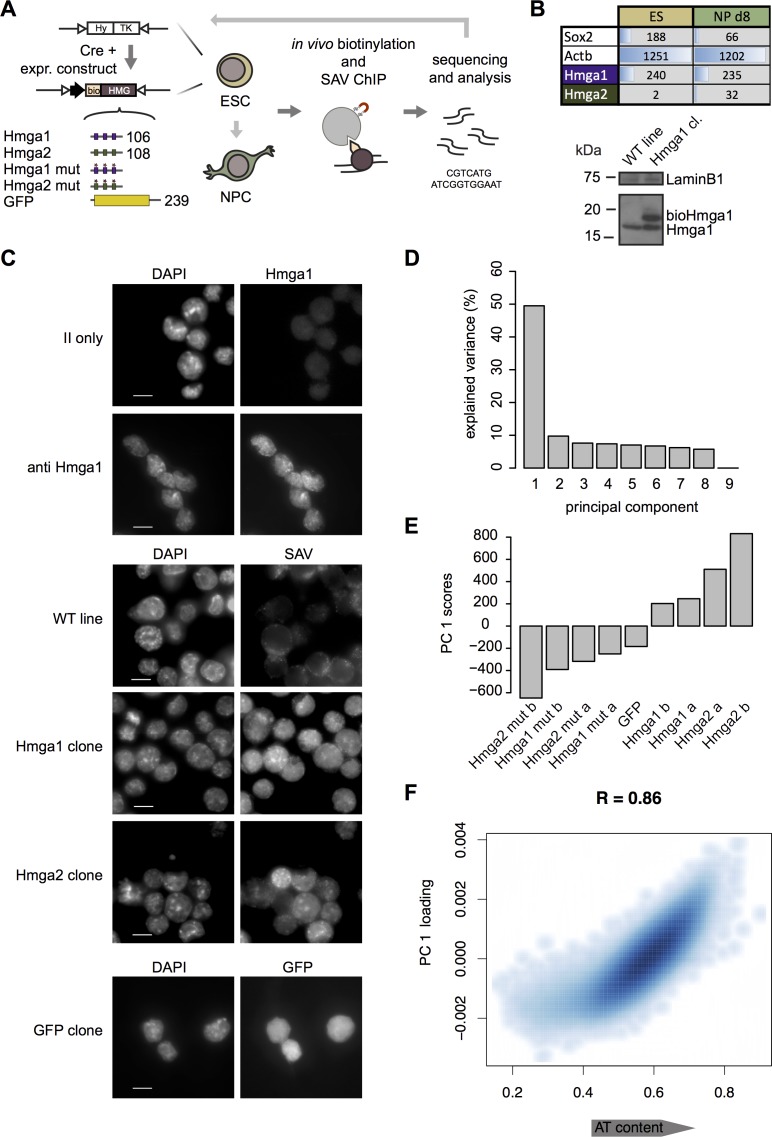
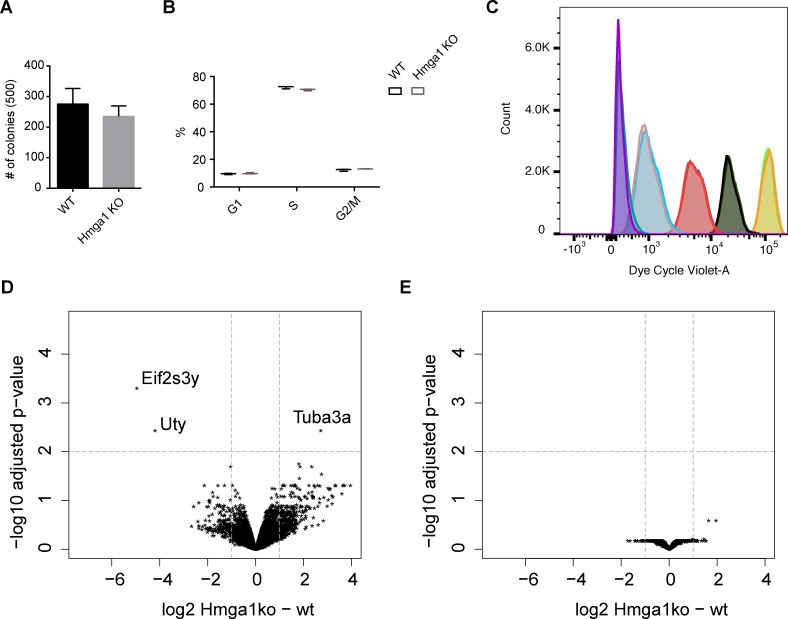
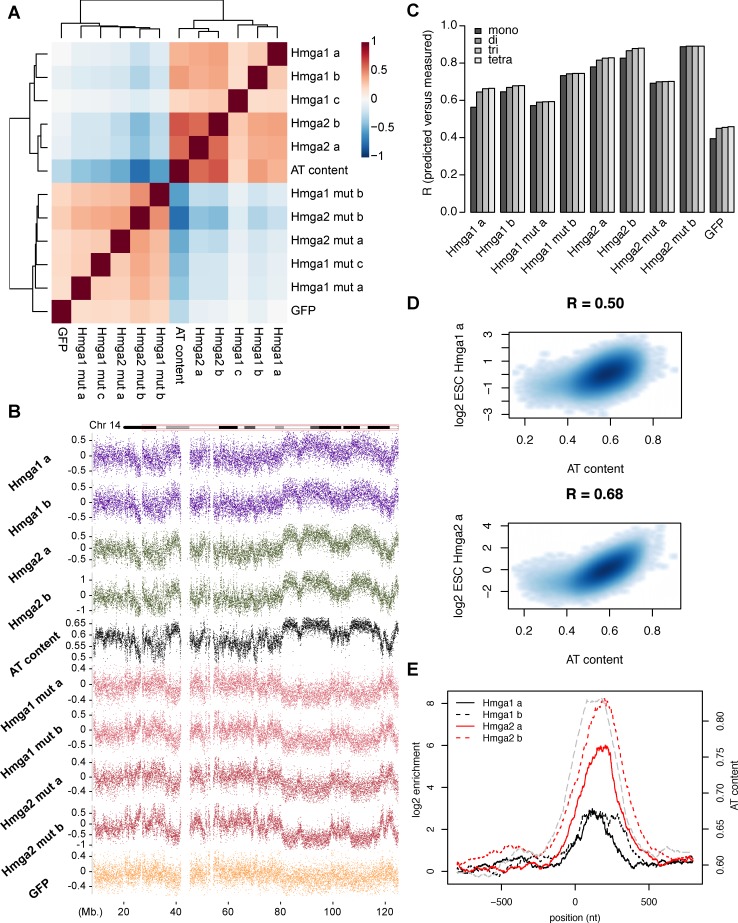
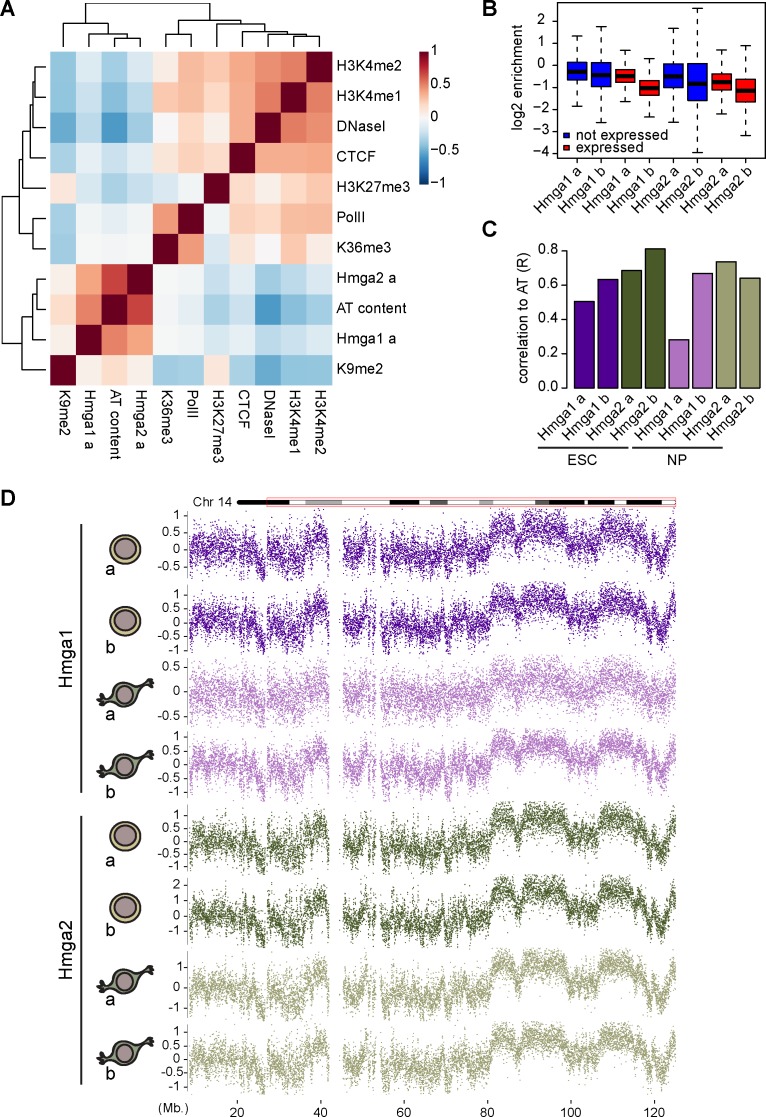
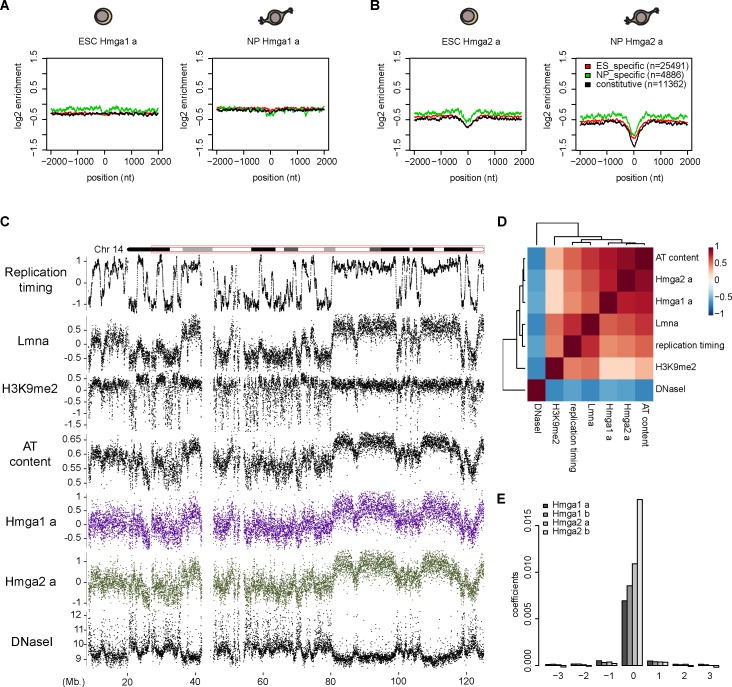
Genomic location can inform on potential function and recruitment signals for chromatin-associated proteins. High mobility group (Hmg) proteins are of similar size as histones with Hmga1 and Hmga2 being particularly abundant in replicating normal tissues and in cancerous cells. While several roles for Hmga proteins have been proposed we lack a comprehensive description of their genomic location as a function of chromatin, DNA sequence and functional domains. Here we report such a characterization in mouse embryonic stem cells in which we introduce biotin-tagged constructs of wild-type and DNA-binding domain mutants. Comparative analysis of the genome-wide distribution of Hmga proteins reveals pervasive binding, a feature that critically depends on a functional DNA-binding domain and which is shared by both Hmga proteins. Assessment of the underlying queues instructive for this binding modality identifies AT richness, defined as high frequency of A or T bases, as the major criterion for local binding. Additionally, we show that other chromatin states such as those linked to cis-regulatory regions have little impact on Hmga binding both in stem and differentiated cells. As a consequence, Hmga proteins are preferentially found at AT-rich regions such as constitutively heterochromatic regions but are absent from enhancers and promoters arguing for a limited role in regulating individual genes. In line with this model, we show that genetic deletion of Hmga proteins in stem cells causes limited transcriptional effects and that binding is conserved in neuronal progenitors. Overall our comparative study describing the in vivo binding modality of Hmga1 and Hmga2 identifies the proteins' preference for AT-rich DNA genome-wide and argues against a suggested function of Hmga at regulatory regions. Instead we discover pervasive binding with enrichment at regions of higher AT content irrespective of local variation in chromatin modifications.
基因组定位能够为染色质相关蛋白的潜在功能和募集信号提供信息。高迁移率族(Hmg)蛋白的大小与组蛋白相似,其中Hmga1和Hmga2在正常增殖组织和癌细胞中尤为丰富。虽然已经提出了Hmga蛋白的多种作用,但我们缺乏对其基因组定位作为染色质、DNA序列和功能域的函数的全面描述。在这里,我们报告了在小鼠胚胎干细胞中的这样一种特征描述,其中我们引入了野生型和DNA结合域突变体的生物素标记构建体。对Hmga蛋白全基因组分布的比较分析揭示了广泛的结合,这一特征关键取决于功能性DNA结合域,并且这两种Hmga蛋白都具有。对这种结合模式的潜在线索的评估确定了富含AT,定义为A或T碱基的高频率,作为局部结合的主要标准。此外,我们表明其他染色质状态,如那些与顺式调控区域相关的状态,在干细胞和分化细胞中对Hmga结合几乎没有影响。因此,Hmga蛋白优先存在于富含AT的区域,如组成型异染色质区域,但在增强子和启动子中不存在,这表明其在调节单个基因方面的作用有限。与该模型一致,我们表明干细胞中Hmga蛋白的基因缺失导致有限的转录效应,并且结合在神经祖细胞中是保守的。总体而言,我们描述Hmga1和Hmga2体内结合模式的比较研究确定了蛋白质在全基因组范围内对富含AT的DNA的偏好,并反对Hmga在调控区域的区域的功能。相反,我们发现无论染色质修饰的局部变化如何,在AT含量较高的区域都存在广泛的结合并富集。