• 文献检索
  • 文档翻译
  • 深度研究
  • 学术资讯
  • Suppr Zotero 插件Zotero 插件
  • 邀请有礼
  • 套餐&价格
  • 历史记录
应用&插件
Suppr Zotero 插件Zotero 插件浏览器插件Mac 客户端Windows 客户端微信小程序
定价
高级版会员购买积分包购买API积分包
服务
文献检索文档翻译深度研究API 文档MCP 服务
关于我们
关于 Suppr公司介绍联系我们用户协议隐私条款
关注我们

Suppr 超能文献

核心技术专利:CN118964589B侵权必究
粤ICP备2023148730 号-1Suppr @ 2026

文献检索

告别复杂PubMed语法,用中文像聊天一样搜索,搜遍4000万医学文献。AI智能推荐,让科研检索更轻松。

立即免费搜索

文件翻译

保留排版,准确专业,支持PDF/Word/PPT等文件格式,支持 12+语言互译。

免费翻译文档

深度研究

AI帮你快速写综述,25分钟生成高质量综述,智能提取关键信息,辅助科研写作。

立即免费体验

利用未经处理的玉米秸秆作为碳源,在一种生物质降解细菌中生产生物絮凝剂,并将生物絮凝剂用于微藻收获。

Bioflocculants' production in a biomass-degrading bacterium using untreated corn stover as carbon source and use of bioflocculants for microalgae harvest.

作者信息

Guo Haipeng, Hong Chuntao, Zheng Bingsong, Lu Fan, Jiang Dean, Qin Wensheng

机构信息

Department of Biology, Lakehead University, Thunder Bay, ON P7B 5E1 Canada.

State Key Laboratory of Plant Physiology and Biochemistry, College of Life Sciences, Zhejiang University, Hangzhou, 310058 China.

出版信息

Biotechnol Biofuels. 2017 Dec 20;10:306. doi: 10.1186/s13068-017-0987-6. eCollection 2017.

DOI:10.1186/s13068-017-0987-6
PMID:29270220
原文链接:https://pmc.ncbi.nlm.nih.gov/articles/PMC5738095/
Abstract

BACKGROUND

Bioflocculation has been developed as a cost-effective and environment-friendly method to harvest multiple microalgae. However, the high production cost of bioflocculants makes it difficult to scale up. In the current study, low-cost bioflocculants were produced from untreated corn stover by a biomass-degrading bacterium sp. GO2.

RESULTS

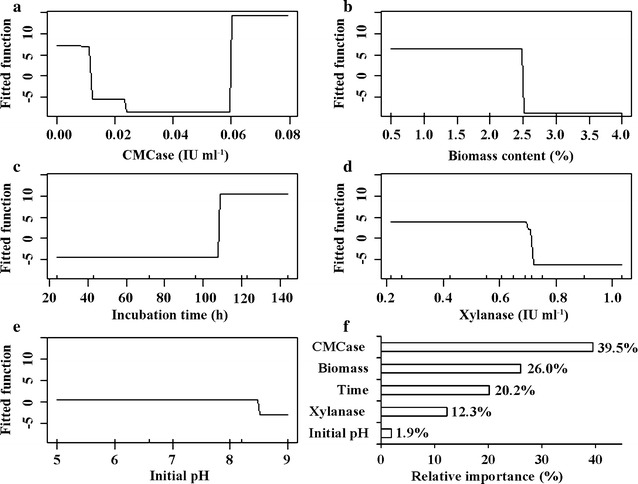
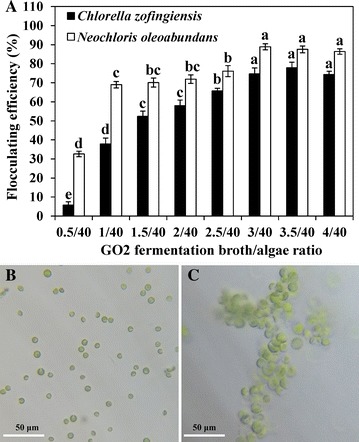
sp. GO2 showed excellent production ability of bioflocculants through directly hydrolyzing various biomasses. The untreated corn stover was selected as carbon source for bioflocculants' production due to its highest flocculating efficiency compared to that when using other biomasses as carbon source. The effects of fermentation parameters on bioflocculants' production were optimized via response surface methodology. According to the optimal model, an ideal flocculating efficiency of 99.8% was obtained with the fermentation time of 130.46 h, initial pH of 7.46, and biomass content of 0.64%. The relative importance of carboxymethyl cellulase and xylanase accounted for 51.8% in the process of bioflocculants' production by boosted regression tree analysis, further indicating that the bioflocculants were mainly from the hydrolysates of biomass. Biochemical analysis showed that it contained 59.0% polysaccharides with uronic acid (34.2%), 32.1% protein, and 6.1% nucleic acid in the bioflocculants, which had an average molecular weight as 1.33 × 10 Da. In addition, the bioflocculants showed the highest flocculating efficiency at a concentration of 12.5 mg L and were stable over broad ranges of pH and temperature. The highest flocculating efficiencies obtained for and were 77.9 and 88.9%, respectively.

CONCLUSIONS

The results indicated that sp. GO2 can directly utilize various untreated lignocellulolytic biomasses to produce low-cost bioflocculants, which showed the high efficiency to harvest two green microalgae in a low GO2 fermentation broth/algal culture ratio.

摘要

背景

生物絮凝作为一种经济高效且环境友好的方法已被开发用于收获多种微藻。然而,生物絮凝剂的高生产成本使其难以扩大规模。在本研究中,一种生物质降解细菌sp. GO2从未经处理的玉米秸秆中生产出低成本的生物絮凝剂。

结果

sp. GO2通过直接水解各种生物质表现出优异的生物絮凝剂生产能力。与使用其他生物质作为碳源相比,未经处理的玉米秸秆因其最高的絮凝效率而被选作生物絮凝剂生产的碳源。通过响应面法优化了发酵参数对生物絮凝剂生产的影响。根据最优模型,在发酵时间为130.46小时、初始pH为7.46、生物质含量为0.64%的条件下,获得了99.8%的理想絮凝效率。通过增强回归树分析,羧甲基纤维素酶和木聚糖酶在生物絮凝剂生产过程中的相对重要性占51.8%,进一步表明生物絮凝剂主要来自生物质的水解产物。生化分析表明,生物絮凝剂中含有59.0%的多糖(含糖醛酸34.2%)、32.1%的蛋白质和6.1%的核酸,其平均分子量为1.33×10 Da。此外,生物絮凝剂在浓度为12.5 mg/L时表现出最高的絮凝效率,并且在较宽的pH和温度范围内稳定。对 和 获得的最高絮凝效率分别为77.9%和88.9%。

结论

结果表明,sp. GO2可以直接利用各种未经处理的木质纤维素生物质来生产低成本的生物絮凝剂,其在低GO2发酵液/藻类培养比例下对收获两种绿色微藻具有高效率。

https://cdn.ncbi.nlm.nih.gov/pmc/blobs/5861/5738095/06892c218e80/13068_2017_987_Fig8_HTML.jpg
https://cdn.ncbi.nlm.nih.gov/pmc/blobs/5861/5738095/6b77fed08270/13068_2017_987_Fig1_HTML.jpg
https://cdn.ncbi.nlm.nih.gov/pmc/blobs/5861/5738095/cf3bce003e77/13068_2017_987_Fig2_HTML.jpg
https://cdn.ncbi.nlm.nih.gov/pmc/blobs/5861/5738095/fd1e6c58df78/13068_2017_987_Fig3_HTML.jpg
https://cdn.ncbi.nlm.nih.gov/pmc/blobs/5861/5738095/38103b555dd8/13068_2017_987_Fig4_HTML.jpg
https://cdn.ncbi.nlm.nih.gov/pmc/blobs/5861/5738095/0abbbf0efc6d/13068_2017_987_Fig5_HTML.jpg
https://cdn.ncbi.nlm.nih.gov/pmc/blobs/5861/5738095/0d34adad2227/13068_2017_987_Fig6_HTML.jpg
https://cdn.ncbi.nlm.nih.gov/pmc/blobs/5861/5738095/8f9efaa19a6e/13068_2017_987_Fig7_HTML.jpg
https://cdn.ncbi.nlm.nih.gov/pmc/blobs/5861/5738095/06892c218e80/13068_2017_987_Fig8_HTML.jpg
https://cdn.ncbi.nlm.nih.gov/pmc/blobs/5861/5738095/6b77fed08270/13068_2017_987_Fig1_HTML.jpg
https://cdn.ncbi.nlm.nih.gov/pmc/blobs/5861/5738095/cf3bce003e77/13068_2017_987_Fig2_HTML.jpg
https://cdn.ncbi.nlm.nih.gov/pmc/blobs/5861/5738095/fd1e6c58df78/13068_2017_987_Fig3_HTML.jpg
https://cdn.ncbi.nlm.nih.gov/pmc/blobs/5861/5738095/38103b555dd8/13068_2017_987_Fig4_HTML.jpg
https://cdn.ncbi.nlm.nih.gov/pmc/blobs/5861/5738095/0abbbf0efc6d/13068_2017_987_Fig5_HTML.jpg
https://cdn.ncbi.nlm.nih.gov/pmc/blobs/5861/5738095/0d34adad2227/13068_2017_987_Fig6_HTML.jpg
https://cdn.ncbi.nlm.nih.gov/pmc/blobs/5861/5738095/8f9efaa19a6e/13068_2017_987_Fig7_HTML.jpg
https://cdn.ncbi.nlm.nih.gov/pmc/blobs/5861/5738095/06892c218e80/13068_2017_987_Fig8_HTML.jpg

相似文献

1
Bioflocculants' production in a biomass-degrading bacterium using untreated corn stover as carbon source and use of bioflocculants for microalgae harvest.利用未经处理的玉米秸秆作为碳源,在一种生物质降解细菌中生产生物絮凝剂,并将生物絮凝剂用于微藻收获。
Biotechnol Biofuels. 2017 Dec 20;10:306. doi: 10.1186/s13068-017-0987-6. eCollection 2017.
2
Bioflocculants' production from a cellulase-free xylanase-producing Pseudomonas boreopolis G22 by degrading biomass and its application in cost-effective harvest of microalgae.无细胞纤维素酶木聚糖酶产生菌泡盛假单胞菌 G22 生产生物絮凝剂及其在经济有效地收获微藻中的应用。
Bioresour Technol. 2018 May;255:171-179. doi: 10.1016/j.biortech.2018.01.082. Epub 2018 Jan 31.
3
Bioflocculant production from untreated corn stover using Cellulosimicrobium cellulans L804 isolate and its application to harvesting microalgae.利用纤维微杆菌L804菌株从未经处理的玉米秸秆生产生物絮凝剂及其在微藻收获中的应用。
Biotechnol Biofuels. 2015 Oct 20;8:170. doi: 10.1186/s13068-015-0354-4. eCollection 2015.
4
Valorization of untreated rice bran towards bioflocculant using a lignocellulose-degrading strain and its use in microalgal biomass harvest.利用木质纤维素降解菌株将未处理的米糠转化为生物絮凝剂及其在微藻生物质收获中的应用。
Biotechnol Biofuels. 2017 Apr 13;10:90. doi: 10.1186/s13068-017-0780-6. eCollection 2017.
5
Flocculation characteristics of a bioflocculant produced by the actinomycete Streptomyces sp. hsn06 on microalgae biomass.由放线菌 hsn06 产生的生物絮凝剂对微藻生物质的絮凝特性。
BMC Biotechnol. 2018 Sep 21;18(1):58. doi: 10.1186/s12896-018-0471-9.
6
Flocculation of Chlorella vulgaris by shell waste-derived bioflocculants for biodiesel production: Process optimization, characterization and kinetic studies.壳聚糖基生物絮凝剂对小球藻絮凝作用及其用于生物柴油生产的工艺优化、特性分析和动力学研究。
Sci Total Environ. 2020 Feb 1;702:134995. doi: 10.1016/j.scitotenv.2019.134995. Epub 2019 Nov 2.
7
Bioflocculants from hydrolysates of corn stover using isolated strain Ochrobactium ciceri W2.利用分离菌株 Ochrobactium ciceri W2 从玉米秸秆水解物中提取生物絮凝剂。
Bioresour Technol. 2013 Oct;145:259-63. doi: 10.1016/j.biortech.2012.11.020. Epub 2012 Nov 21.
8
Improving enzymatic digestibility of wheat straw pretreated by a cellulase-free xylanase-secreting G22 with simultaneous production of bioflocculants.利用分泌无纤维素酶木聚糖酶的G22预处理小麦秸秆,同时生产生物絮凝剂,提高其酶解消化率。
Biotechnol Biofuels. 2018 Sep 17;11:250. doi: 10.1186/s13068-018-1255-0. eCollection 2018.
9
Isolation and characterization of extracellular bioflocculants produced by bacteria isolated from Qatari ecosystems.从卡塔尔生态系统分离出的细菌所产生的细胞外生物絮凝剂的分离与特性研究
Pol J Microbiol. 2008;57(3):231-9.
10
Production of glycoprotein bioflocculant from untreated rice straw by a CAZyme-rich bacterium, Pseudomonas sp. HP2.利用富含 CAZyme 的细菌 Pseudomonas sp. HP2 从未经处理的稻草中生产糖蛋白生物絮凝剂。
J Biotechnol. 2019 Dec 20;306:185-192. doi: 10.1016/j.jbiotec.2019.10.011. Epub 2019 Oct 17.

引用本文的文献

1
Green synthesis and characterization of iron nanoparticles synthesized from bioflocculant for wastewater treatment: A review.用于废水处理的生物絮凝剂合成铁纳米颗粒的绿色合成与表征:综述
Biotechnol Notes. 2024 Dec 14;6:10-31. doi: 10.1016/j.biotno.2024.12.001. eCollection 2025.
2
Progress towards a targeted biorefinery of : a review.迈向目标生物精炼厂的进展:综述
Biomass Convers Biorefin. 2024;14(7):8127-8152. doi: 10.1007/s13399-022-02955-7. Epub 2022 Jun 27.
3
Contrasting patterns of bacterial communities in the rearing water and gut of in response to exogenous glucose addition.

本文引用的文献

1
Enhancing digestibility of Miscanthus using lignocellulolytic enzyme produced by Bacillus.利用枯草芽孢杆菌产生的木质纤维素酶提高芒草的消化率。
Bioresour Technol. 2017 Dec;245(Pt A):1008-1015. doi: 10.1016/j.biortech.2017.09.034. Epub 2017 Sep 7.
2
Valorization of untreated rice bran towards bioflocculant using a lignocellulose-degrading strain and its use in microalgal biomass harvest.利用木质纤维素降解菌株将未处理的米糠转化为生物絮凝剂及其在微藻生物质收获中的应用。
Biotechnol Biofuels. 2017 Apr 13;10:90. doi: 10.1186/s13068-017-0780-6. eCollection 2017.
3
Characterization of a Novel Polymeric Bioflocculant Produced from Bacterial Utilization of -Hexadecane and Its Application in Removal of Heavy Metals.
添加外源葡萄糖后,养殖水体和肠道中细菌群落的对比模式。
Mar Life Sci Technol. 2022 Jan 1;4(2):222-236. doi: 10.1007/s42995-021-00124-9. eCollection 2022 May.
4
A Review on Bacterial Contribution to Lignocellulose Breakdown into Useful Bio-Products.细菌对木质纤维素分解为有用生物制品的贡献综述。
Int J Environ Res Public Health. 2021 Jun 3;18(11):6001. doi: 10.3390/ijerph18116001.
5
Multidisciplinary involvement and potential of thermophiles.嗜热菌的多学科参与及潜力。
Folia Microbiol (Praha). 2019 May;64(3):389-406. doi: 10.1007/s12223-018-0662-8. Epub 2018 Nov 1.
6
Improving enzymatic digestibility of wheat straw pretreated by a cellulase-free xylanase-secreting G22 with simultaneous production of bioflocculants.利用分泌无纤维素酶木聚糖酶的G22预处理小麦秸秆,同时生产生物絮凝剂,提高其酶解消化率。
Biotechnol Biofuels. 2018 Sep 17;11:250. doi: 10.1186/s13068-018-1255-0. eCollection 2018.
利用细菌对十六烷的代谢产生的新型聚合生物絮凝剂的特性及其在重金属去除中的应用
Front Microbiol. 2017 Feb 7;8:170. doi: 10.3389/fmicb.2017.00170. eCollection 2017.
4
A review of catalytic microwave pyrolysis of lignocellulosic biomass for value-added fuel and chemicals.木质纤维素生物质的催化微波热解制备增值燃料和化学品的研究综述。
Bioresour Technol. 2017 Apr;230:112-121. doi: 10.1016/j.biortech.2017.01.059. Epub 2017 Jan 30.
5
Production of a bioflocculant from Pseudomonas veronii L918 using the hydrolyzate of peanut hull and its application in the treatment of ash-flushing wastewater generated from coal fired power plant.利用花生壳水解物生产假单胞菌 L918 生物絮凝剂及其在处理火电厂冲灰水中的应用。
Bioresour Technol. 2016 Oct;218:318-25. doi: 10.1016/j.biortech.2016.06.108. Epub 2016 Jun 28.
6
Synergistic effect and mechanisms of compound bioflocculant and AlCl3 salts on enhancing Chlorella regularis harvesting.复合生物絮凝剂和 AlCl3 盐对增强小球藻采收的协同作用及机理。
Appl Microbiol Biotechnol. 2016 Jun;100(12):5653-60. doi: 10.1007/s00253-016-7543-3. Epub 2016 Apr 22.
7
Potential biotechnological application of microalgae: a critical review.微藻的潜在生物技术应用:批判性综述
Crit Rev Biotechnol. 2017 Feb;37(1):37-52. doi: 10.3109/07388551.2015.1108956. Epub 2015 Nov 23.
8
Bioflocculant production from untreated corn stover using Cellulosimicrobium cellulans L804 isolate and its application to harvesting microalgae.利用纤维微杆菌L804菌株从未经处理的玉米秸秆生产生物絮凝剂及其在微藻收获中的应用。
Biotechnol Biofuels. 2015 Oct 20;8:170. doi: 10.1186/s13068-015-0354-4. eCollection 2015.
9
Production of a bioflocculant from chromotropic acid waste water and its application in steroid estrogen removal.利用变色酸废水制备生物絮凝剂及其在去除甾体雌激素中的应用。
Colloids Surf B Biointerfaces. 2014 Oct 1;122:729-737. doi: 10.1016/j.colsurfb.2014.08.006. Epub 2014 Aug 19.
10
Characterization and application of bioflocculant prepared by Rhodococcus erythropolis using sludge and livestock wastewater as cheap culture media.利用污泥和养殖废水作为廉价培养基制备红球菌产生的生物絮凝剂的特性及应用。
Appl Microbiol Biotechnol. 2014 Aug;98(15):6847-58. doi: 10.1007/s00253-014-5725-4. Epub 2014 Apr 30.