
从头设计的抗菌肽衣壳。
Antimicrobial peptide capsids of de novo design.
机构信息
National Physical Laboratory, Hampton Road, Teddington, TW11 0LW, UK.
London Centre for Nanotechnology, University College London, London, WC1H 0AH, UK.
出版信息
Nat Commun. 2017 Dec 22;8(1):2263. doi: 10.1038/s41467-017-02475-3.
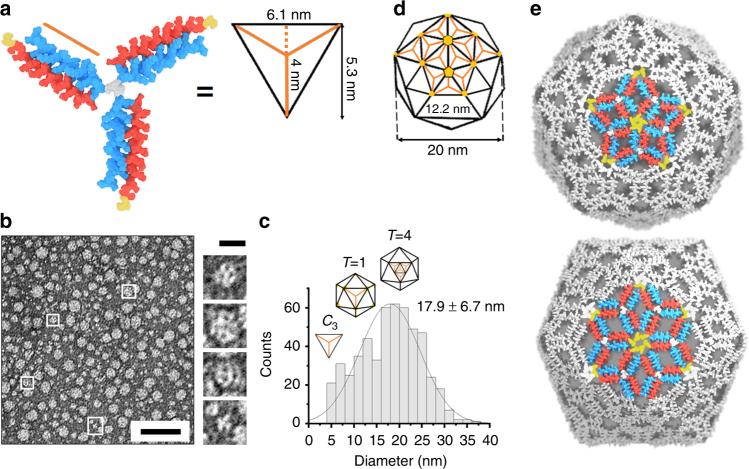
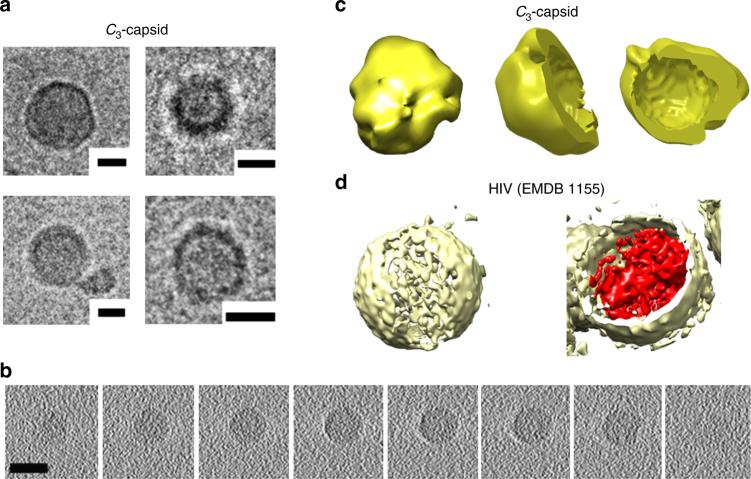
The spread of bacterial resistance to antibiotics poses the need for antimicrobial discovery. With traditional search paradigms being exhausted, approaches that are altogether different from antibiotics may offer promising and creative solutions. Here, we introduce a de novo peptide topology that-by emulating the virus architecture-assembles into discrete antimicrobial capsids. Using the combination of high-resolution and real-time imaging, we demonstrate that these artificial capsids assemble as 20-nm hollow shells that attack bacterial membranes and upon landing on phospholipid bilayers instantaneously (seconds) convert into rapidly expanding pores causing membrane lysis (minutes). The designed capsids show broad antimicrobial activities, thus executing one primary function-they destroy bacteria on contact.
细菌对抗生素耐药性的传播提出了对抗微生物药物发现的需求。随着传统搜索模式的枯竭,与抗生素完全不同的方法可能提供有前景和创造性的解决方案。在这里,我们引入了一种新的肽拓扑结构,该结构通过模拟病毒结构组装成离散的抗菌衣壳。我们利用高分辨率和实时成像的组合,证明这些人工衣壳组装成 20nm 的空心壳,攻击细菌膜,一旦落在磷脂双层膜上,立即(秒)转化为迅速扩张的孔,导致膜裂解(分钟)。设计的衣壳显示出广泛的抗菌活性,因此执行了一个主要功能——它们在接触时破坏细菌。


 Zotero 插件