Demirbilek Hüseyin, Hussain Khalid
Hacettepe University Faculty of Medicine, Department of Paediatric Endocrinology, Ankara, Turkey.
Sidra Medical and Research Center, Clinic of Paediatric Medicine, Doha, Qatar.
J Clin Res Pediatr Endocrinol. 2017 Dec 30;9(Suppl 2):69-87. doi: 10.4274/jcrpe.2017.S007. Epub 2017 Dec 27.
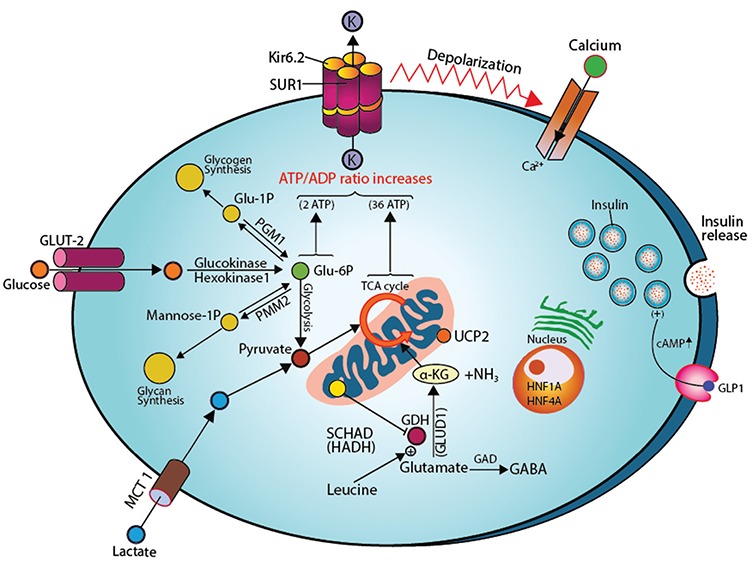
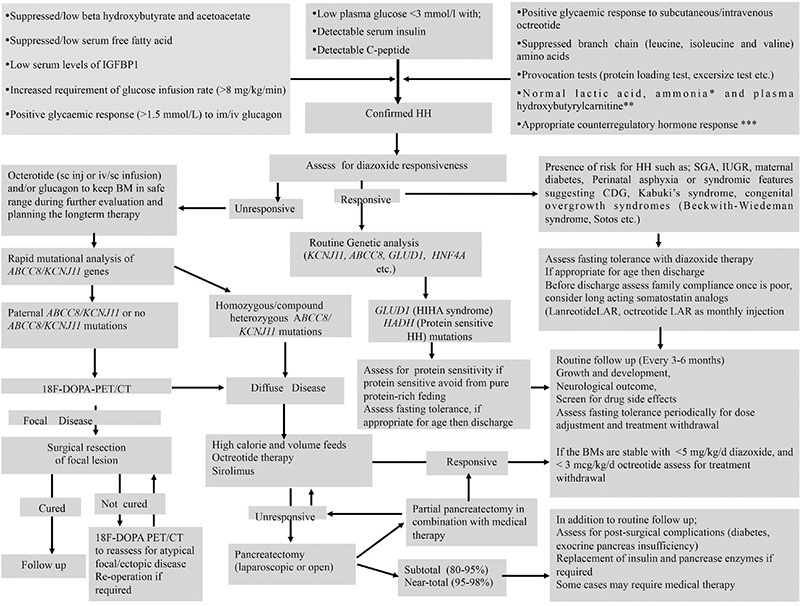
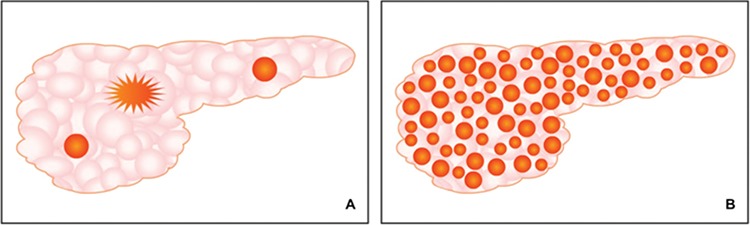
Pancreatic β-cells are finely tuned to secrete insulin so that plasma glucose levels are maintained within a narrow physiological range (3.5-5.5 mmol/L). Hyperinsulinaemic hypoglycaemia (HH) is the inappropriate secretion of insulin in the presence of low plasma glucose levels and leads to severe and persistent hypoglycaemia in neonates and children. Mutations in 12 different key genes (ABCC8, KCNJ11, GLUD1, GCK, HADH, SLC16A1, UCP2, HNF4A, HNF1A, HK1, PGM1 and PMM2) that are involved in the regulation of insulin secretion from pancreatic β-cells have been described to be responsible for the underlying molecular mechanisms leading to congenital HH. In HH due to the inhibitory effect of insulin on lipolysis and ketogenesis there is suppressed ketone body formation in the presence of hypoglycaemia thus leading to increased risk of hypoglycaemic brain injury. Therefore, a prompt diagnosis and immediate management of HH is essential to avoid hypoglycaemic brain injury and long-term neurological complications in children. Advances in molecular genetics, imaging techniques (18F-DOPA positron emission tomography/computed tomography scanning), medical therapy and surgical advances (laparoscopic and open pancreatectomy) have changed the management and improved the outcome of patients with HH. This review article provides an overview to the background, clinical presentation, diagnosis, molecular genetics and therapy in children with different forms of HH.
胰腺β细胞经过精细调节以分泌胰岛素,从而使血浆葡萄糖水平维持在较窄的生理范围内(3.5 - 5.5 mmol/L)。高胰岛素血症性低血糖症(HH)是指在血浆葡萄糖水平较低时胰岛素分泌不当,会导致新生儿和儿童出现严重且持续的低血糖症。已发现参与胰腺β细胞胰岛素分泌调节的12种不同关键基因(ABCC8、KCNJ11、GLUD1、GCK、HADH、SLC16A1、UCP2、HNF4A、HNF1A、HK1、PGM1和PMM2)发生突变是导致先天性HH的潜在分子机制。在HH中,由于胰岛素对脂肪分解和生酮作用的抑制,低血糖时酮体生成受到抑制,从而增加了低血糖性脑损伤的风险。因此,对HH进行快速诊断和及时处理对于避免儿童低血糖性脑损伤和长期神经并发症至关重要。分子遗传学、成像技术(18F - DOPA正电子发射断层扫描/计算机断层扫描)、药物治疗以及外科进展(腹腔镜和开放胰腺切除术)已经改变了HH患者的治疗方式并改善了治疗效果。本文综述了不同类型HH患儿的背景、临床表现、诊断、分子遗传学及治疗方法。