Ojeda Naharros Irene, Gesemann Matthias, Mateos José M, Barmettler Gery, Forbes Austin, Ziegler Urs, Neuhauss Stephan C F, Bachmann-Gagescu Ruxandra
Institute of Molecular Life Sciences, University of Zurich, Zurich, Switzerland.
Center for Microscopy and Image Analysis, University of Zurich, Zurich, Switzerland.
PLoS Genet. 2017 Dec 27;13(12):e1007150. doi: 10.1371/journal.pgen.1007150. eCollection 2017 Dec.
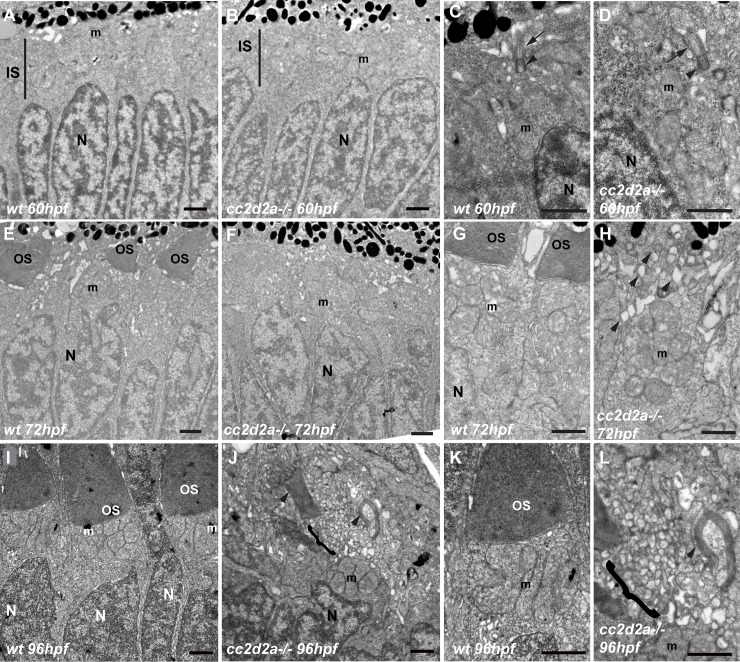
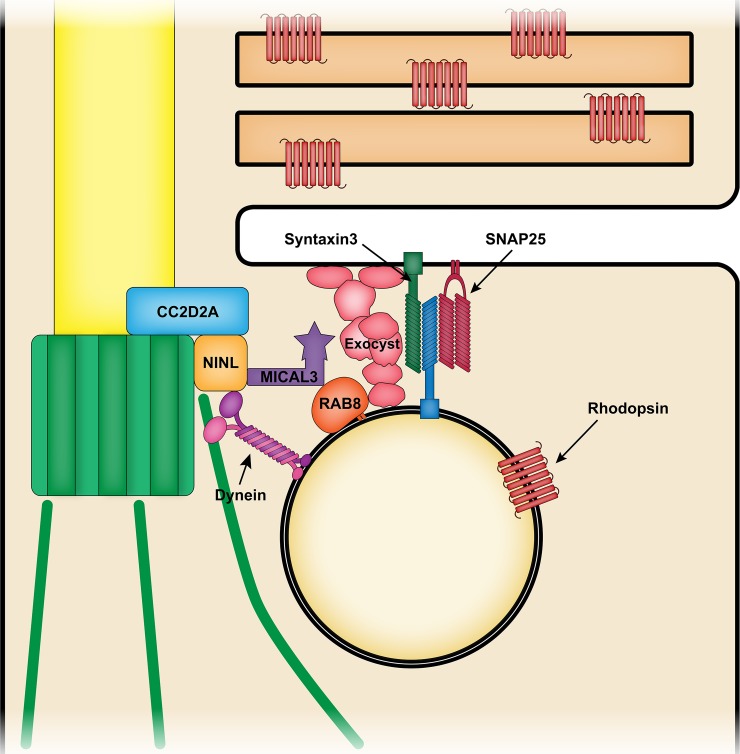
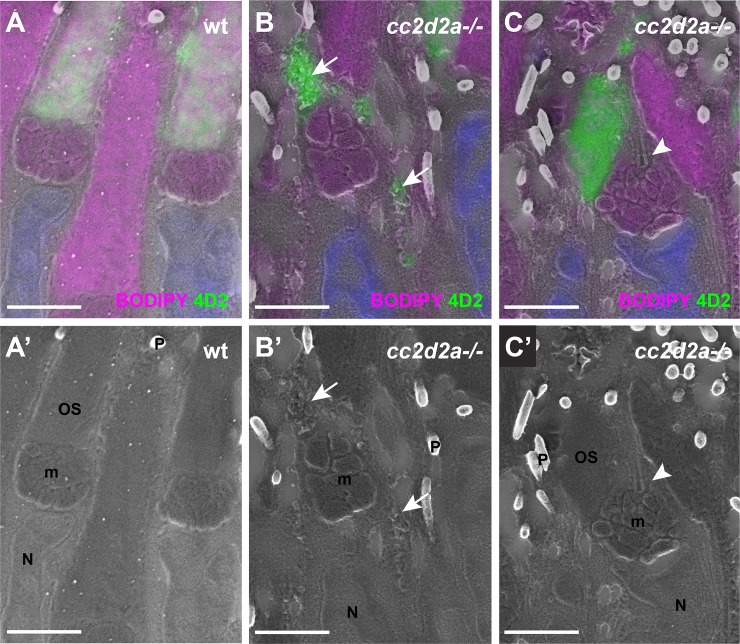
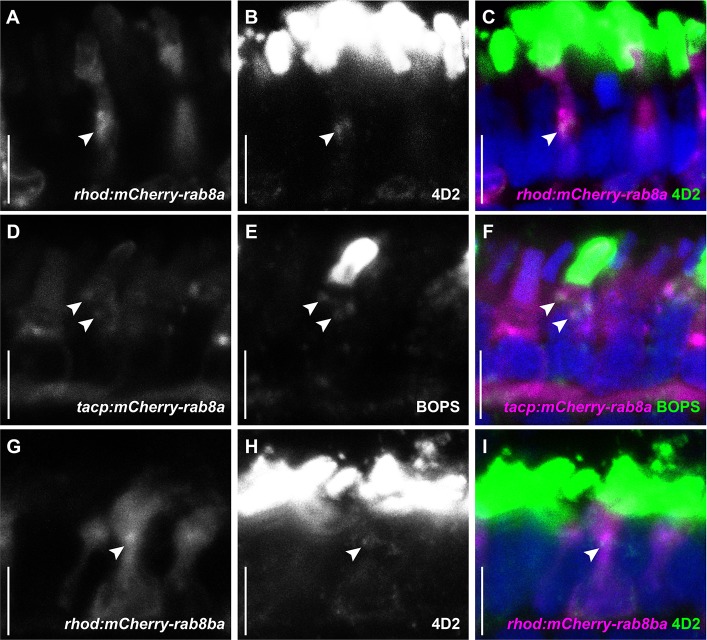
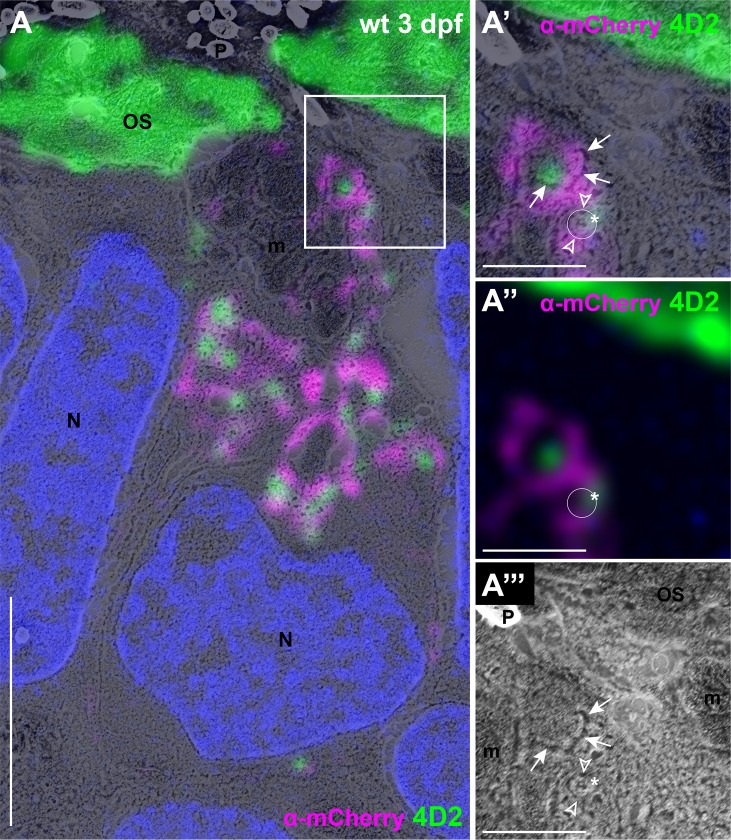
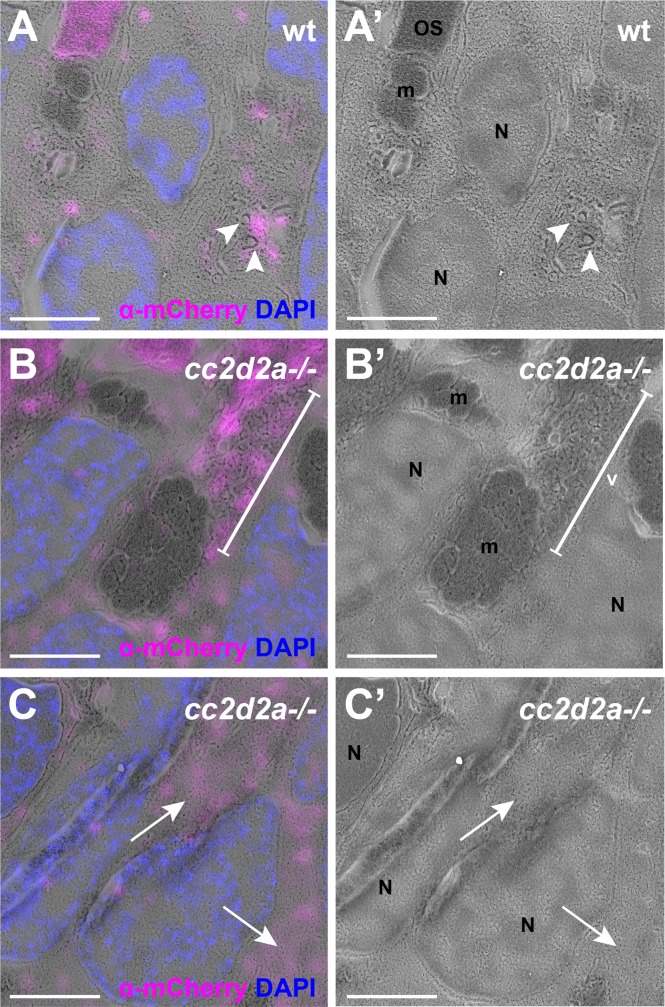
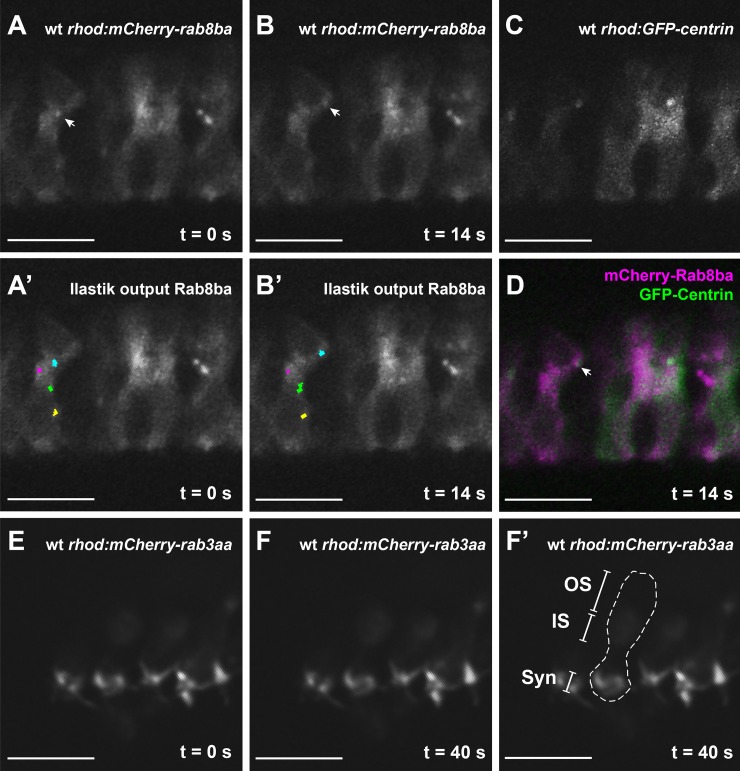
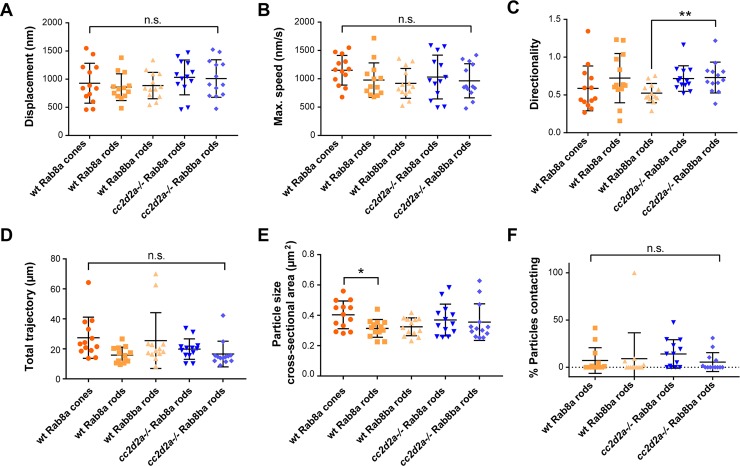
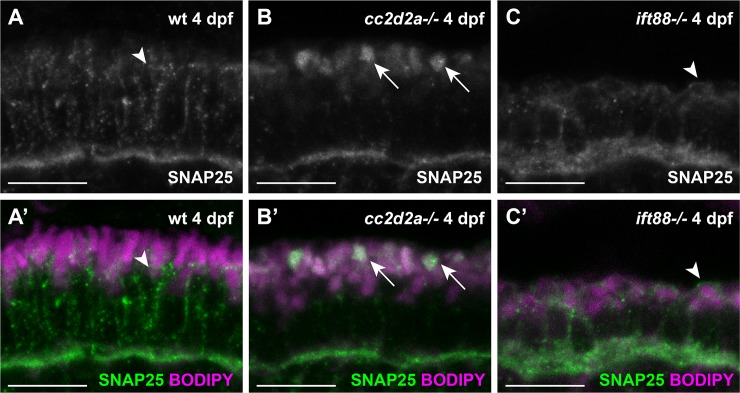
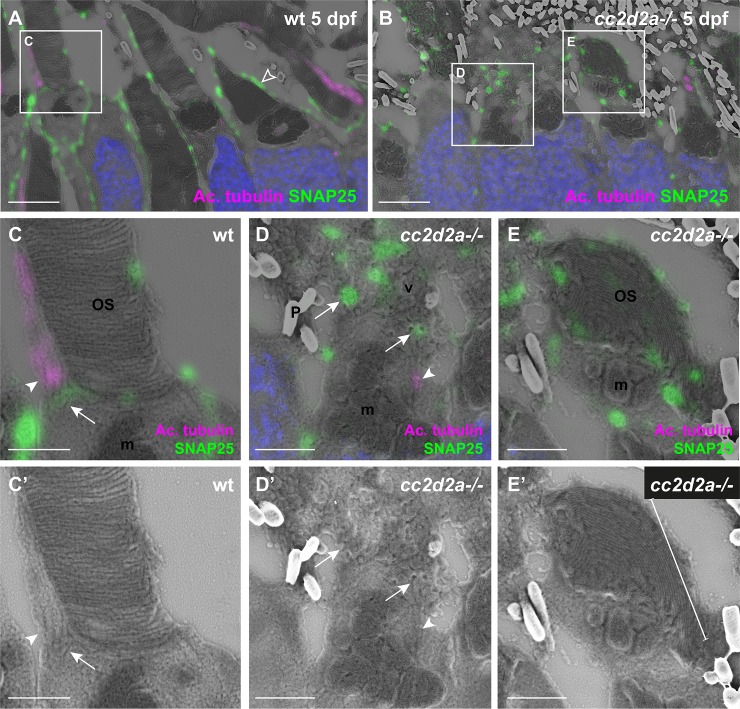
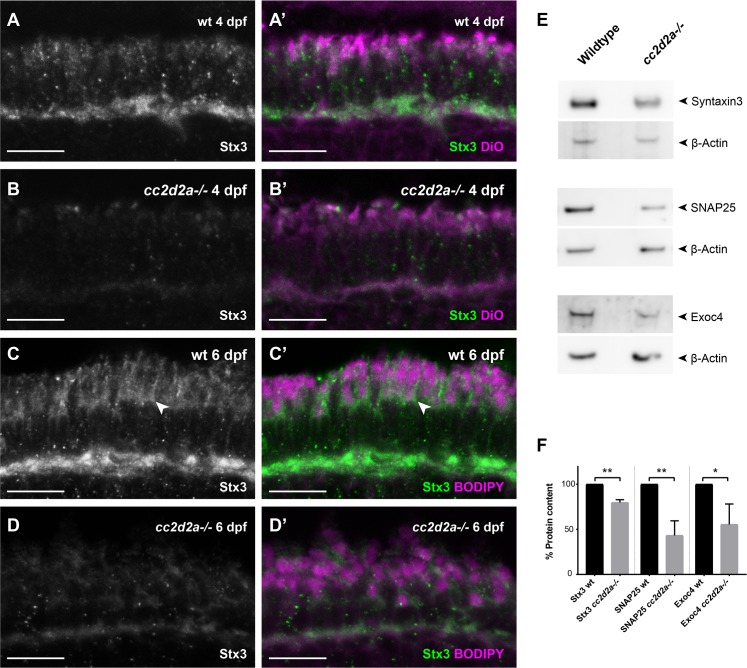
Ciliopathies are human disorders caused by dysfunction of primary cilia, ubiquitous organelles involved in transduction of environmental signals such as light sensation in photoreceptors. Concentration of signal detection proteins such as opsins in the ciliary membrane is achieved by RabGTPase-regulated polarized vesicle trafficking and by a selective barrier at the ciliary base, the transition zone (TZ). Dysfunction of the TZ protein CC2D2A causes Joubert/Meckel syndromes in humans and loss of ciliary protein localization in animal models, including opsins in retinal photoreceptors. The link between the TZ and upstream vesicle trafficking has been little explored to date. Moreover, the role of the small GTPase Rab8 in opsin-carrier vesicle (OCV) trafficking has been recently questioned in a mouse model. Using correlative light and electron microscopy and live imaging in zebrafish photoreceptors, we provide the first live characterization of Rab8-mediated trafficking in photoreceptors in vivo. Our results support a possibly redundant role for both Rab8a/b paralogs in OCV trafficking, based on co-localization of Rab8 and opsins in vesicular structures, and joint movement of Rab8-tagged particles with opsin. We further investigate the role of the TZ protein Cc2d2a in Rab8-mediated trafficking using cc2d2a zebrafish mutants and identify a requirement for Cc2d2a in the latest step of OCV trafficking, namely vesicle fusion. Progressive accumulation of opsin-containing vesicles in the apical portion of photoreceptors lacking Cc2d2a is caused by disorganization of the vesicle fusion machinery at the periciliary membrane with mislocalization and loss of the t-SNAREs SNAP25 and Syntaxin3 and of the exocyst component Exoc4. We further observe secondary defects on upstream Rab8-trafficking with cytoplasmic accumulation of Rab8. Taken together, our results support participation of Rab8 in OCV trafficking and identify a novel role for the TZ protein Cc2d2a in fusion of incoming ciliary-directed vesicles, through organization of the vesicle fusion machinery at the periciliary membrane.
纤毛病是由初级纤毛功能障碍引起的人类疾病,初级纤毛是普遍存在的细胞器,参与环境信号的转导,如光感受器中的光感觉。通过RabGTPase调节的极化囊泡运输以及在纤毛基部的选择性屏障——过渡区(TZ),可实现信号检测蛋白(如视蛋白)在纤毛膜中的富集。TZ蛋白CC2D2A功能异常会导致人类出现Joubert/Meckel综合征,并在动物模型中导致纤毛蛋白定位丧失,包括视网膜光感受器中的视蛋白。迄今为止,对TZ与上游囊泡运输之间的联系研究甚少。此外,小GTPase Rab8在视蛋白载体囊泡(OCV)运输中的作用最近在小鼠模型中受到质疑。利用相关光镜和电镜以及斑马鱼光感受器中的实时成像,我们首次对体内光感受器中Rab8介导的运输进行了实时表征。基于Rab8与视蛋白在囊泡结构中的共定位以及Rab8标记颗粒与视蛋白的共同移动,我们的结果支持Rab8a/b两个旁系同源物在OCV运输中可能具有冗余作用。我们进一步利用cc2d2a斑马鱼突变体研究了TZ蛋白Cc2d2a在Rab8介导的运输中的作用,并确定了Cc2d2a在OCV运输的最后一步即囊泡融合中的需求。缺乏Cc2d2a的光感受器顶端部分中含视蛋白囊泡的逐渐积累,是由睫状周膜处囊泡融合机制的紊乱导致的,t-SNAREs SNAP25和Syntaxin3以及外排复合体成分Exoc4出现错误定位和丢失。我们还观察到上游Rab8运输的继发性缺陷,Rab8在细胞质中积累。综上所述,我们的结果支持Rab8参与OCV运输,并确定了TZ蛋白Cc2d2a在通过组织睫状周膜处的囊泡融合机制来融合进入的纤毛定向囊泡中的新作用。