Wellcome Centre for Mitochondrial Research, Institute of Neuroscience, Newcastle University, Newcastle upon Tyne, United Kingdom.
National Health Service Highly Specialised Mitochondrial Diagnostic Laboratory, Newcastle upon Tyne Hospitals, National Health Service Foundation Trust, Newcastle upon Tyne, United Kingdom.
Ann Neurol. 2018 Jan;83(1):115-130. doi: 10.1002/ana.25127.
Single, large-scale deletions in mitochondrial DNA (mtDNA) are a common cause of mitochondrial disease. This study aimed to investigate the relationship between the genetic defect and molecular phenotype to improve understanding of pathogenic mechanisms associated with single, large-scale mtDNA deletions in skeletal muscle.
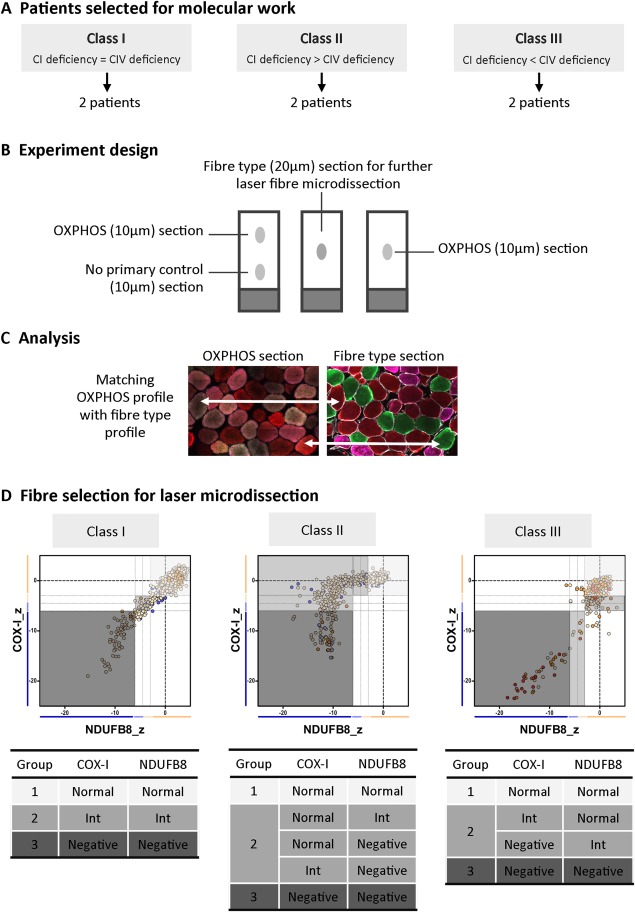
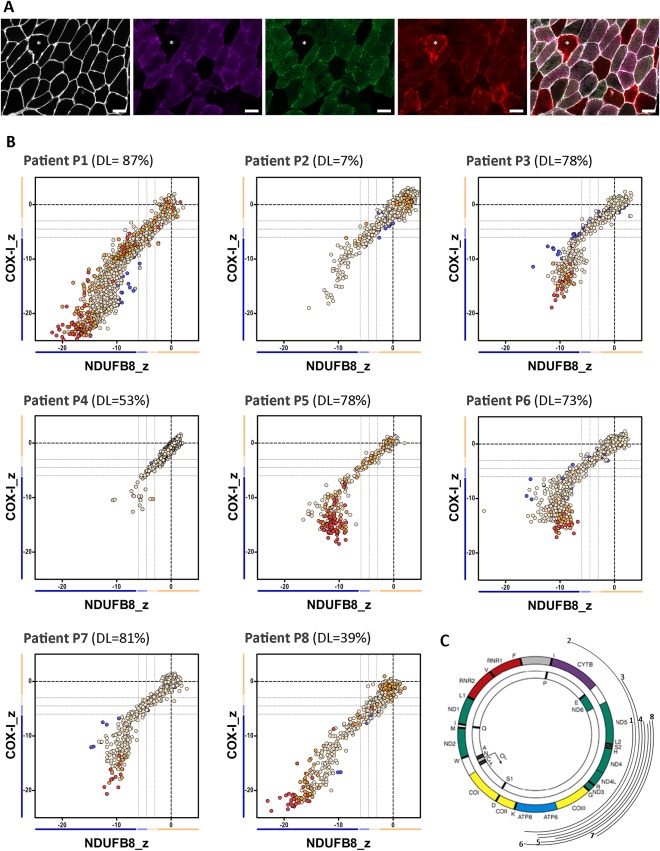
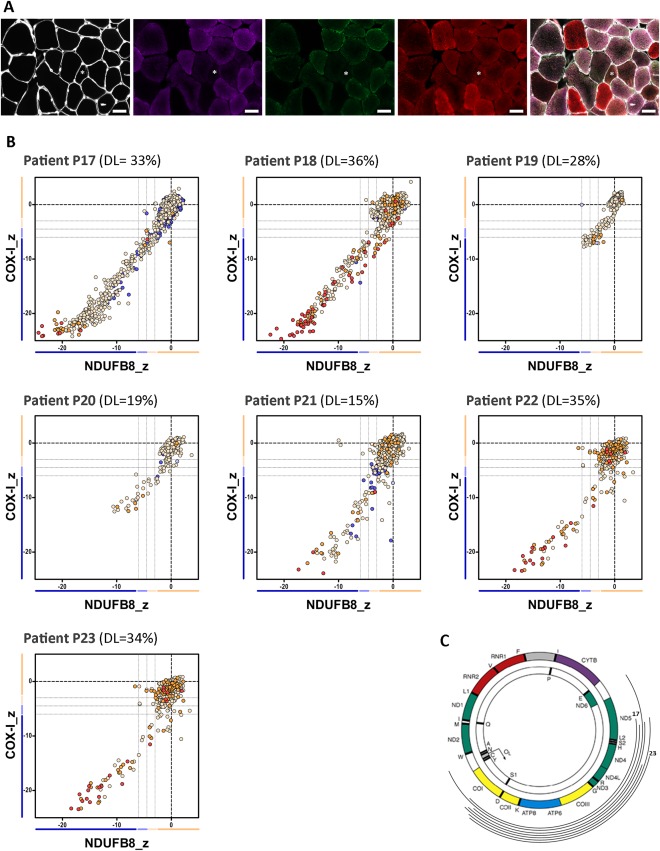
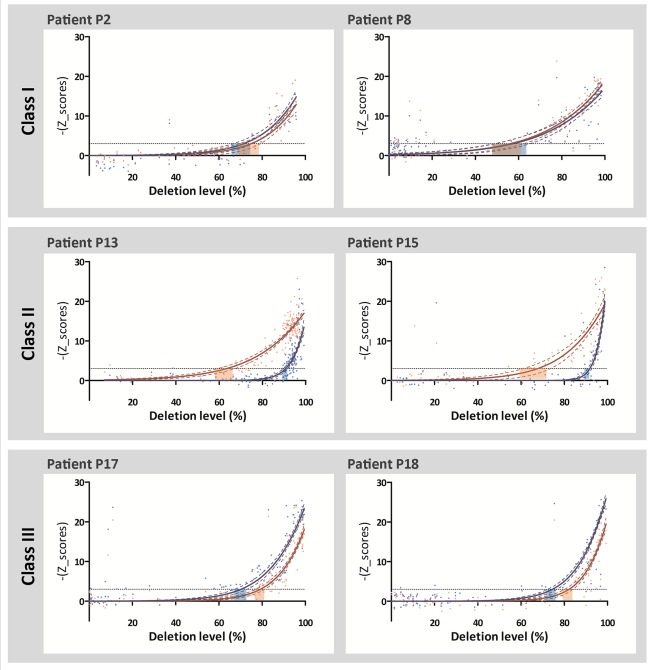
We investigated 23 muscle biopsies taken from adult patients (6 males/17 females with a mean age of 43 years) with characterized single, large-scale mtDNA deletions. Mitochondrial respiratory chain deficiency in skeletal muscle biopsies was quantified by immunoreactivity levels for complex I and complex IV proteins. Single muscle fibers with varying degrees of deficiency were selected from 6 patient biopsies for determination of mtDNA deletion level and copy number by quantitative polymerase chain reaction.
We have defined 3 "classes" of single, large-scale deletion with distinct patterns of mitochondrial deficiency, determined by the size and location of the deletion. Single fiber analyses showed that fibers with greater respiratory chain deficiency harbored higher levels of mtDNA deletion with an increase in total mtDNA copy number. For the first time, we have demonstrated that threshold levels for complex I and complex IV deficiency differ based on deletion class.
Combining genetic and immunofluorescent assays, we conclude that thresholds for complex I and complex IV deficiency are modulated by the deletion of complex-specific protein-encoding genes. Furthermore, removal of mt-tRNA genes impacts specific complexes only at high deletion levels, when complex-specific protein-encoding genes remain. These novel findings provide valuable insight into the pathogenic mechanisms associated with these mutations. Ann Neurol 2018;83:115-130.
线粒体 DNA(mtDNA)的单个大片段缺失是线粒体疾病的常见原因。本研究旨在调查遗传缺陷与分子表型之间的关系,以提高对与骨骼肌中单一大段 mtDNA 缺失相关致病机制的理解。
我们研究了 23 例来自成年患者(6 名男性/17 名女性,平均年龄 43 岁)的肌肉活检,这些患者具有特征性的单一大段 mtDNA 缺失。通过免疫反应性检测复合物 I 和复合物 IV 蛋白的水平来量化骨骼肌活检中的线粒体呼吸链缺陷。从 6 例患者的活检中选择具有不同程度缺陷的单个肌纤维,通过定量聚合酶链反应确定 mtDNA 缺失水平和拷贝数。
我们已经定义了 3 种“类”单一大段缺失,它们具有不同的线粒体缺陷模式,这取决于缺失的大小和位置。单纤维分析表明,呼吸链缺陷程度较高的纤维具有更高水平的 mtDNA 缺失,总 mtDNA 拷贝数增加。我们首次证明,复合物 I 和复合物 IV 缺陷的阈值水平因缺失类别而异。
通过结合遗传和免疫荧光检测,我们得出结论,复合物 I 和复合物 IV 缺陷的阈值是由特定复合物编码蛋白基因缺失所调节的。此外,只有当特定复合物编码蛋白基因仍然存在时,mt-tRNA 基因的缺失才会对特定复合物产生影响,而且仅在高缺失水平时才会产生影响。这些新发现为这些突变相关的致病机制提供了有价值的见解。《神经病学年鉴》2018;83:115-130。