Khare Avneesh, Sharma Satya Prakash, Deganwa Mangi Lal, Sharma Mamta, Gill Nitesh
Freelance Anesthesia Specialist, Udaipur, Rajasthan, India.
Department of Anaesthesiology, Mahatma Gandhi Medical College and Hospital, Jaipur, Rajasthan, India.
Anesth Essays Res. 2017 Oct-Dec;11(4):1040-1045. doi: 10.4103/aer.AER_107_17.
Despite multiple benefits, laparoscopic surgery always poses anesthetic challenge due to significant alteration of hemodynamics. Various pharmacological agents have been used for the same with variable response. Dexmedetomidine, in addition to sympatholytic effect, diminishes intraoperative requirement of anesthetics including propofol. The present study was conducted to evaluate the effects of intravenous dexmedetomidine on intraoperative hemodynamics and propofol requirement using bispectral index (BIS) in laparoscopic cholecystectomy.
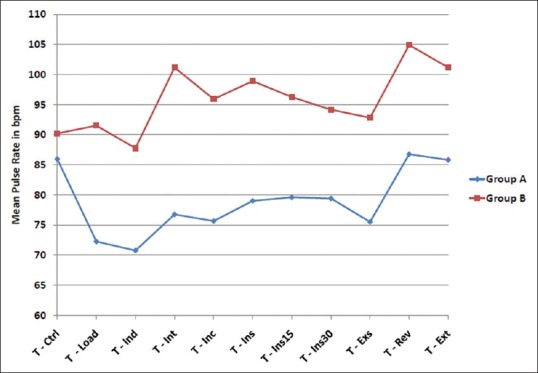
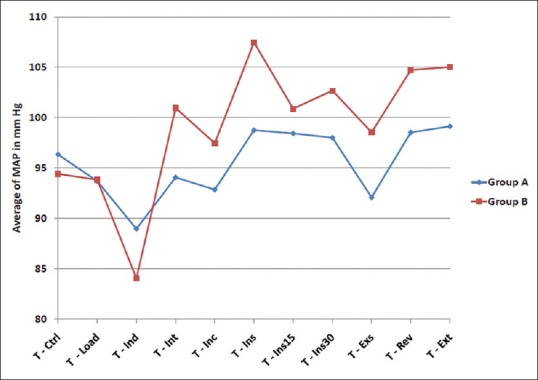
Forty patients undergoing laparoscopic cholecystectomy were randomly allocated to receive either dexmedetomidine (Group A; = 20) or normal saline (Group B; = 20). In Group A, dexmedetomidine was loaded (1 μg/kg) before anesthesia induction and infused (0.6 μg/kg/h) during surgery. Anesthesia was induced with propofol, and maintenance infusion rate was adjusted to a BIS of 55-60 in both groups. Mean arterial pressure (MAP) and heart rate (HR) were recorded at baseline and at various time points from loading of drugs to just after tracheal extubation. All infusions were stopped with removal of scope from abdominal cavity. Recovery time (time from end of all infusions to BIS = 80) and extubation time (time from end of all infusions to extubation) were noted.
After intubation, MAP and HR values in Group A were significantly lower than Group B at various time points of study. To achieve similar BIS values, significantly low doses of propofol were required in Group A during induction and intraoperatively. Doses were reduced by 36% and 31%, respectively. Mean recovery time and mean extubation time in Group A were also significantly less.
During propofol-based anesthesia for laparoscopic cholecystectomy, dexmedetomidine provides stable intraoperative hemodynamics and reduces propofol requirement for induction as well as maintenance, without compromising recovery profile.
尽管腹腔镜手术有诸多益处,但由于血流动力学的显著改变,它始终给麻醉带来挑战。多种药物已被用于此,反应各异。右美托咪定除了具有抗交感神经作用外,还能减少包括丙泊酚在内的术中麻醉药物需求量。本研究旨在评估静脉注射右美托咪定对腹腔镜胆囊切除术中血流动力学及丙泊酚需求量的影响,并使用脑电双频指数(BIS)进行监测。
40例行腹腔镜胆囊切除术的患者被随机分为两组,每组20例。A组接受右美托咪定,B组接受生理盐水。A组在麻醉诱导前静脉输注负荷剂量右美托咪定(1 μg/kg),术中持续输注(0.6 μg/kg/h)。两组均采用丙泊酚诱导麻醉,并将维持输注速率调整至BIS值为55 - 60。记录基础值以及从药物输注开始至气管拔管后各时间点的平均动脉压(MAP)和心率(HR)。随着腹腔镜从腹腔取出,停止所有输注。记录恢复时间(从所有输注结束至BIS = 80的时间)和拔管时间(从所有输注结束至拔管的时间)。
在研究的各个时间点,插管后A组的MAP和HR值均显著低于B组。为达到相似的BIS值,A组在诱导期和术中所需丙泊酚剂量显著降低,分别减少了36%和31%。A组的平均恢复时间和平均拔管时间也显著缩短。
在基于丙泊酚的腹腔镜胆囊切除术麻醉中,右美托咪定可提供稳定的术中血流动力学,减少诱导期及维持期丙泊酚的需求量,且不影响恢复情况。