Verdugo-Sivianes Eva M, Navas Lola, Molina-Pinelo Sonia, Ferrer Irene, Quintanal-Villalonga Alvaro, Peinado Javier, Garcia-Heredia Jose M, Felipe-Abrio Blanca, Muñoz-Galvan Sandra, Marin Juan J, Montuenga Luis, Paz-Ares Luis, Carnero Amancio
Instituto de Biomedicina de Sevilla (IBIS), Hospital Universitario Virgen del Rocío, Universidad de Sevilla, Consejo Superior de Investigaciones Científicas, Sevilla, Spain.
CIBER de Cáncer, Instituto de Salud Carlos III, Pabellón 11, Planta 0, Madrid, Spain.
Oncotarget. 2017 Oct 26;8(62):105196-105210. doi: 10.18632/oncotarget.22111. eCollection 2017 Dec 1.
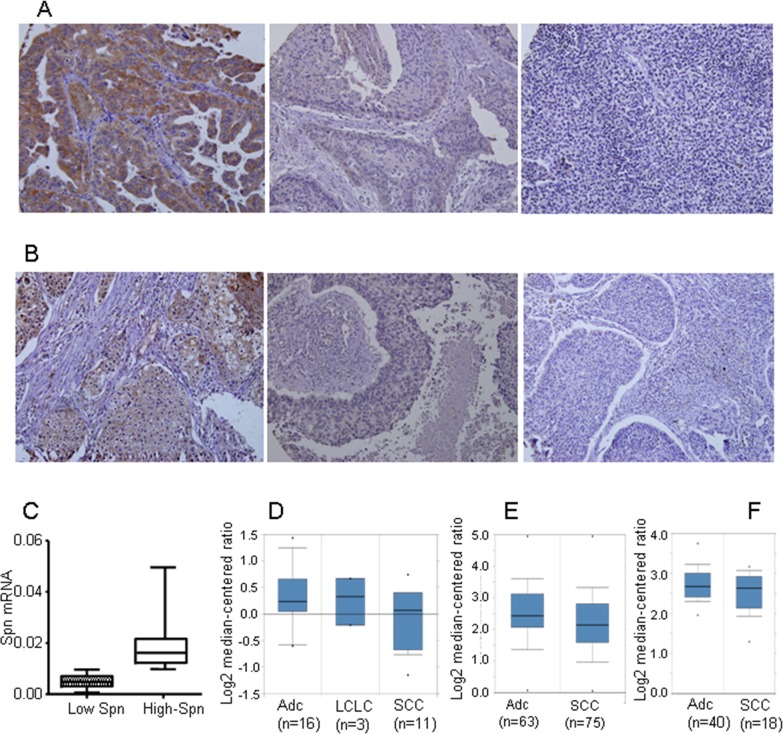
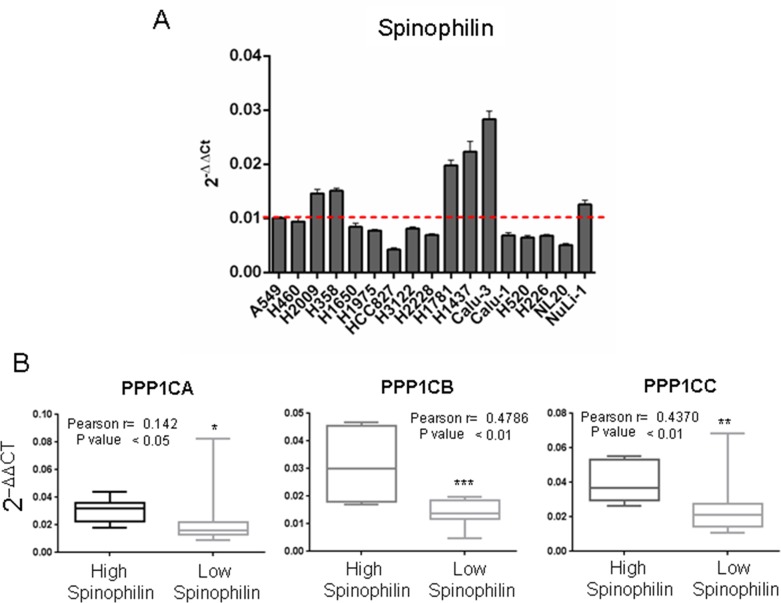
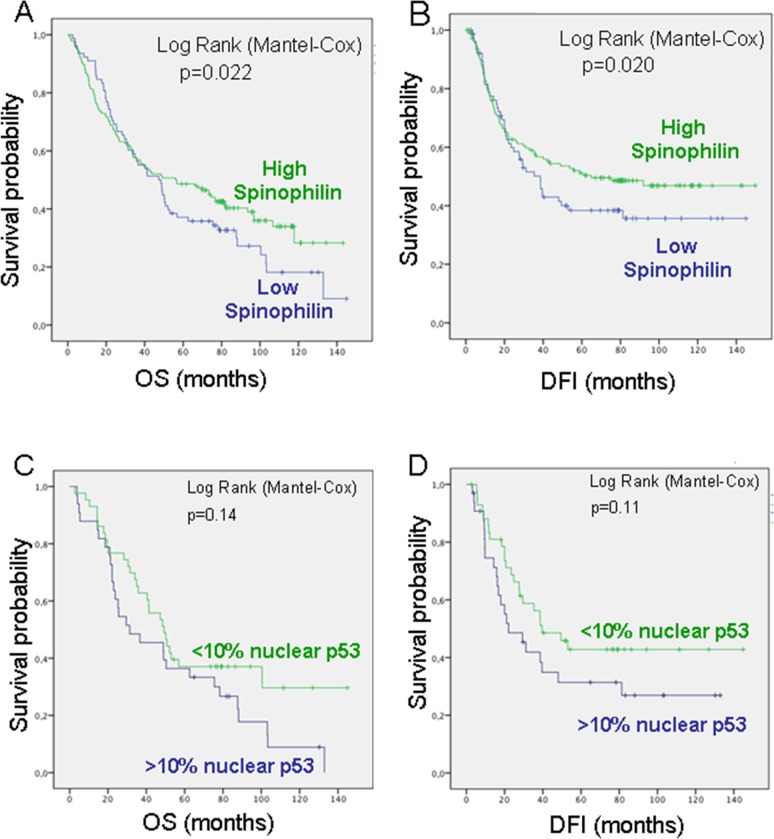
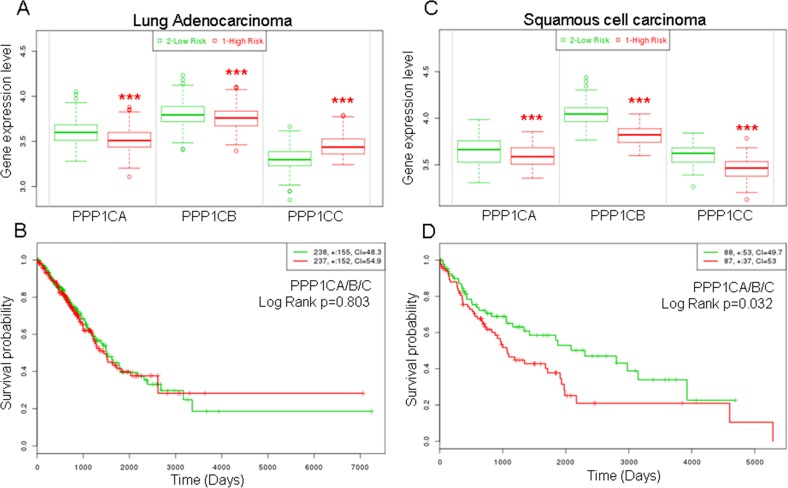
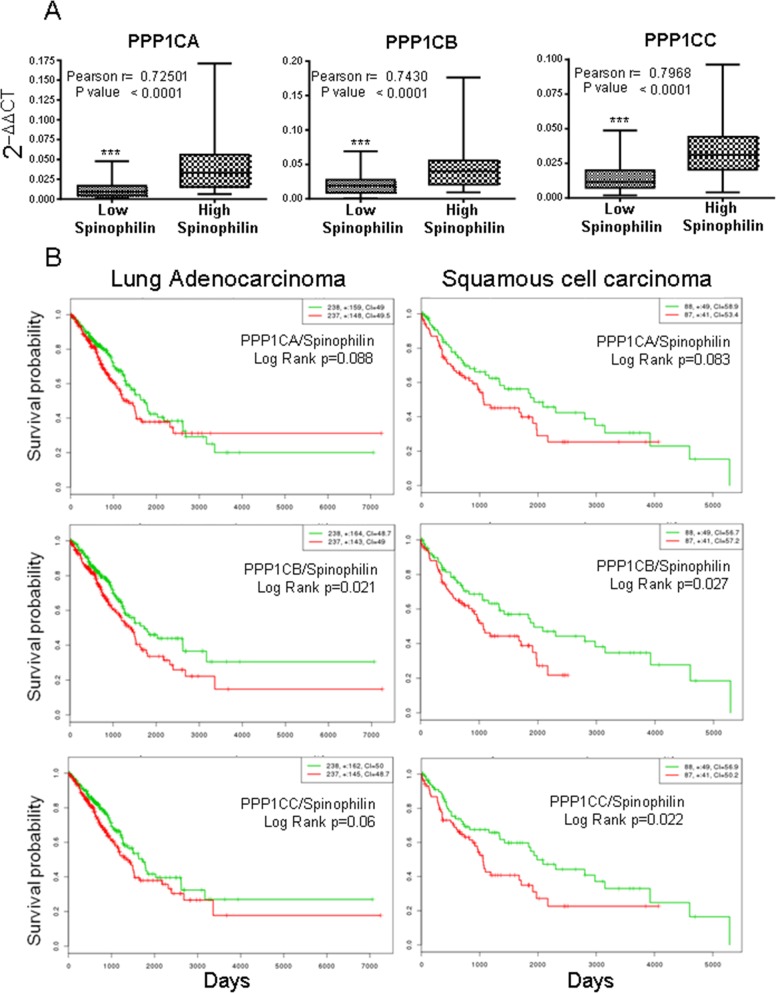
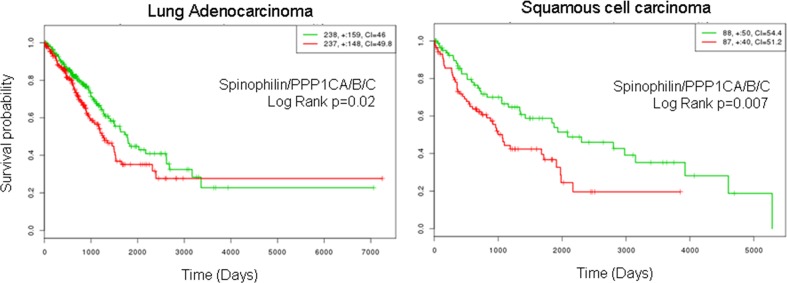
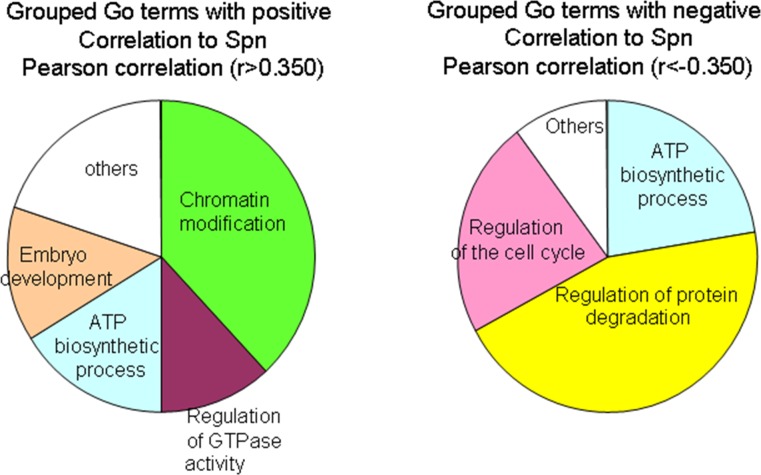
The scaffold protein Spinophilin (Spinophilin, PPP1R9B) is one of the regulatory subunits of phosphatase-1 (PP1), directing it to distinct subcellular locations and targets. The loss of Spinophilin reduces PP1 targeting to pRb, thereby maintaining higher levels of phosphorylated pRb. Spinophilin is absent or reduced in approximately 40% of human lung tumors, correlating with the malignant grade. However, little is known about the relevance of the coordinated activity or presence of Spinophilin and its reported catalytic partners in the prognosis of lung cancer. In the present work, we show that the downregulation of Spinophilin, either by protein or mRNA, is related to a worse prognosis in lung tumors. This effect is more relevant in squamous cell carcinoma, SCC, than in adenocarcinoma. Downregulation of Spinophilin is related to a decrease in the levels of its partners PPP1CA/B/C, the catalytic subunits of PP1. A decrease in these subunits is also related to prognosis in SCC and, in combination with a decrease in Spinophilin, are markers of a poor prognosis in these tumors. The analysis of the genes that correlate to Spinophilin in lung tumors showed clear enrichment in ATP biosynthesis and protein degradation GO pathways. The analysis of the response to several common and pathway-related drugs indicates a direct correlation between the Spinophilin/PPP1Cs ratio and the response to oxaliplatin and bortezomib. This finding indicates that this ratio may be a good predictive biomarker for the activity of the drugs in these tumors with a poor prognosis.
支架蛋白亲嗜素(亲嗜素,PPP1R9B)是蛋白磷酸酶-1(PP1)的调节亚基之一,可将其导向不同的亚细胞位置和靶点。亲嗜素的缺失会减少PP1对视网膜母细胞瘤蛋白(pRb)的靶向作用,从而维持较高水平的磷酸化pRb。在约40%的人类肺癌中,亲嗜素缺失或减少,这与恶性程度相关。然而,关于亲嗜素及其报道的催化伙伴的协同活性或存在情况与肺癌预后的相关性,人们知之甚少。在本研究中,我们发现,无论是通过蛋白质还是mRNA下调亲嗜素,都与肺肿瘤预后较差有关。这种效应在鳞状细胞癌(SCC)中比在腺癌中更显著。亲嗜素的下调与PP1催化亚基PPP1CA/B/C水平的降低有关。这些亚基的减少也与SCC的预后相关,并且与亲嗜素的减少相结合,是这些肿瘤预后不良的标志物。对肺肿瘤中与亲嗜素相关基因的分析显示,ATP生物合成和蛋白质降解GO途径明显富集。对几种常见的与途径相关药物的反应分析表明,亲嗜素/PPP1Cs比值与对奥沙利铂和硼替佐米的反应直接相关。这一发现表明,该比值可能是这些预后不良肿瘤中药物活性的良好预测生物标志物。