Lavanya M, Kannan P Muthu
Department of Electrical and Electronics Engineering, Saveetha School of Engineering, Saveetha University, Thandalam, Chennai-602 105, India. Email:
Asian Pac J Cancer Prev. 2017 Dec 29;18(12):3395-3399. doi: 10.22034/APJCP.2017.18.12.3395.
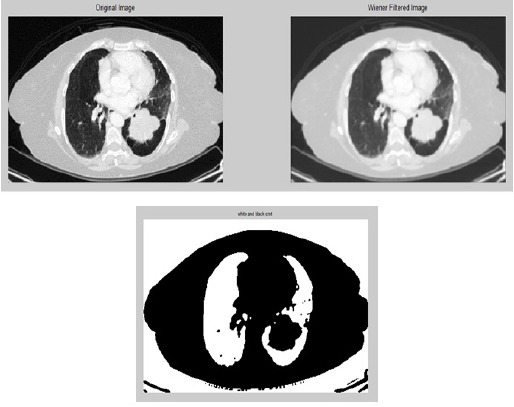
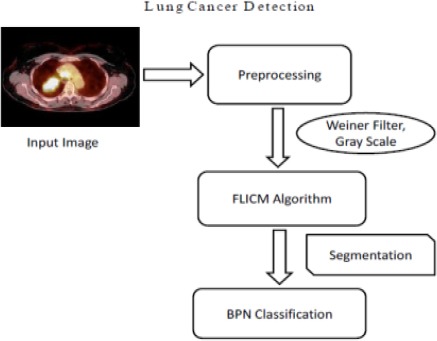
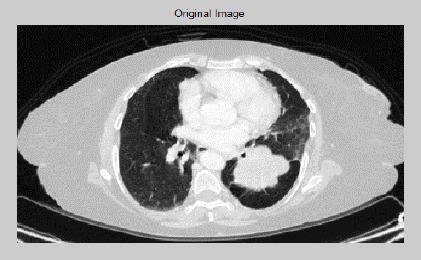
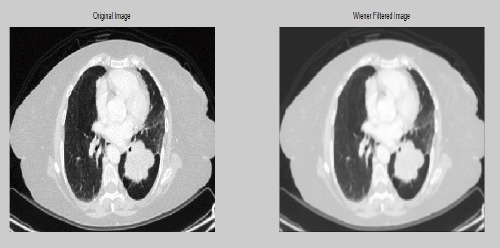
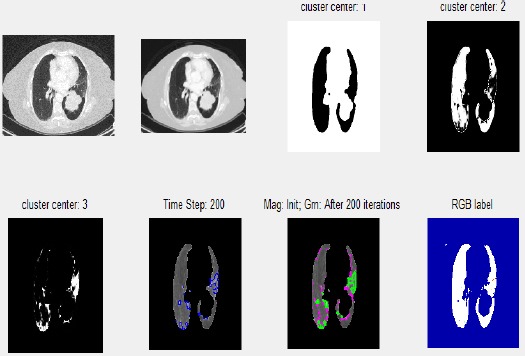
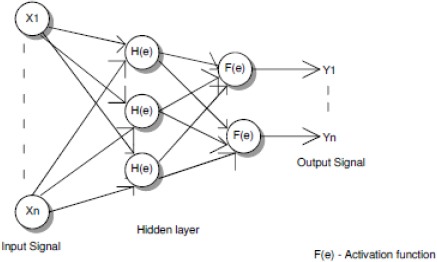
Lung cancer is a frequently lethal disease often causing death of human beings at an early age because of uncontrolled cell growth in the lung tissues. The diagnostic methods available are less than effective for detection of cancer. Therefore an automatic lesion segmentation method with computed tomography (CT) scans has been developed. However it is very difficult to perform automatic identification and segmentation of lung tumours with good accuracy because of the existence of variation in lesions. This paper describes the application of a robust lesion detection and segmentation technique to segment every individual cell from pathological images to extract the essential features. The proposed technique based on the FLICM (Fuzzy Local Information Cluster Means) algorithm used for segmentation, with reduced false positives in detecting lung cancers. The back propagation network used to classify cancer cells is based on computer aided diagnosis (CAD).
肺癌是一种常常致命的疾病,由于肺组织中细胞不受控制地生长,往往导致人类在早年死亡。现有的诊断方法在检测癌症方面效果欠佳。因此,已经开发出一种利用计算机断层扫描(CT)进行自动病变分割的方法。然而,由于病变存在差异,要以高准确率对肺肿瘤进行自动识别和分割非常困难。本文描述了一种强大的病变检测与分割技术的应用,该技术可从病理图像中分割出每个单独的细胞以提取关键特征。所提出的基于模糊局部信息聚类均值(FLICM)算法的技术用于分割,在检测肺癌时减少了假阳性。用于对癌细胞进行分类的反向传播网络是基于计算机辅助诊断(CAD)的。