Ahmadi Katayoon, Karimi Abbas, Fouladi Nia Babak
Department of Computer Engineering, Faculty of Engineering, Arak Branch, Islamic Azad University, ARAK, Markazi, Iran.
Comput Math Methods Med. 2016;2016:5237191. doi: 10.1155/2016/5237191. Epub 2016 Dec 4.
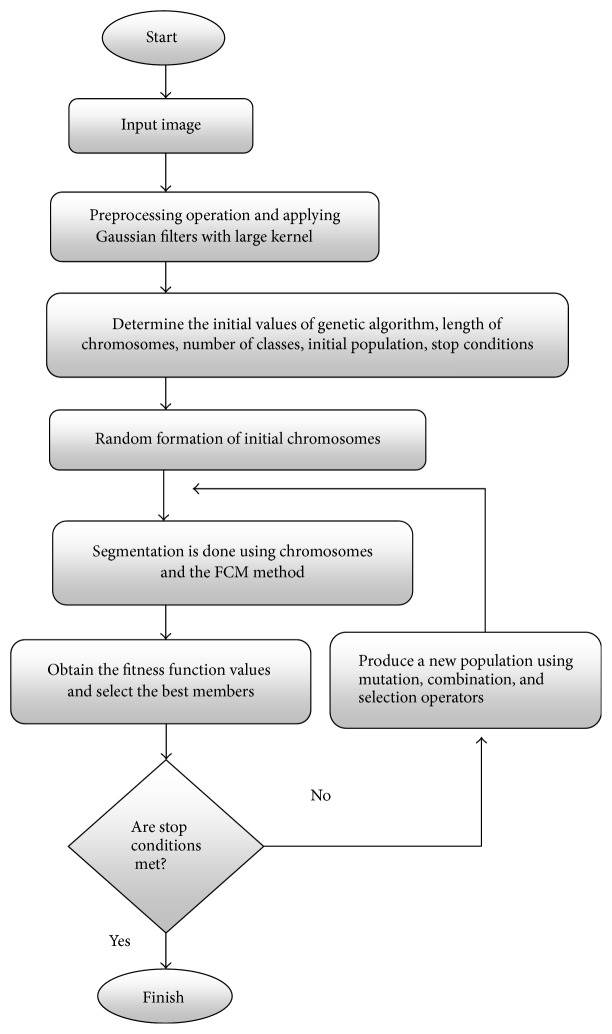
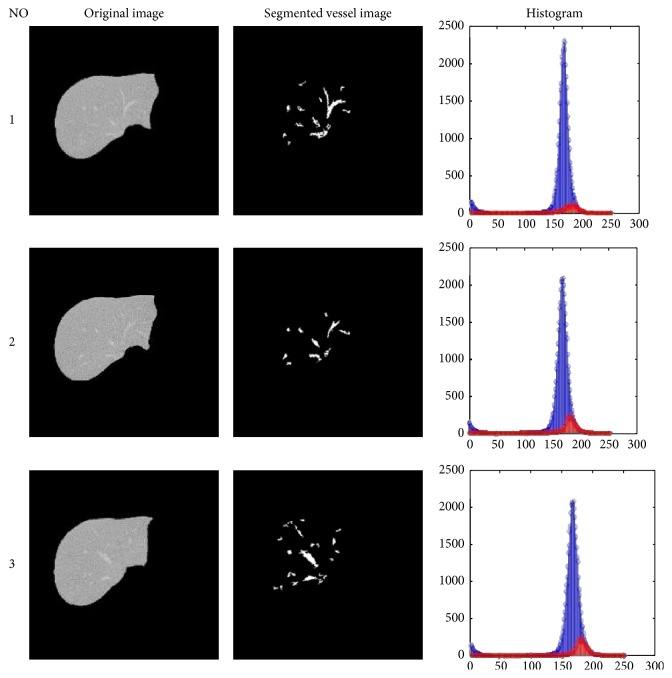
Automatic segmentation of medical CT scan images is one of the most challenging fields in digital image processing. The goal of this paper is to discuss the automatic segmentation of CT scan images to detect and separate vessels in the liver. The segmentation of liver vessels is very important in the liver surgery planning and identifying the structure of vessels and their relationship to tumors. Fuzzy -means (FCM) method has already been proposed for segmentation of liver vessels. Due to classical optimization process, this method suffers lack of sensitivity to the initial values of class centers and segmentation of local minima. In this article, a method based on FCM in conjunction with genetic algorithms (GA) is applied for segmentation of liver's blood vessels. This method was simulated and validated using 20 CT scan images of the liver. The results showed that the accuracy, sensitivity, specificity, and CPU time of new method in comparison with FCM algorithm reaching up to 91%, 83.62, 94.11%, and 27.17 were achieved, respectively. Moreover, selection of optimal and robust parameters in the initial step led to rapid convergence of the proposed method. The outcome of this research assists medical teams in estimating disease progress and selecting proper treatments.
医学CT扫描图像的自动分割是数字图像处理中最具挑战性的领域之一。本文的目的是讨论CT扫描图像的自动分割,以检测和分离肝脏中的血管。肝脏血管的分割在肝脏手术规划以及识别血管结构及其与肿瘤的关系方面非常重要。模糊均值(FCM)方法已被用于肝脏血管的分割。由于传统的优化过程,该方法对类中心的初始值缺乏敏感性,并且存在局部最小值的分割问题。在本文中,一种基于FCM结合遗传算法(GA)的方法被应用于肝脏血管的分割。该方法使用20幅肝脏CT扫描图像进行了模拟和验证。结果表明,与FCM算法相比,新方法的准确率、灵敏度、特异性和CPU时间分别达到了91%、83.62、94.11%和27.17。此外,在初始步骤中选择最优和鲁棒的参数导致了所提方法的快速收敛。本研究结果有助于医疗团队评估疾病进展并选择合适的治疗方法。