National Institute of Arthritis, Musculoskeletal and Skin Diseases, NIH, Bethesda, Maryland.
Oregon Health and Science University, Portland.
Arthritis Rheumatol. 2018 Apr;70(4):555-565. doi: 10.1002/art.40405. Epub 2018 Mar 7.
To investigate whether HLA-B27-mediated experimental spondyloarthritis (SpA) is associated with a common gut microbial signature, in order to identify potential drivers of pathogenesis.
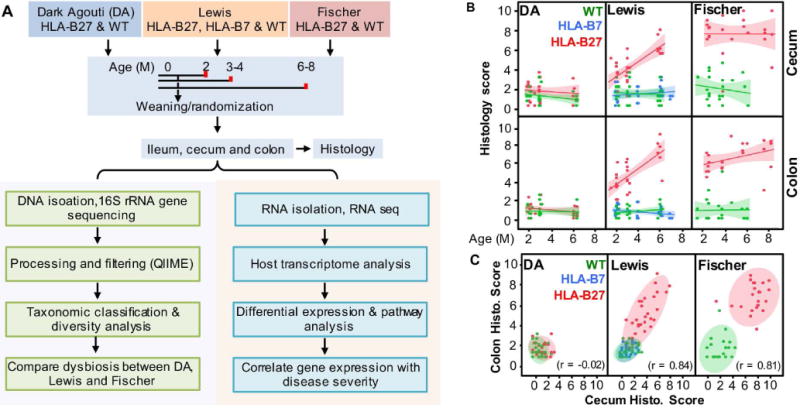
The effects of HLA-B27 on 3 genetic backgrounds, dark agouti (DA), Lewis, and Fischer, were compared, using wild-type littermates and HLA-B7-transgenic Lewis rats as controls. Cecum and colon tissue specimens or contents were collected from the rats at 2, 3-4, and 6-8 months of age, and histologic analysis was performed to assess inflammation, RNA sequencing was used to determine gene expression differences, and 16S ribosomal RNA gene sequencing was used to determine microbiota differences.
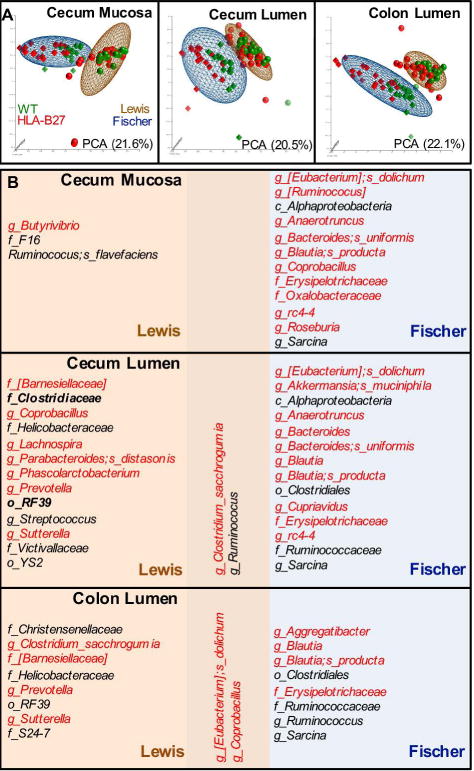
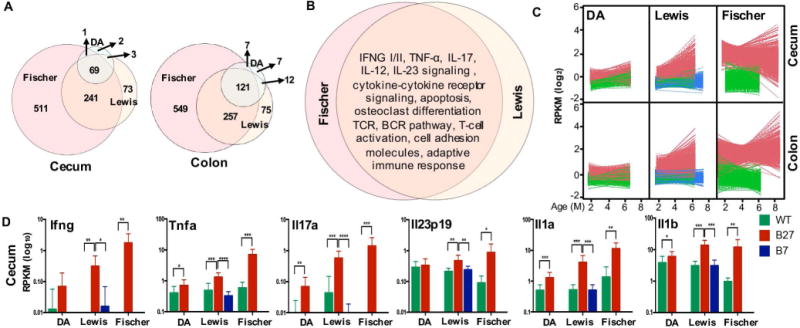
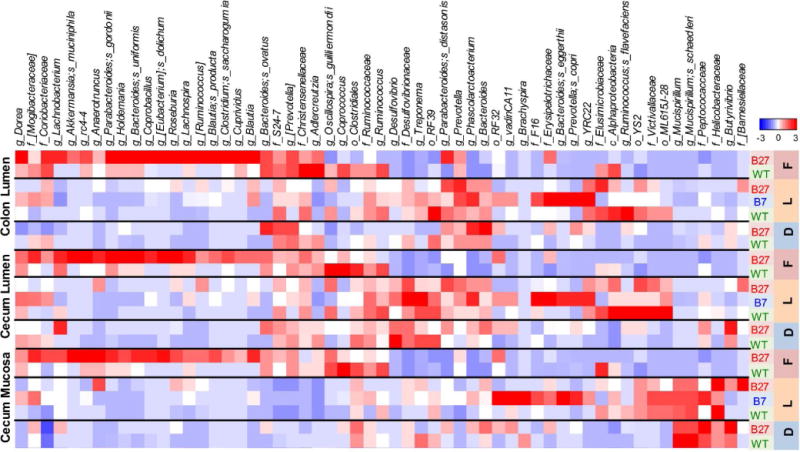
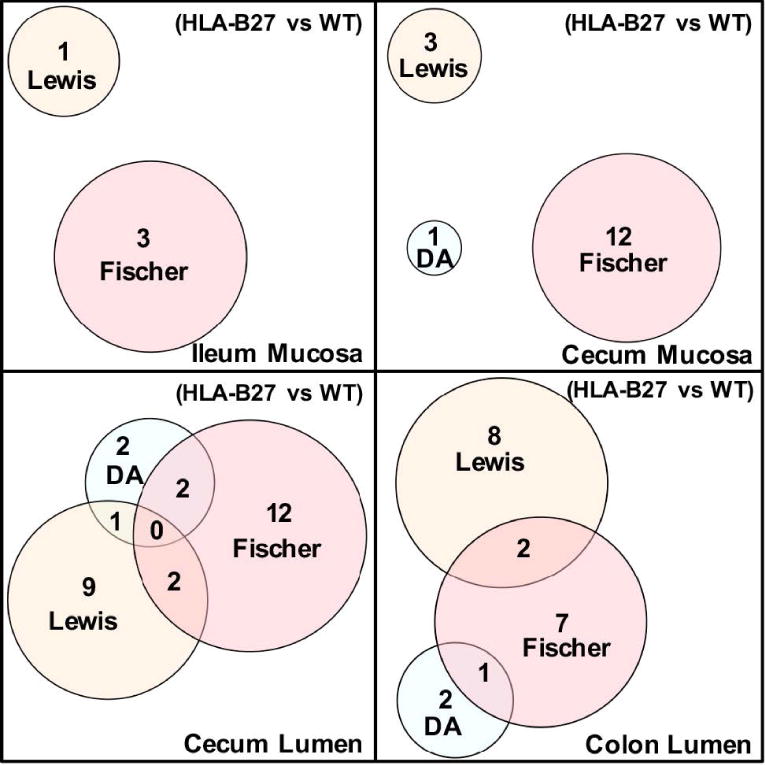
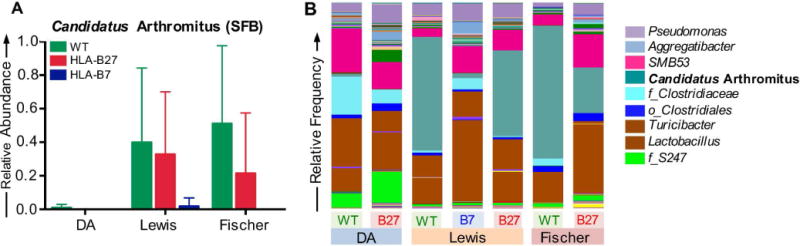
Both HLA-B27-transgenic Lewis rats and HLA-B27-transgenic Fischer rats developed gut inflammation, while DA rats were resistant to the effects of HLA-B27, and HLA-B7-transgenic rats were not affected. Immune dysregulation was similar in affected Lewis and Fischer rats and was dominated by activation of interleukin-23 (IL-23)/IL-17, interferon, tumor necrosis factor, and IL-1 cytokines and pathways in the colon and cecum, while DA rats exhibited low-level cytokine dysregulation without inflammation. Gut microbial changes in HLA-B27-transgenic rats were strikingly divergent on the 3 different host genetic backgrounds, including different patterns of dysbiosis in HLA-B27-transgenic Lewis and HLA-B27-transgenic Fischer rat strains, with some overlap. Interestingly, DA rats lacked segmented filamentous bacteria that promote CD4+ Th17 cell development, which may explain their resistance to disease.
The effects of HLA-B27 on gut microbiota and dysbiosis in SpA are highly dependent on the host genetic background and/or environment, despite convergence of dysregulated immune pathways. These results implicate an ecological model of dysbiosis, with the effects of multiple microbes contributing to the aberrant immune response, rather than a single or small number of microbes driving pathogenesis.
研究 HLA-B27 介导的实验性脊柱关节炎(SpA)是否与常见的肠道微生物特征相关,以确定发病机制的潜在驱动因素。
比较了 HLA-B27 在 3 种遗传背景(暗褐鼠、Lewis 和 Fischer)下的影响,以野生型同窝仔鼠和 HLA-B7 转基因 Lewis 大鼠作为对照。分别于 2、3-4 和 6-8 月龄时收集大鼠的回肠和结肠组织标本或内容物,进行组织学分析以评估炎症,进行 RNA 测序以确定基因表达差异,并进行 16S 核糖体 RNA 基因测序以确定微生物群差异。
HLA-B27 转基因 Lewis 大鼠和 HLA-B27 转基因 Fischer 大鼠均出现肠道炎症,而暗褐鼠对 HLA-B27 的影响具有抗性,HLA-B7 转基因大鼠则不受影响。受影响的 Lewis 和 Fischer 大鼠的免疫失调相似,以白细胞介素 23(IL-23)/IL-17、干扰素、肿瘤坏死因子和 IL-1 细胞因子和途径在结肠和回肠中的激活为主,而暗褐鼠则表现出低水平的细胞因子失调而无炎症。在 3 种不同的宿主遗传背景下,HLA-B27 转基因大鼠的肠道微生物变化明显不同,包括 HLA-B27 转基因 Lewis 和 HLA-B27 转基因 Fischer 大鼠株的不同失调模式,存在一些重叠。有趣的是,暗褐鼠缺乏促进 CD4+Th17 细胞发育的分段丝状细菌,这可能解释了它们对疾病的抗性。
尽管失调的免疫途径趋同,但 HLA-B27 对 SpA 肠道微生物和失调的影响高度依赖于宿主遗传背景和/或环境。这些结果暗示了一种生态失调模型,其中多种微生物的影响导致异常免疫反应,而不是单一或少数微生物驱动发病机制。