Pietryczuk A, Cudowski A, Hauschild T, Świsłocka M, Więcko A, Karpowicz M
Department of Hydrobiology, Institute of Biology, University of Białystok, Ciołkowskiego 1J, 15-245, Białystok, Poland.
Department of Microbiology, Institute of Biology, University of Białystok, Ciołkowskiego 1J, 15-245, Białystok, Poland.
Curr Microbiol. 2018 May;75(5):630-638. doi: 10.1007/s00284-017-1427-3. Epub 2017 Dec 30.
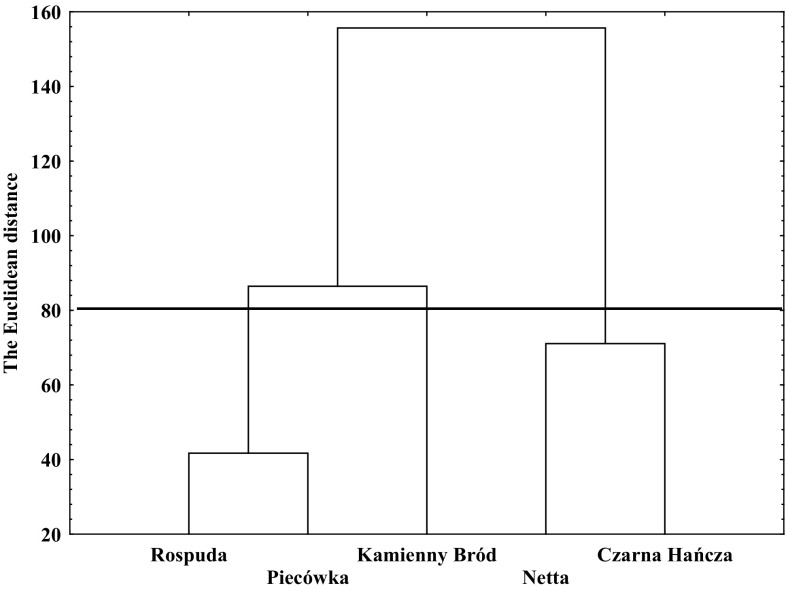
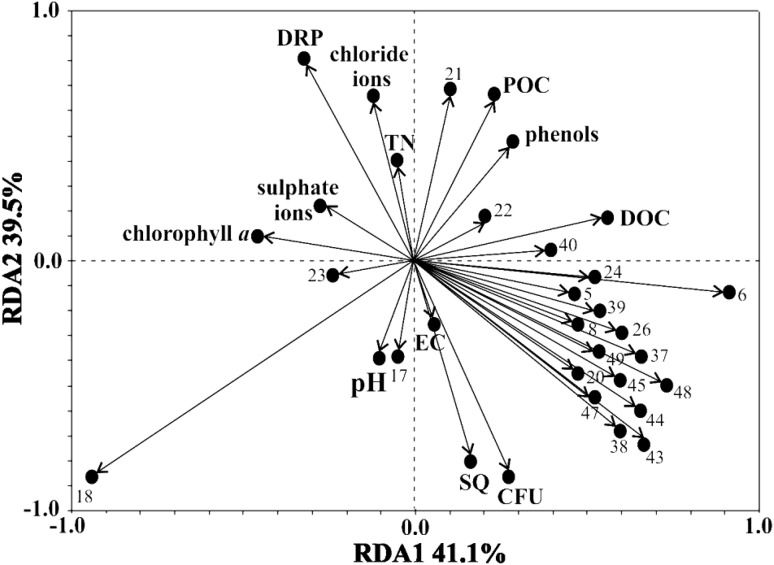
The main objective of this work was to determine the abundance and species diversity of fungi in the waters of selected rivers of Central Europe, NE Poland (Augustów Lakeland), differing in size, physical and chemical properties, and streamflow rate. The minimum abundance of fungi in the analysed rivers was recorded for a river with low concentration of organic matter (8200 CFU/mL, Czarna Hańcza River), and maximum for a strongly anthropogenically polluted river (24,800 CFU/mL, Kamienny Bród River). A total of 49 fungal species were identified based on PCR ITS-RFLP and DNA sequencing methods. However, RFLP-PCR method has proved to be sufficient to determine the species of 34 fungi. The highest taxonomic diversity was determined for the waters abundant in organic matter (Piecówka and Rospuda Rivers), and the lowest for rivers poor in organic matter (Netta and Czarna Hańcza Rivers). From the 49 identified species, 47% were aquatic hyphomycetes, and 18% were potentially pathogenic fungi mainly occurring in the waters of polluted rivers with increased organic matter concentrations. Moreover, a higher number of fungal taxa were recorded in fluvial waters distinguished by higher streamflow rate, and therefore, stronger water turbulence. The study results suggest that the most important factors influencing the structure of mycoplankton in rivers include pH of water, content of organic matter, degree of anthropogenic pollution, and streamflow rate.
这项工作的主要目的是确定中欧波兰东北部(奥古斯托夫湖区)选定河流中真菌的丰度和物种多样性,这些河流在大小、物理和化学性质以及流速方面存在差异。在分析的河流中,真菌丰度最低的是一条有机物浓度较低的河流(8200 CFU/mL,黑汉恰河),最高的是一条受人为污染严重的河流(24,800 CFU/mL,卡缅尼布罗德河)。基于PCR ITS-RFLP和DNA测序方法共鉴定出49种真菌。然而,RFLP-PCR方法已被证明足以确定34种真菌的种类。有机物丰富的水域(皮耶乔夫卡河和罗斯普达河)分类多样性最高,而有机物贫乏的河流(内塔河和黑汉恰河)分类多样性最低。在鉴定出的49个物种中,47%是水生丝孢菌,18%是潜在致病真菌,主要出现在有机物浓度增加的污染河流中。此外,在流速较高、因此水流湍动较强的河流水域中记录到的真菌类群数量更多。研究结果表明,影响河流中浮游真菌结构的最重要因素包括水的pH值、有机物含量、人为污染程度和流速。