Hontani Koji, Tsuchikawa Takahiro, Hiwasa Takaki, Nakamura Toru, Ueno Takashi, Kushibiki Toshihiro, Takahashi Mizuna, Inoko Kazuho, Takano Hironobu, Takeuchi Satoshi, Dosaka-Akita Hirotoshi, Kuwatani Masaki, Sakamoto Naoya, Hatanaka Yutaka, Mitsuhashi Tomoko, Shimada Hideaki, Shichinohe Toshiaki, Hirano Satoshi
Department of Gastroenterological Surgery II, Hokkaido University Graduate School of Medicine, Sapporo 060-8638, Japan.
Department of Biochemistry and Genetics, Chiba University, Chuo Ku, Chiba 260-8670, Japan.
Oncotarget. 2017 Oct 31;8(63):106206-106221. doi: 10.18632/oncotarget.22175. eCollection 2017 Dec 5.
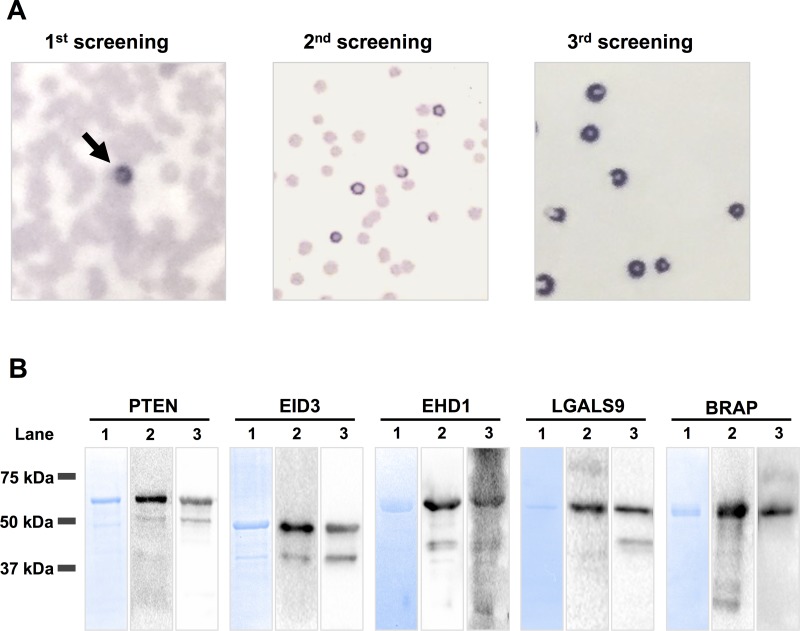
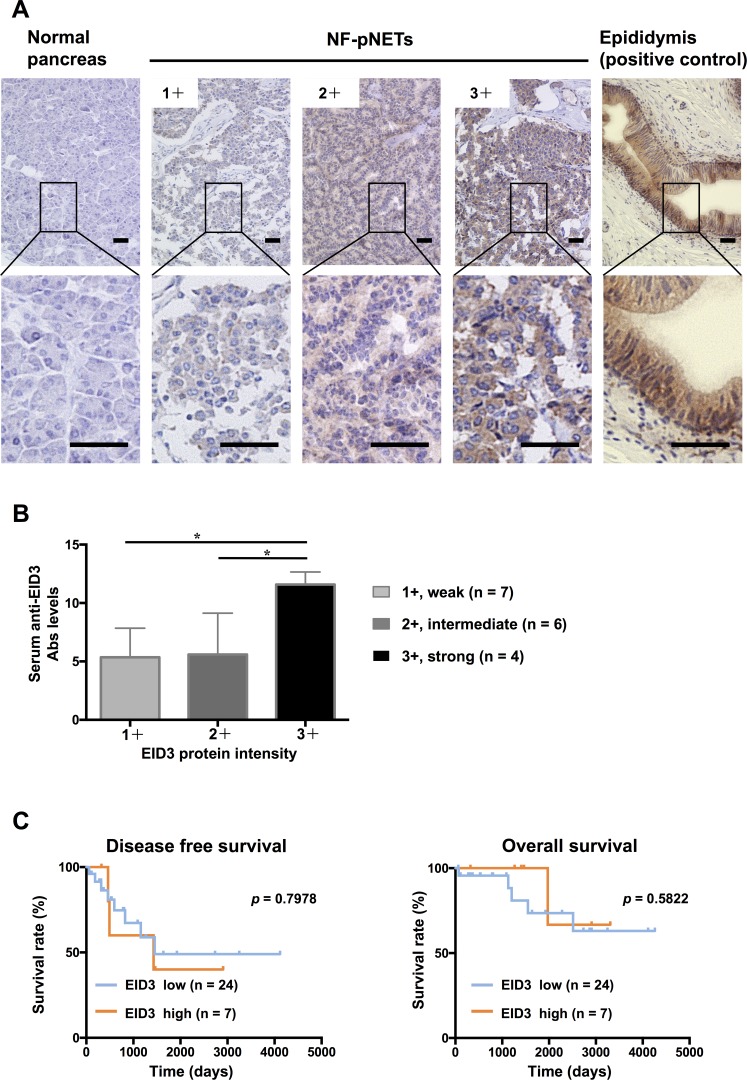
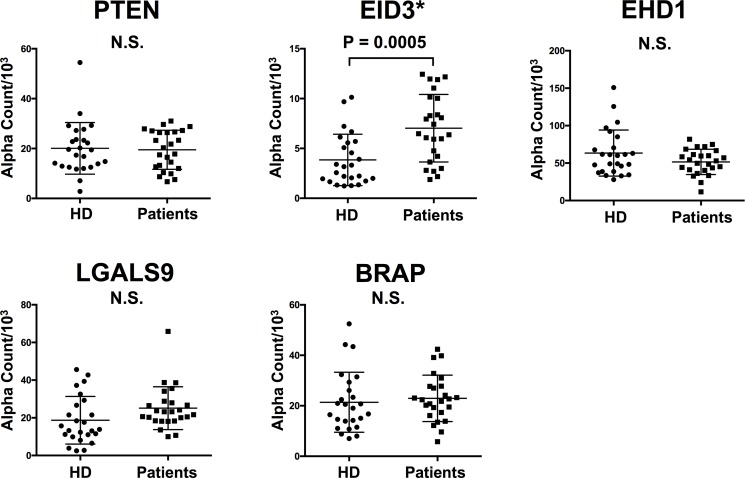
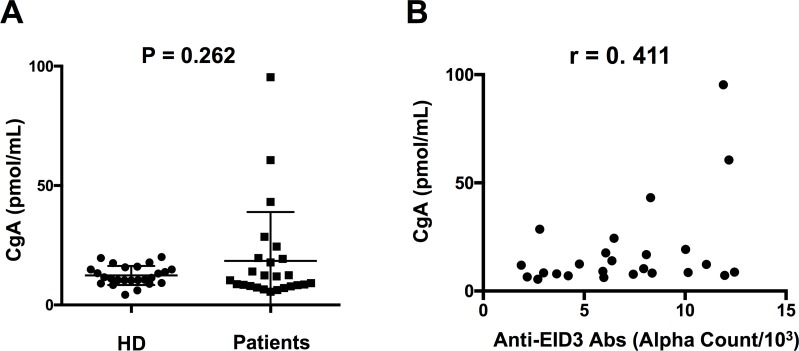
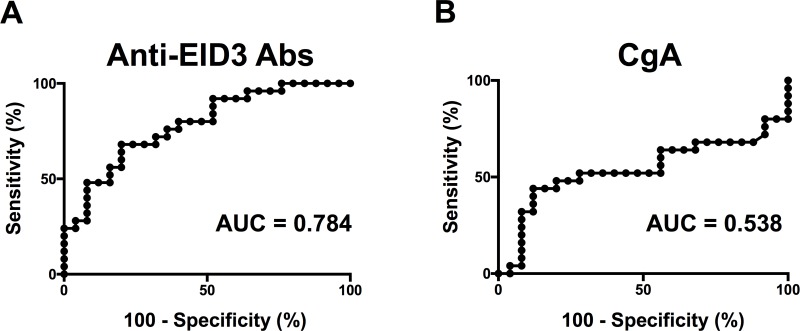
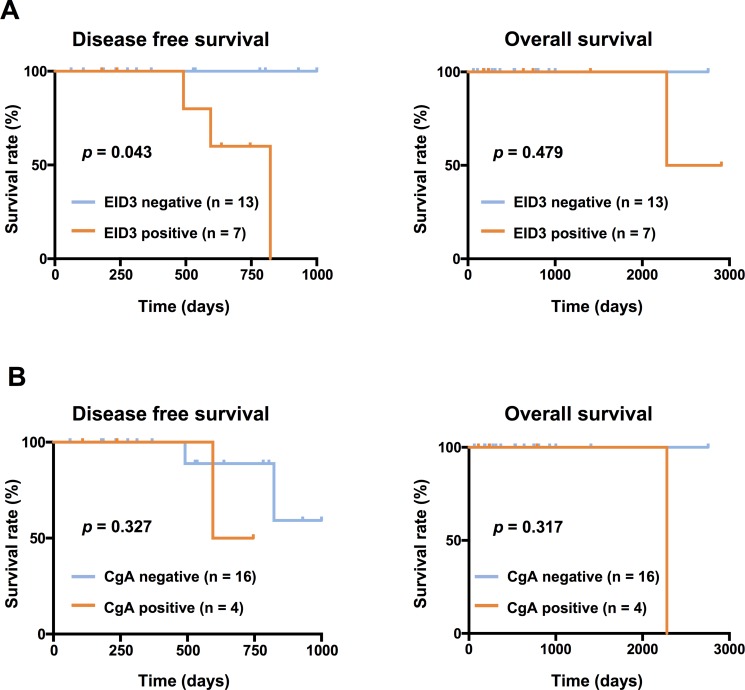
Pancreatic neuroendocrine tumors (pNETs) are relatively rare heterogenous tumors, comprising only 1-2% of all pancreatic neoplasms. The majority of pNETs are non-functional tumors (NF-pNETs) that do not produce hormones, and as such, do not cause any hormone-related symptoms. As a result, these tumors are often diagnosed at an advanced stage because patients do not present with specific symptoms. Although tumor markers are used to help diagnosis and predict some types of cancers, chromogranin A, a widely used tumor marker of pNETs, has significant limitations. To identify novel NF-pNET-associated antigens, we performed serological identification of antigens by recombinant cDNA expression cloning (SEREX) and identified five tumor antigens (phosphatase and tensin homolog, EP300-interacting inhibitor of differentiation 3 [EID3], EH domain-containing protein 1, galactoside-binding soluble 9, and BRCA1-associated protein). Further analysis using the AlphaLISA immunoassay to compare serum antibody levels revealed that antibody levels against the EID3 antigen was significantly higher in the patient group than in the healthy donor group ( = 25, both groups). In addition, higher serum anti-EID3 antibody levels in NF-pNET patients correlated with shorter disease-free survival. The AUC calculated by ROC analysis was 0.784 with moderate diagnostic accuracy. In conclusion, serum anti-EID3 antibody levels may be useful as a tumor marker for prediction of tumor recurrence in NF-pNETs.
胰腺神经内分泌肿瘤(pNETs)是相对罕见的异质性肿瘤,仅占所有胰腺肿瘤的1%-2%。大多数pNETs是非功能性肿瘤(NF-pNETs),不产生激素,因此不会引起任何激素相关症状。结果,这些肿瘤往往在晚期才被诊断出来,因为患者没有出现特定症状。虽然肿瘤标志物用于辅助诊断和预测某些类型的癌症,但嗜铬粒蛋白A作为一种广泛使用的pNETs肿瘤标志物,有显著局限性。为了鉴定新的与NF-pNET相关的抗原,我们通过重组cDNA表达克隆(SEREX)进行了抗原的血清学鉴定,并鉴定出五种肿瘤抗原(磷酸酶和张力蛋白同源物、EP300相互作用的分化抑制因子3 [EID3]、含EH结构域蛋白1、半乳糖苷结合可溶性9和BRCA1相关蛋白)。使用AlphaLISA免疫测定法进一步分析以比较血清抗体水平,结果显示患者组中针对EID3抗原的抗体水平显著高于健康供体组(两组均n = 25)。此外,NF-pNET患者中较高的血清抗EID3抗体水平与较短的无病生存期相关。通过ROC分析计算的AUC为0.784,诊断准确性中等。总之,血清抗EID3抗体水平可能作为预测NF-pNETs肿瘤复发的肿瘤标志物。