Machida Toshio, Kubota Motoo, Kobayashi Eiichi, Iwadate Yasuo, Saeki Naokatsu, Yamaura Akira, Nomura Fumio, Takiguchi Masaki, Hiwasa Takaki
Departments of Neurosurgery, Chiba Cardiovascular Center, Ichihara, Chiba, Japan.
Department of Neurosurgery, Kameda Medical Center, Chiba, Japan.
J Transl Med. 2015 Feb 22;13:71. doi: 10.1186/s12967-015-0393-4.
Because circulating antibodies against a variety of antigens have been detected in patients with coronary heart disease, carotid atherosclerosis and those who have suffered a stroke, it is suspected that immune response may be one of the mechanisms of atherogenesis The objective of this study is to identify novel antibodies in ischemic stroke patients by screening the expressed recombinant proteins using a human cDNA library (SEREX).
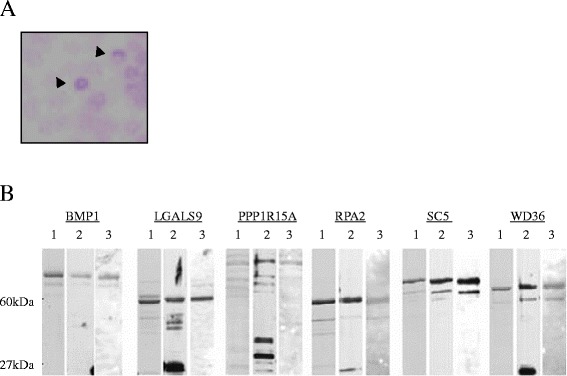
To identify the candidate antigens, cDNA library was screened by SEREX using plasma from ten patients with ischemic stroke. Subsequently, via ELISA using recombinant proteins and synthetic peptides, the serum antibody levels were measured in two independent patient/healthy donor (HD) cohorts (142 and 78 in the 2nd screening and a validation cohort, respectively).
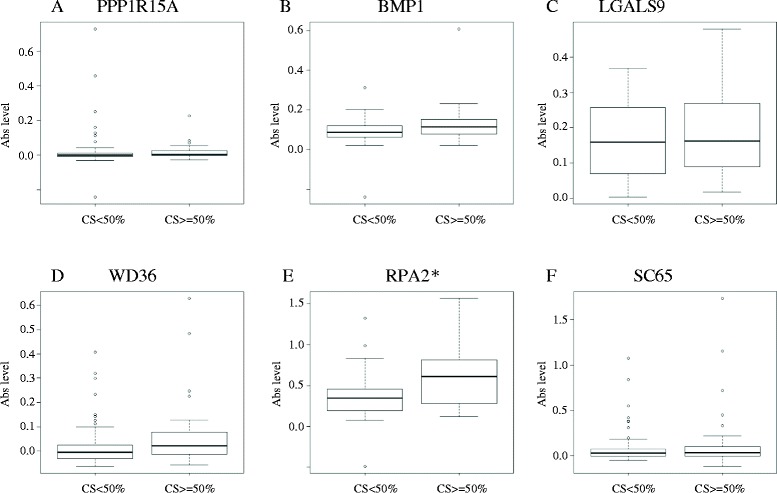
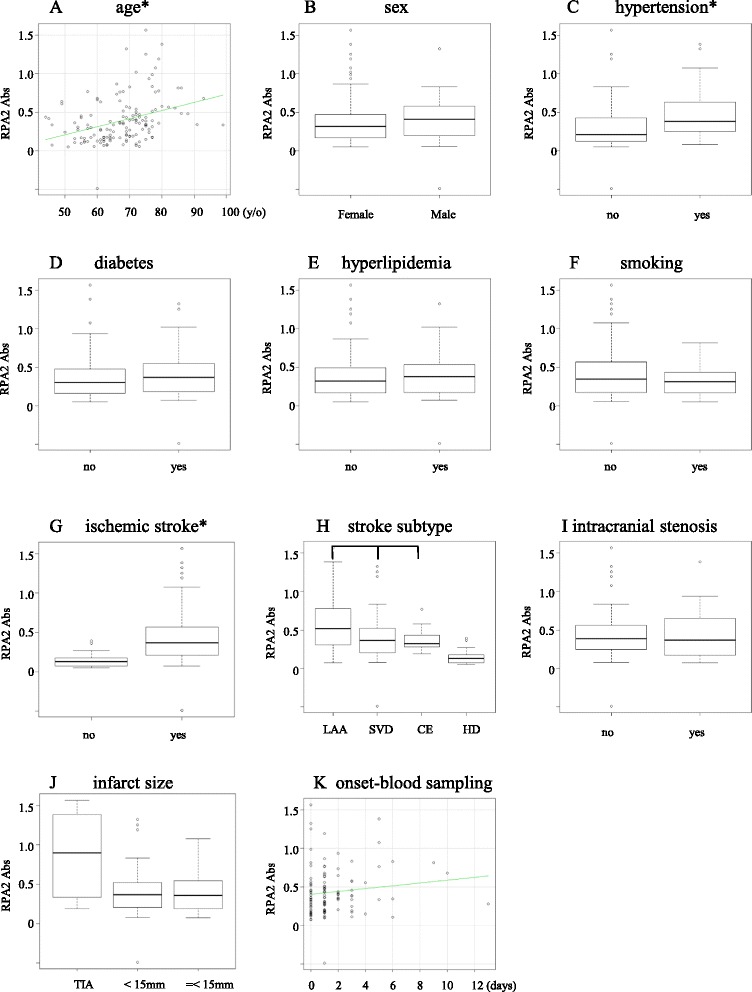
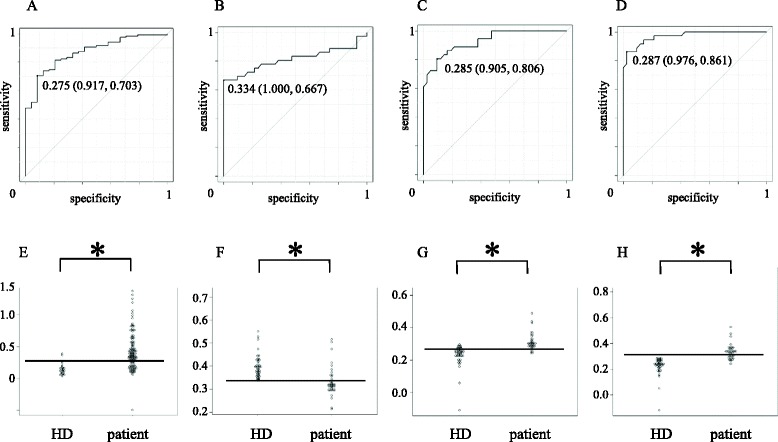
The initial screening resulted in the identification of six candidate antigens. Of these antigens, replication protein A2 (RPA2) was determined to be the antigen associated with stroke (P < 0.05) by ELISA with 2nd screening and validation cohort. Multifactorial logistic regression analysis showed that the increased levels of the RPA2 antibodies (RPA2-Abs) associated with stroke independent of other risk factors for stroke (P < 0.05). Receiver operating curve analysis demonstrated that the area under the curve from ELISA using GST fusion RPA2 and synthetic peptides (bRPA2-132) were 0.867 (95% CI: 0.798-0.936) and 0.971 (95% CI: 0.940-1.00), respectively. If the cut-off value of the bRPA2-132-Ab level was determined to be 0.334, the sensitivity and specificity of the antibody level as the diagnostic marker for stroke were 0.323 (95% CI: 0.209-0.453) and 1.00 (95% CI: 0.713-1.00), respectively.
SEREX identified RPA2 as the antigen associated with ischemic stroke and serum auto-antibodies against RPA2 elevates in stroke patients. RPA2-Abs could become a biomarker for the evaluation of ischemic stroke at risk.
由于在冠心病、颈动脉粥样硬化患者以及中风患者体内检测到了针对多种抗原的循环抗体,因此怀疑免疫反应可能是动脉粥样硬化形成的机制之一。本研究的目的是通过使用人cDNA文库(SEREX)筛选表达的重组蛋白,在缺血性中风患者中鉴定新的抗体。
为了鉴定候选抗原,使用10例缺血性中风患者的血浆通过SEREX筛选cDNA文库。随后,通过使用重组蛋白和合成肽的ELISA,在两个独立的患者/健康供体(HD)队列(第二次筛选和验证队列中分别为142例和78例)中测量血清抗体水平。
初步筛选鉴定出6种候选抗原。在这些抗原中,通过第二次筛选和验证队列的ELISA确定复制蛋白A2(RPA2)是与中风相关的抗原(P<0.05)。多因素逻辑回归分析表明,RPA2抗体(RPA2-Abs)水平升高与中风相关,独立于其他中风危险因素(P<0.05)。受试者工作曲线分析表明,使用GST融合RPA2和合成肽(bRPA2-132)的ELISA的曲线下面积分别为0.867(95%CI:0.798-0.936)和0.971(95%CI:0.940-1.00)。如果将bRPA2-132-Ab水平的截断值确定为0.334,抗体水平作为中风诊断标志物的敏感性和特异性分别为0.323(95%CI:0.209-0.453)和1.00(95%CI:0.713-1.00)。
SEREX鉴定出RPA2是与缺血性中风相关的抗原,中风患者血清中针对RPA2的自身抗体升高。RPA2-Abs可能成为评估缺血性中风风险的生物标志物。