Bachiller Eneko, Utne Kjell Rong, Jansen Teunis, Huse Geir
Pelagic Fish Research Group, Institute of Marine Research (IMR), Bergen, Norway.
GINR-Greenland Institute of Natural Resources, Nuuk, Greenland.
PLoS One. 2018 Jan 2;13(1):e0190345. doi: 10.1371/journal.pone.0190345. eCollection 2018.
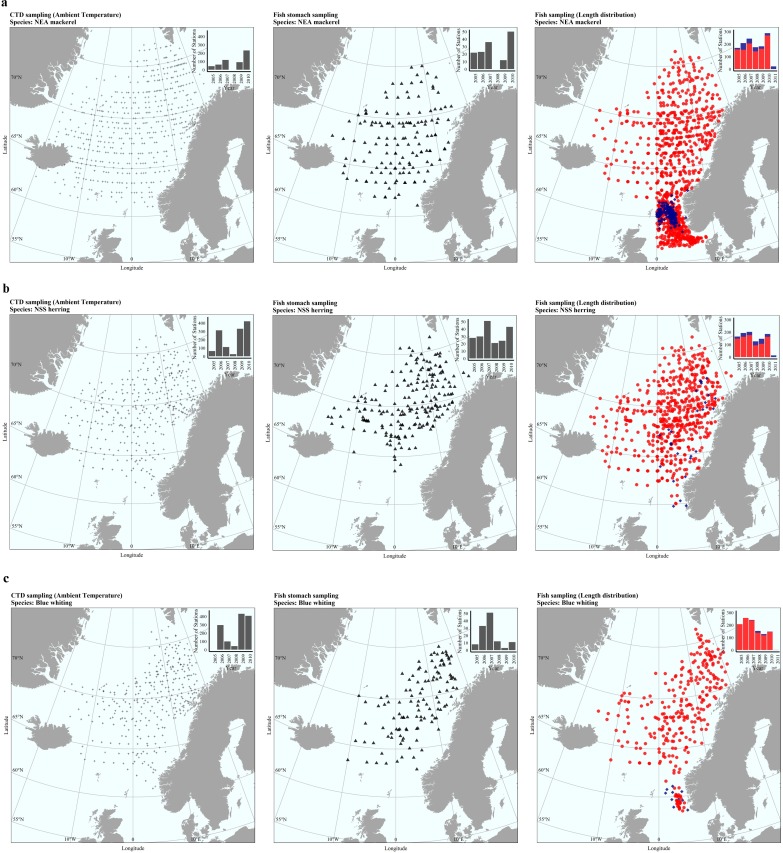
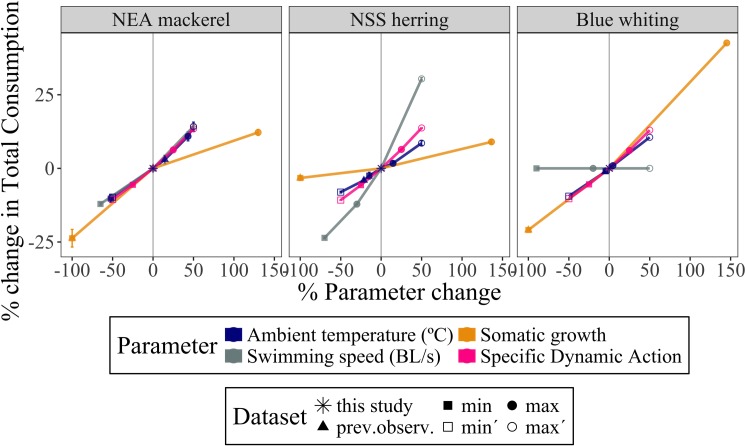
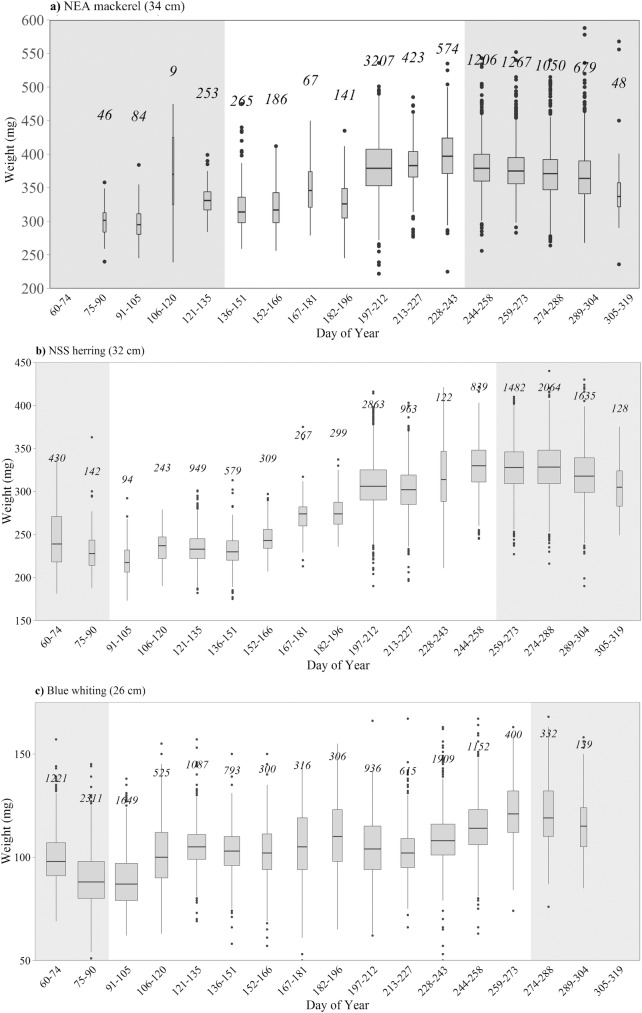
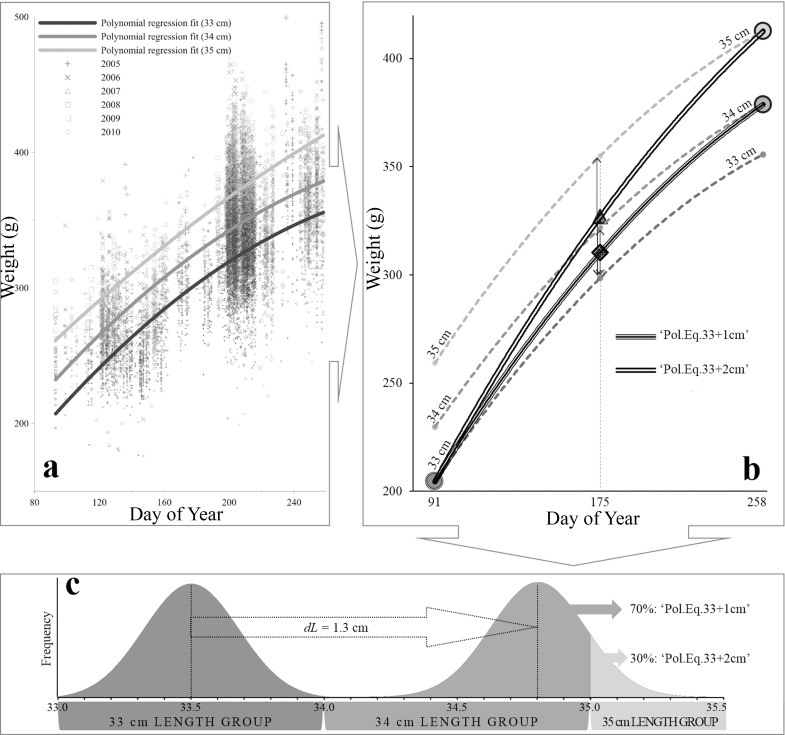
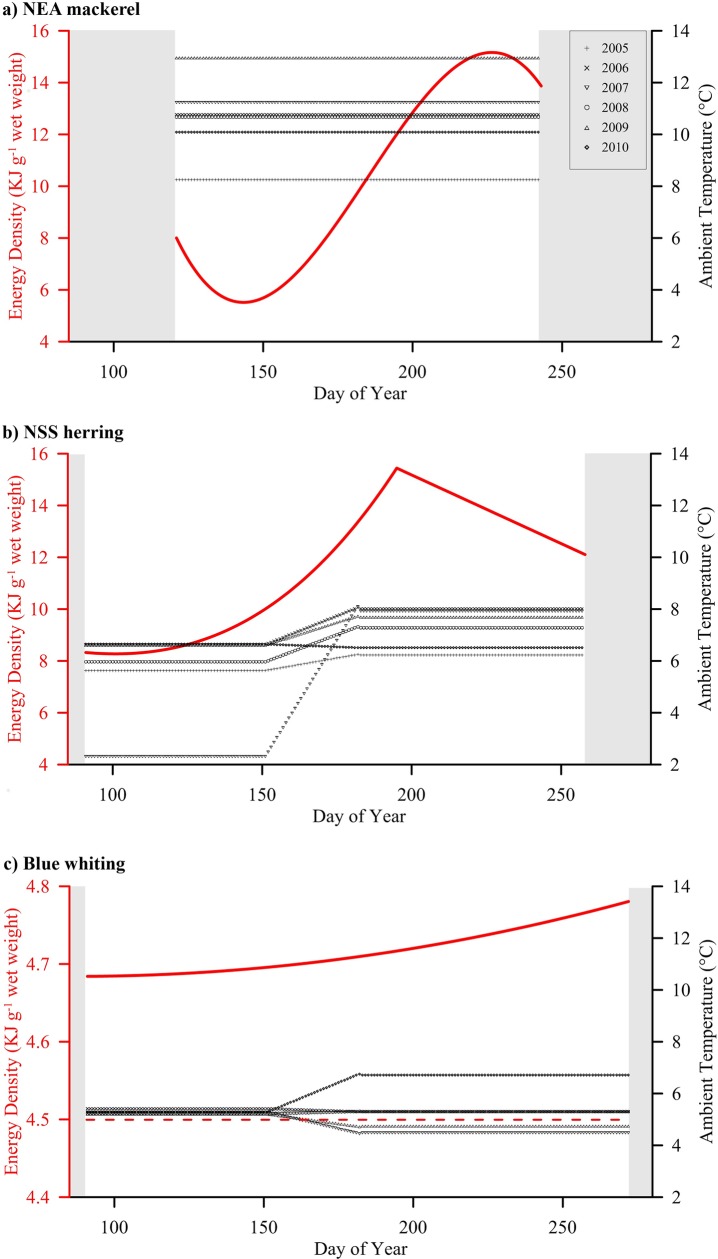
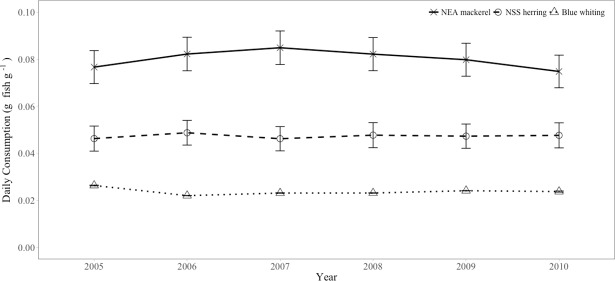
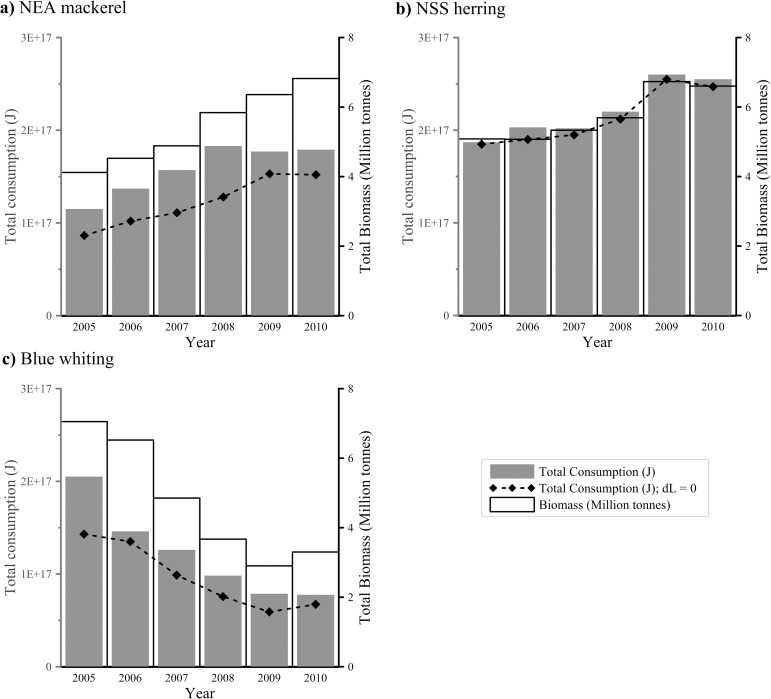
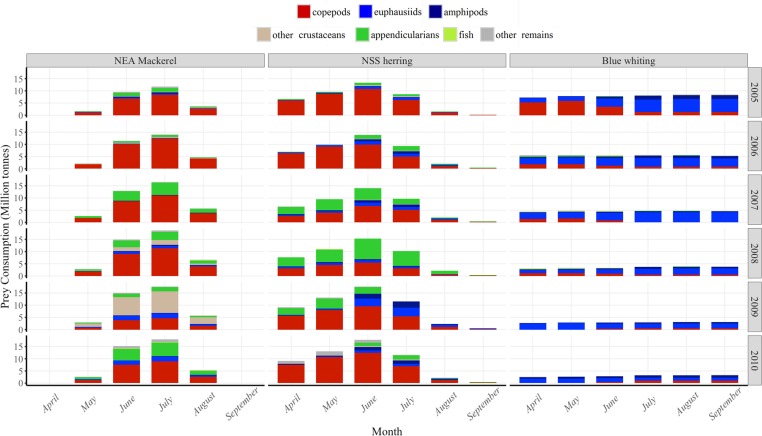
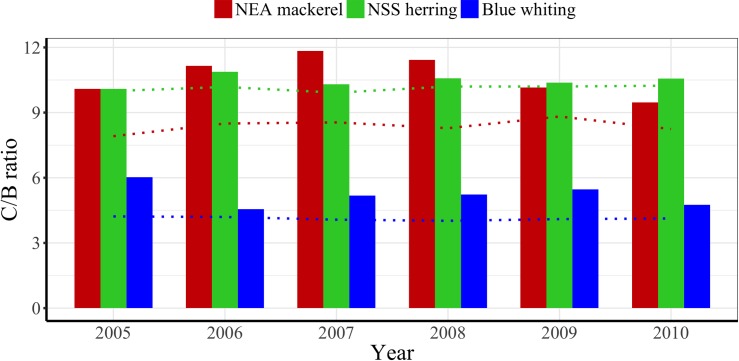
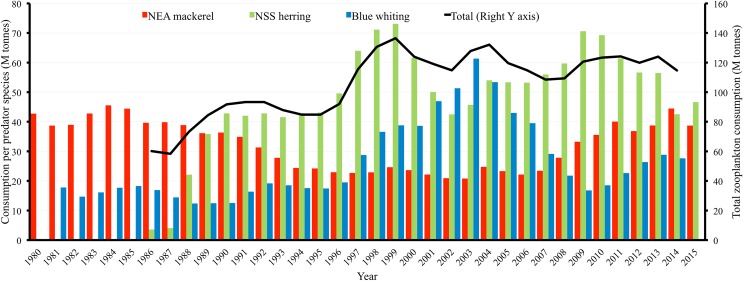
The present study uses bioenergetics modeling to estimate the annual consumption of the main zooplankton groups by some of the most commercially important planktivorous fish stocks in the Northeast Atlantic, namely Norwegian spring-spawning (NSS) herring (Clupea harengus), blue whiting (Micromesistius poutassou) and NEA mackerel (Scomber scombrus). The data was obtained from scientific surveys in the main feeding area (Norwegian Sea) in the period 2005-2010. By incorporating novel information about ambient temperature, seasonal growth and changes in the diet from stomach content analyses, annual consumption of the different zooplankton groups by pelagic fish is estimated. The present study estimates higher consumption estimates than previous studies for the three species and suggests that fish might have a greater impact on the zooplankton community as foragers. This way, NEA mackerel, showing the highest daily consumption rates, and NSS herring, annually consume around 10 times their total biomass, whereas blue whiting consume about 6 times their biomass in zooplankton. The three species were estimated to consume an average of 135 million (M) tonnes of zooplankton each year, consisting of 53-85 M tonnes of copepods, 20-32 M tonnes of krill, 8-42 M tonnes of appendicularians and 0.2-1.2 M tonnes of fish, depending on the year. For NSS herring and NEA mackerel the main prey groups are calanoids and appendicularians, showing a peak in consumption during June and June-July, respectively, and suggesting high potential for inter-specific feeding competition between these species. In contrast, blue whiting maintain a low consumption rate from April to September, consuming mainly larger euphausiids. Our results suggest that the three species can coexist regardless of their high abundance, zooplankton consumption rates and overlapping diet. Accordingly, the species might have niche segregation, as they are species specific, showing annual and inter-annual variability in total consumption of the different prey species. These estimates and their inter-annual and inter-specific variation are fundamental for understanding fundamental pelagic predator-prey interactions as well as to inform advanced multispecies ecosystem models.
本研究运用生物能量学模型,估算东北大西洋一些商业上最重要的食浮游生物鱼类种群每年对主要浮游动物群体的消费量,这些鱼类包括挪威春季产卵(NSS)鲱鱼(大西洋鲱)、蓝鳕和东北大西洋鲭鱼。数据取自2005年至2010年期间在主要摄食区域(挪威海)进行的科学调查。通过纳入有关环境温度、季节性生长以及胃内容物分析得出的饮食变化的新信息,估算了中上层鱼类对不同浮游动物群体的年消费量。本研究估算出的这三种鱼类的消费量高于以往研究,表明鱼类作为捕食者可能对浮游动物群落有更大影响。这样一来,日消费量最高的东北大西洋鲭鱼和挪威春季产卵鲱鱼每年消耗的浮游动物量约为其总生物量的10倍,而蓝鳕消耗的浮游动物量约为其生物量的6倍。据估计,这三种鱼类每年平均消耗1.35亿吨浮游动物,其中包括5300万至8500万吨桡足类、2000万至3200万吨磷虾、800万至4200万吨尾海鞘纲动物以及20万至120万吨鱼类,具体数量因年份而异。对于挪威春季产卵鲱鱼和东北大西洋鲭鱼而言,主要猎物群体分别是哲水蚤类和尾海鞘纲动物,它们的消费量分别在6月以及6月至7月达到峰值,这表明这些物种之间存在种间捕食竞争的高潜力。相比之下,蓝鳕在4月至9月维持较低的消费率,主要捕食较大的磷虾类。我们的结果表明,尽管这三种鱼类数量众多、浮游动物消费率高且饮食重叠,但它们仍能共存。因此,这些物种可能存在生态位分离,因为它们具有物种特异性,在不同猎物物种的总消费量上表现出年度和年际变化。这些估算及其年际和种间变化对于理解基本的中上层捕食者 - 猎物相互作用以及为先进的多物种生态系统模型提供信息至关重要。