Li Kai, Zhang Yongxing, Chen Mengting, Hu Yangyang, Jiang Weiliang, Zhou Li, Li Sisi, Xu Min, Zhao Qinghua, Wan Rong
Department of Gastroenterology, Shanghai First People's Hospital, School of Medicine, Shanghai Jiao Tong University, Shanghai, People's Republic of China.
Department of Orthopaedics, Shanghai First People's Hospital, School of Medicine, Shanghai Jiao Tong University, Shanghai, People's Republic of China.
Int J Nanomedicine. 2017 Dec 19;13:19-30. doi: 10.2147/IJN.S143928. eCollection 2018.
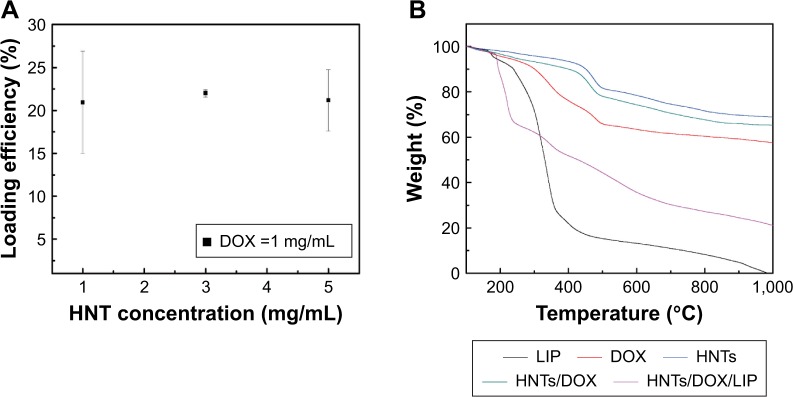
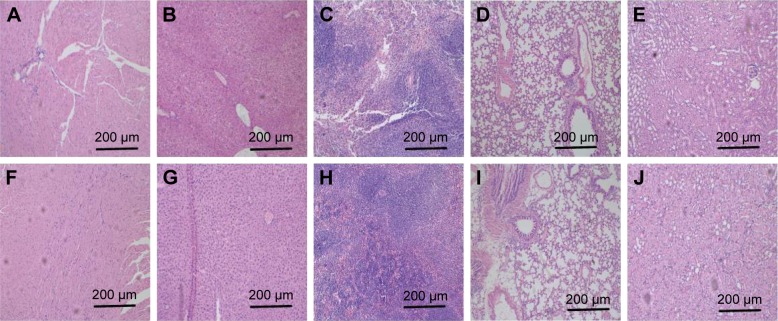
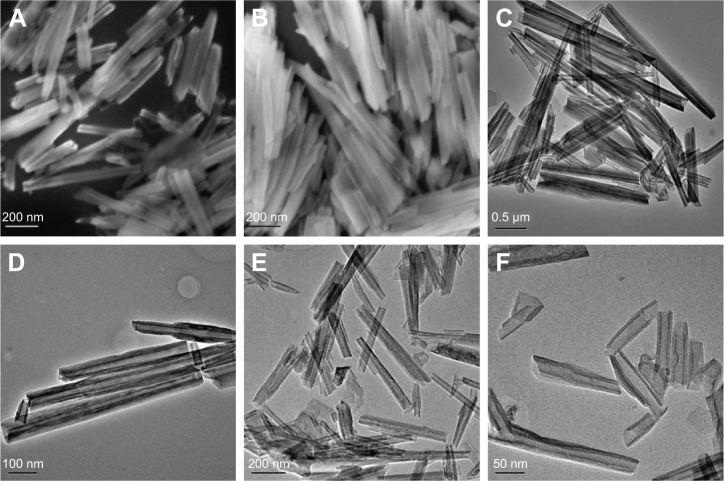
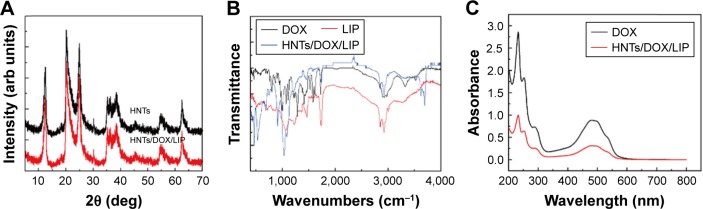
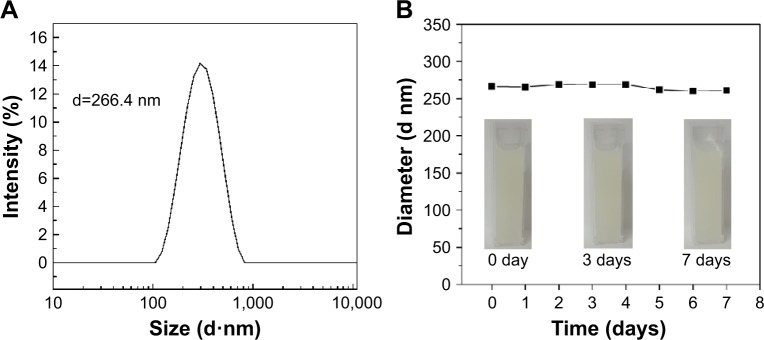
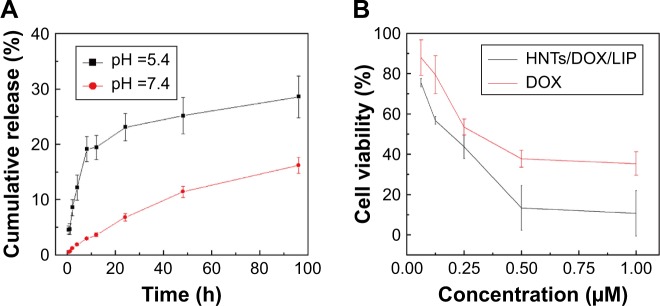
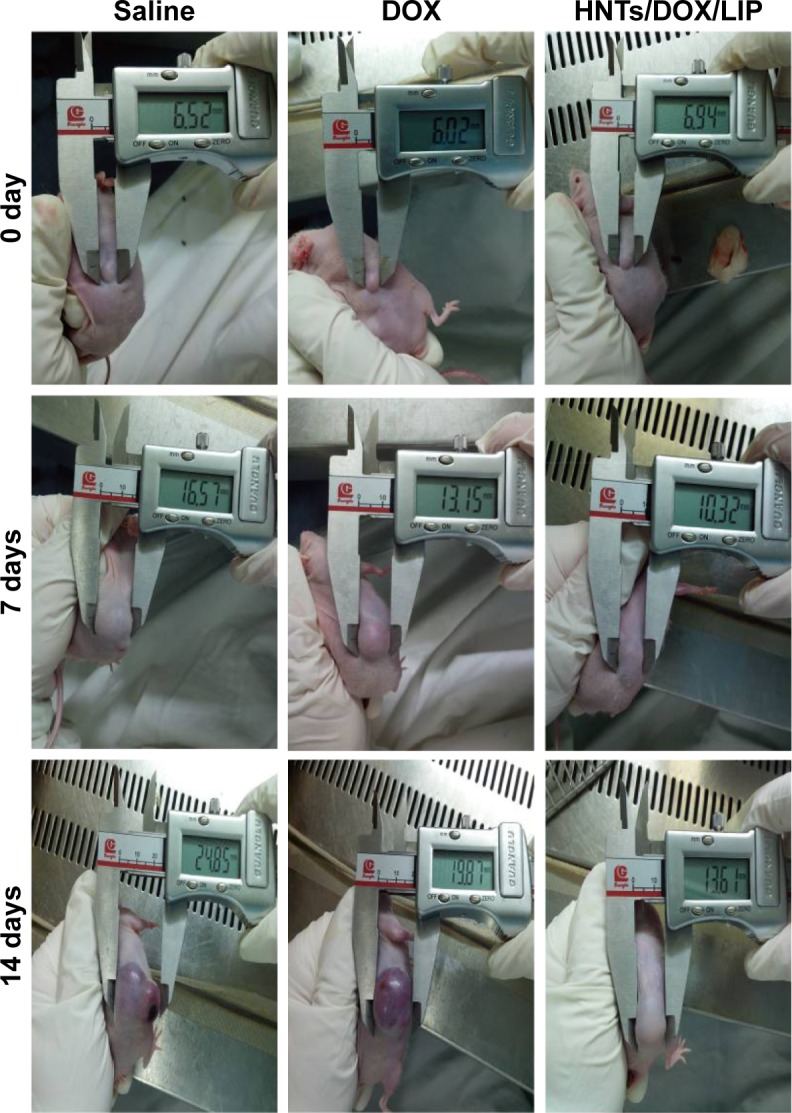
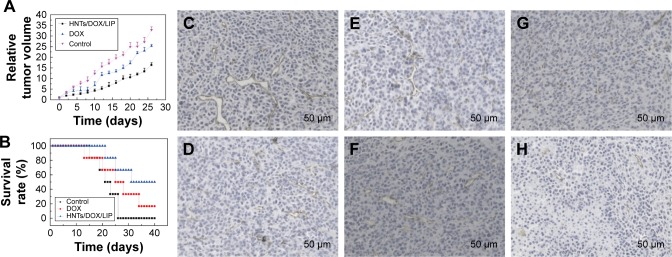
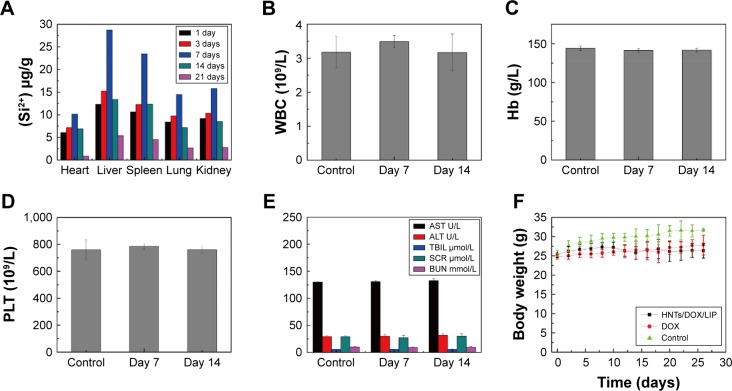
To improve the antitumor efficacy of doxorubicin (DOX) and provide novel clinical treatment of gastric cancer, halloysite nanotubes (HNTs) loaded with DOX were encapsulated by soybean phospholipid (LIP) and the formed HNTs/DOX/LIP was systematically characterized via different techniques. The in vitro anticancer activity of HNTs/DOX/LIP was examined using an MTT assay. The antitumor efficacy and biocompatibility were monitored by measuring the tumor volume and assessing the blood routine and serum biochemistry using an ectopic implantation cancer model. The results show that when the concentration of HNTs was 3 mg/mL and the concentration of DOX was 1 mg/mL the optimal DOX loading efficiency was as high as 22.01%±0.43%. In vitro drug release behavior study demonstrated that HNTs/DOX/LIP shows a pH-responsive release property with fast drug release under acidic conditions (pH =5.4). MTT assays and in vivo experimental results revealed that HNTs/DOX/LIP exhibits a significantly higher inhibitory efficacy on the growth of mouse gastric cancer cells than free DOX at the same drug concentration. In addition, the life span of tumor-bearing mice in the HNTs/DOX/LIP-treated group was obviously prolonged compared with the control groups. Moreover, HNTs/DOX/LIP possessed excellent hemocompatibility as shown in the blood and histology studies. These findings indicated that the formed HNTs/DOX/LIP possesses higher antitumor efficacy and may be used as a targeted delivery nanoplatform for targeting therapy of different types of cancer cells.
为提高阿霉素(DOX)的抗肿瘤疗效并为胃癌提供新的临床治疗方法,用大豆磷脂(LIP)包裹负载DOX的埃洛石纳米管(HNTs),并通过不同技术对形成的HNTs/DOX/LIP进行系统表征。采用MTT法检测HNTs/DOX/LIP的体外抗癌活性。通过测量肿瘤体积以及使用异位植入癌模型评估血常规和血清生化指标,监测其抗肿瘤疗效和生物相容性。结果表明,当HNTs浓度为3mg/mL且DOX浓度为1mg/mL时,最佳DOX负载效率高达22.01%±0.43%。体外药物释放行为研究表明,HNTs/DOX/LIP具有pH响应释放特性,在酸性条件(pH =5.4)下药物释放较快。MTT法和体内实验结果显示,在相同药物浓度下,HNTs/DOX/LIP对小鼠胃癌细胞生长的抑制效果明显高于游离DOX。此外,与对照组相比,HNTs/DOX/LIP治疗组荷瘤小鼠的生存期明显延长。而且,血液和组织学研究表明HNTs/DOX/LIP具有优异的血液相容性。这些发现表明,形成的HNTs/DOX/LIP具有更高的抗肿瘤疗效,可作为靶向递送纳米平台用于不同类型癌细胞的靶向治疗。