Xu Ping, Morrison James P, Foley Julie F, Stumpo Deborah J, Ward Toni, Zeldin Darryl C, Blackshear Perry J
Signal Transduction Laboratory, National Institute of Environmental Health Sciences, Research Triangle Park, North Carolina, Unites States of America.
Pathology, Charles River Laboratories, Shrewsbury, Massachusetts, Unites States of America.
PLoS One. 2018 Jan 3;13(1):e0190561. doi: 10.1371/journal.pone.0190561. eCollection 2018.
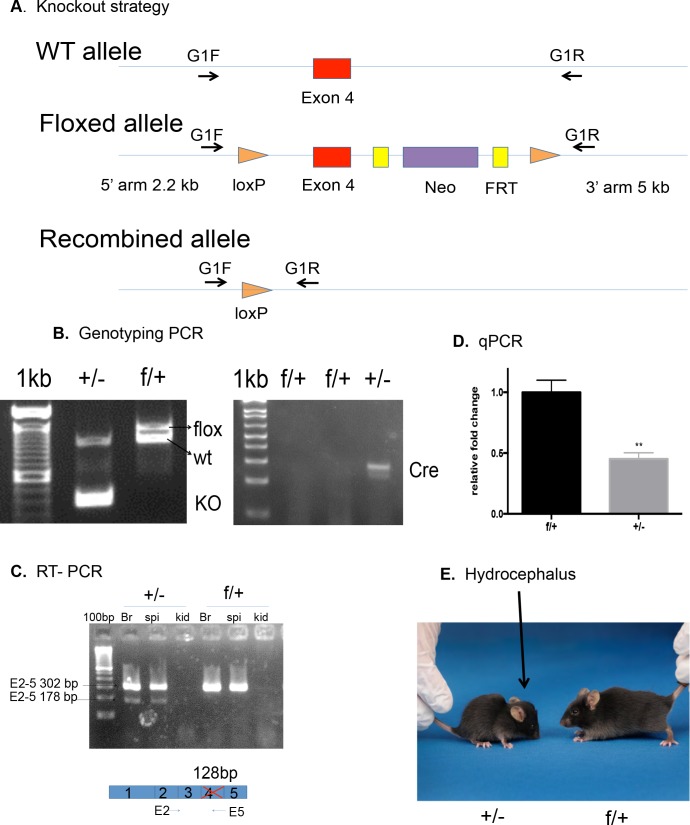
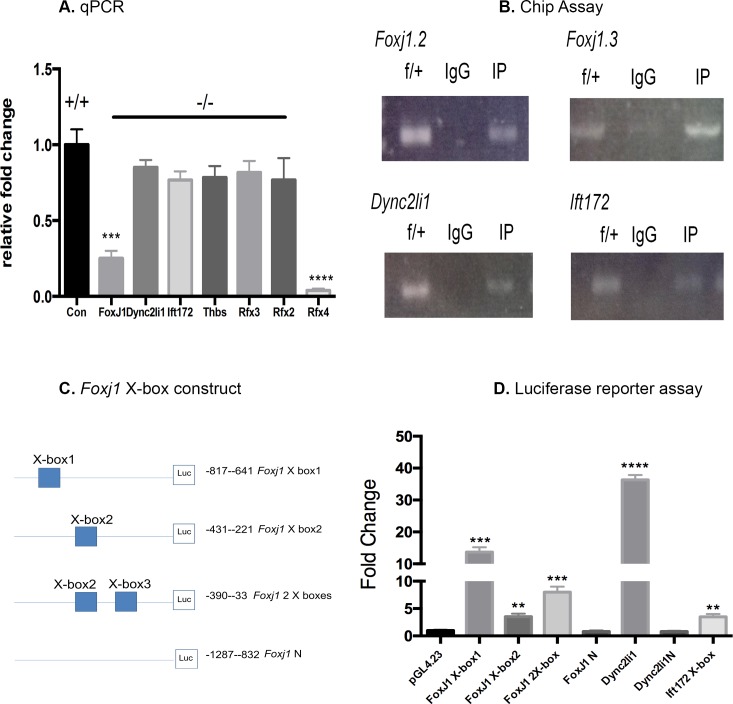
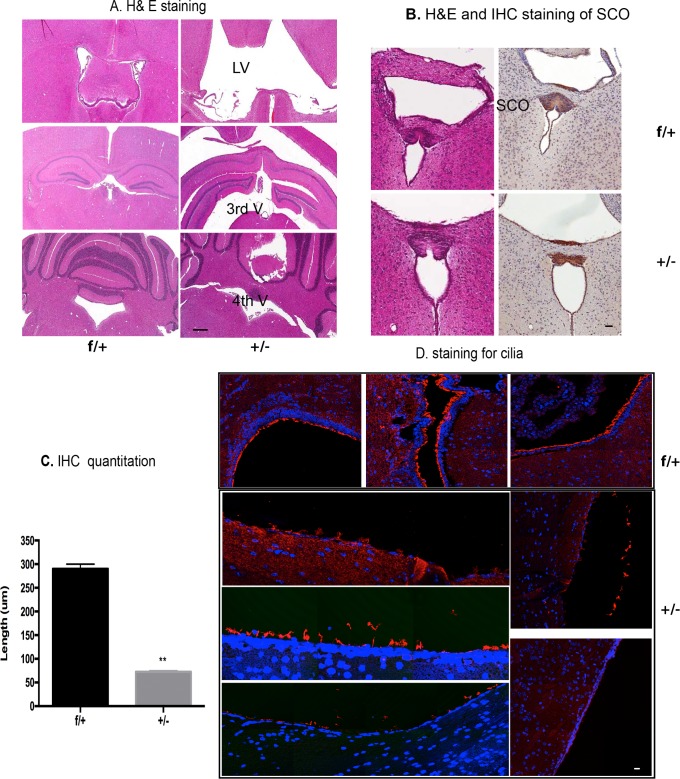
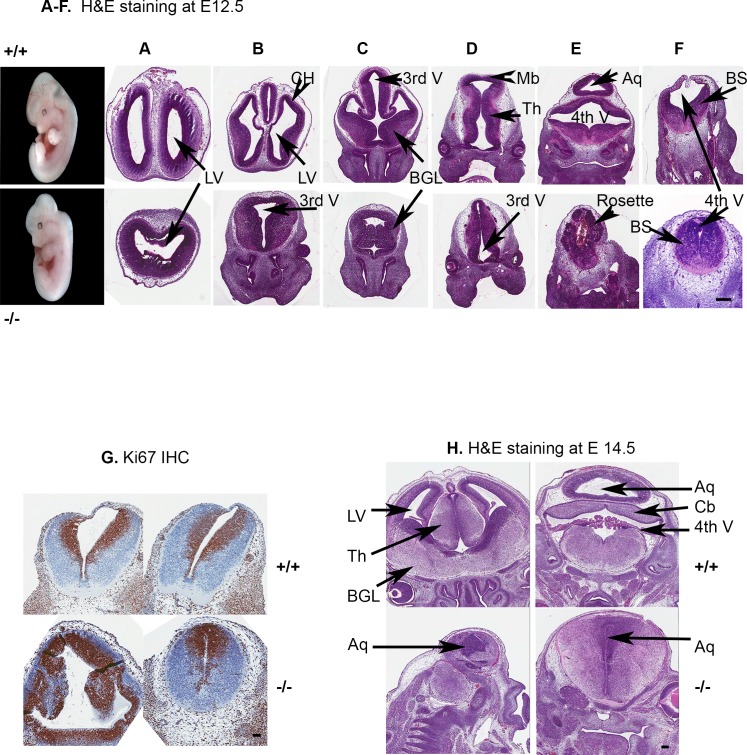
Regulatory factor X4 (RFX4) isoform 1 is a recently discovered isoform of the winged helix transcription factor RFX4, which can bind to X-box consensus sequences that are enriched in the promoters of cilia-related genes. Early insertional mutagenesis studies in mice first identified this isoform, and demonstrated that it was crucial for mouse brain development. RFX4 isoform 1 is the only RFX4 isoform significantly expressed in the mouse fetal and adult brain. In this study, we evaluated conditional knock-out (KO) mice in which one or two floxed alleles of Rfx4 were deleted early in development through the use of a Sox2-Cre transgene. Heterozygous deletion of Rfx4 resulted in severe, non-communicating congenital hydrocephalus associated with hypoplasia of the subcommissural organ. Homozygous deletion of Rfx4 resulted in formation of a single ventricle in the forebrain, and severe dorsoventral patterning defects in the telencephalon and midbrain at embryonic day 12.5, a collection of phenotypes that resembled human holoprosencephaly. No anatomical abnormalities were noted outside the brain in either case. At the molecular level, transcripts encoded by the cilia-related gene Foxj1 were significantly decreased, and Foxj1 was identified as a direct gene target of RFX4 isoform 1. The phenotypes were similar to those observed in the previous Rfx4 insertional mutagenesis studies. Thus, we provide a novel conditional KO animal model in which to investigate the downstream genes directly and/or indirectly regulated by RFX4 isoform 1. This model could provide new insights into the pathogenesis of obstructive hydrocephalus and holoprosencephaly in humans, both relatively common and disabling birth defects.
调节因子X4(RFX4)亚型1是最近发现的有翼螺旋转录因子RFX4的一种亚型,它可以结合在纤毛相关基因启动子中富集的X盒共有序列。早期对小鼠的插入诱变研究首次鉴定出这种亚型,并证明它对小鼠大脑发育至关重要。RFX4亚型1是在小鼠胎儿和成年大脑中显著表达的唯一RFX4亚型。在本研究中,我们评估了条件性敲除(KO)小鼠,其中通过使用Sox2-Cre转基因在发育早期删除了一个或两个Rfx4的floxed等位基因。Rfx4的杂合缺失导致严重的、非交通性先天性脑积水,并伴有连合下器官发育不全。Rfx4的纯合缺失导致前脑形成单一脑室,在胚胎第12.5天,端脑和中脑出现严重的背腹模式缺陷,这一系列表型类似于人类全前脑畸形。在这两种情况下,大脑外均未发现解剖学异常。在分子水平上,纤毛相关基因Foxj1编码的转录本显著减少,并且Foxj1被鉴定为RFX4亚型1的直接基因靶点。这些表型与先前Rfx4插入诱变研究中观察到的表型相似。因此,我们提供了一种新型的条件性敲除动物模型,用于直接和/或间接研究由RFX4亚型1调控的下游基因。该模型可以为人类阻塞性脑积水和全前脑畸形的发病机制提供新的见解,这两种疾病都是相对常见且致残的出生缺陷。