State Key Laboratory of Crop Genetics and Germplasm Enhancement, College of Horticulture, Nanjing Agricultural University, 1 Weigang, Nanjing, 210095, China.
BMC Plant Biol. 2018 Jan 5;18(1):8. doi: 10.1186/s12870-017-1221-1.
Carrot which contains lots of nutrients has a large demand around the world. The soluble sugar content in fleshy root of carrot directly influences its taste and quality. Sucrose, as an important member of soluble sugar, is the main product of photosynthesis in higher plants and it plays pivotal roles in physiological processes including energy supply, signal transduction, transcriptional regulation, starch and cellulose synthesis, and stress tolerance. Sucrose synthase is a key enzyme involved in sucrose metabolism and is closely related to sucrose content. However, the molecular mechanism involved in sucrose metabolism in carrot has lagged behind.
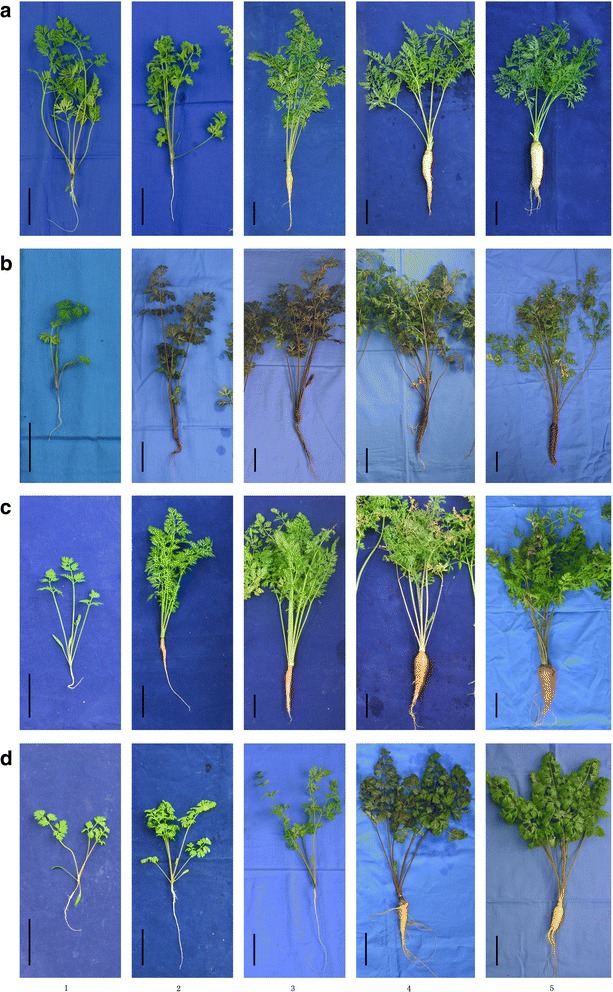
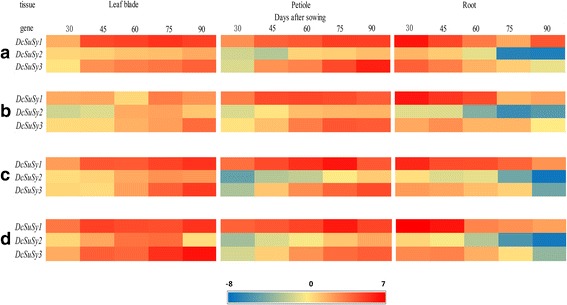
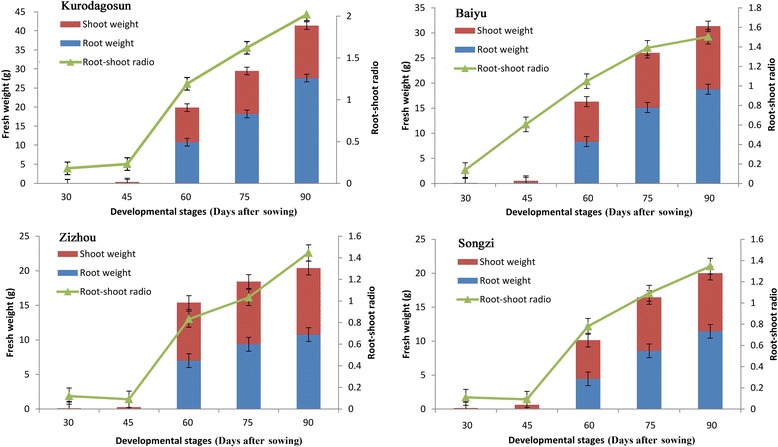
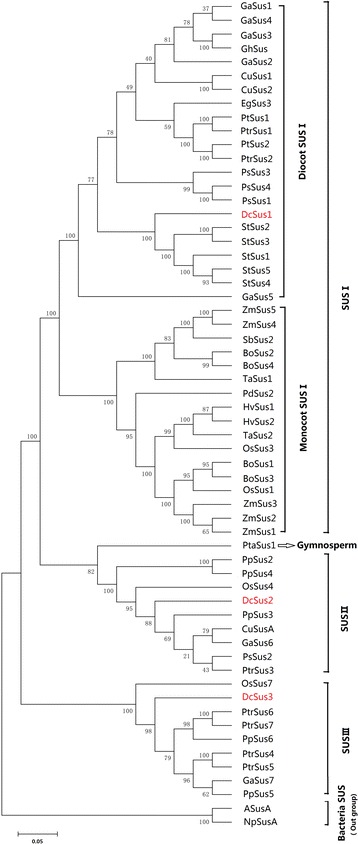
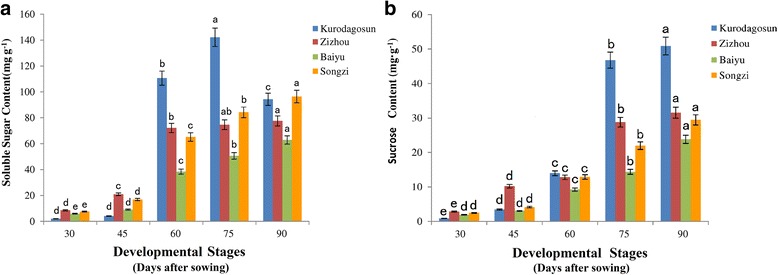
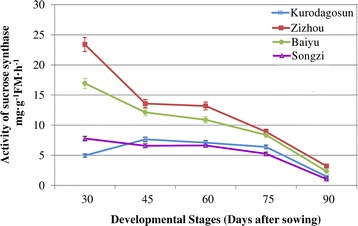
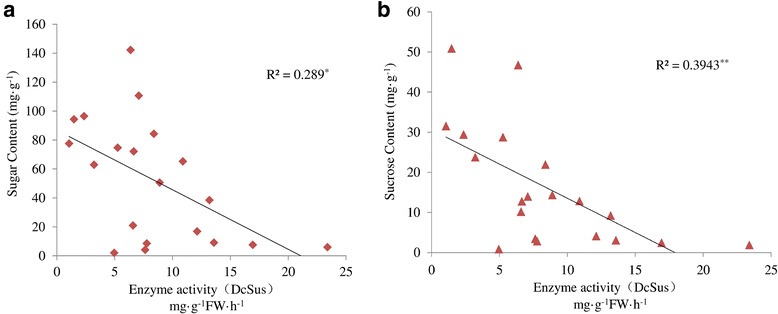
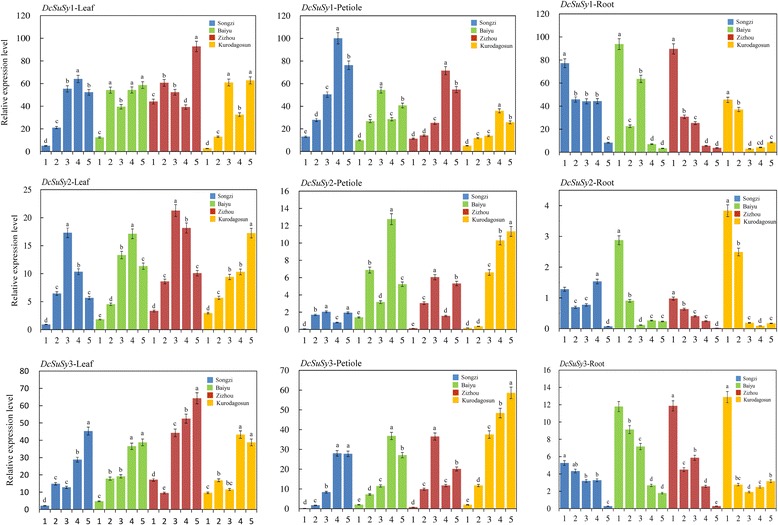
Here, carrot roots of five developmental stages from four carrot cultivars were collected, and the contents of soluble sugar and sucrose in different stages and cultivars were surveyed. Three DcSus genes (DcSus1, DcSus2, and DcSus3), with lengths of 2427 bp, 2454 bp and 2628 bp, respectively, were identified and cloned in carrot. Phylogenetic analysis from the deduced amino acid sequences suggested that three DcSus were clustered into three distinct groups (SUSI, II and III). Results of enzymatic profiles demonstrated that the DcSus activities showed decrease trends during taproot development. Correlation analysis indicated that the DcSus activity showed negative correlation with soluble sugar content and strong negative correlation with sucrose concentration. Quantitative real-time PCR analysis showed that the expression profiles of the DcSus genes are significantly different in carrot tissues (root, leaf blade, and petiole), and the expression levels of the DcSus genes in the leaf blade were much higher than that in the root and petiole. The expression profiles of DcSus genes showed strong negative correlation with both sucrose content and soluble sugar content.
During carrot root development, the soluble sugar content and sucrose content showed increasing trends, while DcSus activities had persisting declinations, which may be due to the decreasing expression levels of genes encoding sucrose synthase. Our data demonstrate that synthesis of sucrose in carrot tissue is closely related with DcSus genes. The results from our study would not only provide effective insights of sucrose metabolism in carrot, but also are beneficial for biologists to improve carrot quality.
胡萝卜含有丰富的营养物质,在全球有很大的需求。胡萝卜肉质根中的可溶性糖含量直接影响其口感和品质。蔗糖作为可溶性糖的重要成员,是高等植物光合作用的主要产物,在能量供应、信号转导、转录调控、淀粉和纤维素合成以及胁迫耐受等生理过程中发挥着关键作用。蔗糖合酶是参与蔗糖代谢的关键酶,与蔗糖含量密切相关。然而,胡萝卜中蔗糖代谢的分子机制研究相对滞后。
本研究从四个胡萝卜品种的五个发育阶段采集了胡萝卜根,并调查了不同阶段和品种的可溶性糖和蔗糖含量。在胡萝卜中鉴定并克隆了三个长度分别为 2427bp、2454bp 和 2628bp 的 DcSus 基因(DcSus1、DcSus2 和 DcSus3)。从推导的氨基酸序列进行系统发育分析表明,三个 DcSus 基因聚为三个不同的亚组(SUSI、II 和 III)。酶谱结果表明,主根发育过程中 DcSus 活性呈下降趋势。相关性分析表明,DcSus 活性与可溶性糖含量呈负相关,与蔗糖浓度呈强负相关。定量实时 PCR 分析表明,DcSus 基因在胡萝卜组织(根、叶片和叶柄)中的表达谱差异显著,叶片中的表达水平明显高于根和叶柄。DcSus 基因的表达谱与蔗糖含量和可溶性糖含量呈强负相关。
在胡萝卜根发育过程中,可溶性糖含量和蔗糖含量呈上升趋势,而 DcSus 活性持续下降,这可能是由于蔗糖合酶基因表达水平降低所致。我们的数据表明,胡萝卜组织中蔗糖的合成与 DcSus 基因密切相关。本研究结果不仅为胡萝卜蔗糖代谢提供了有效的见解,而且有助于生物学家改善胡萝卜品质。