Department of Biomedical Engineering, Tufts University, Medford, MA 02155, USA.
Department of Biomedical Engineering, Tufts University, Medford, MA 02155, USA.
Trends Biotechnol. 2018 Feb;36(2):173-185. doi: 10.1016/j.tibtech.2017.11.006. Epub 2018 Jan 2.
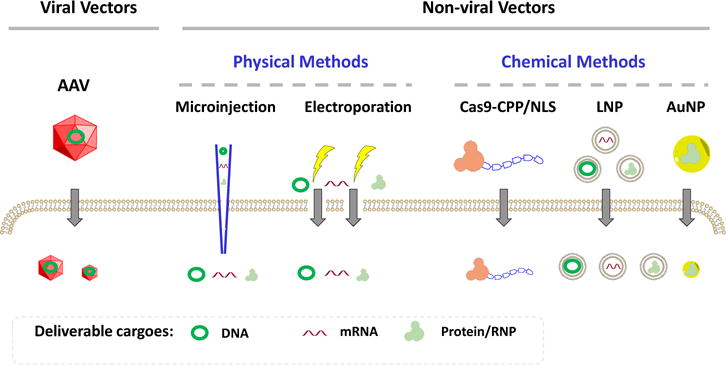
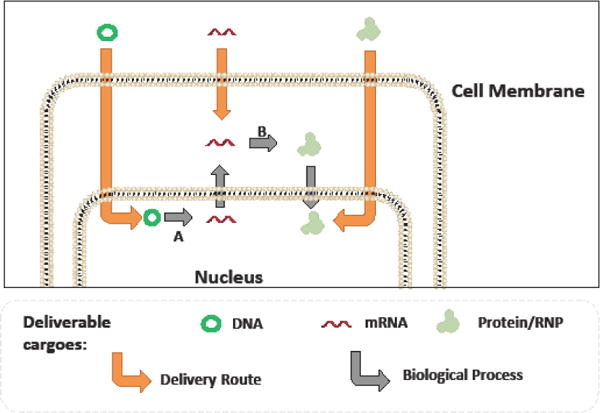
Clustered regularly interspaced short palindromic repeat-CRISPR-associated protein (CRISPR-Cas) systems, found in nature as microbial adaptive immune systems, have been repurposed into an important tool in biological engineering and genome editing, providing a programmable platform for precision gene targeting. These tools have immense promise as therapeutics that could potentially correct disease-causing mutations. However, CRISPR-Cas gene editing components must be transported directly to the nucleus of targeted cells to exert a therapeutic effect. Thus, efficient methods of delivery will be critical to the success of therapeutic genome editing applications. Here, we review current strategies available for in vivo delivery of CRISPR-Cas gene editing components and outline challenges that need to be addressed before this powerful tool can be deployed in the clinic.
成簇规律间隔短回文重复序列 - CRISPR 相关蛋白(CRISPR-Cas)系统,作为微生物适应性免疫系统在自然界中被重新利用,已成为生物工程和基因组编辑中的重要工具,为精确基因靶向提供了可编程平台。这些工具作为治疗方法具有巨大的潜力,可以潜在地纠正致病突变。然而,CRISPR-Cas 基因编辑组件必须直接运输到靶细胞的细胞核中才能发挥治疗作用。因此,有效的递送方法对于治疗性基因组编辑应用的成功至关重要。在这里,我们综述了目前可用于体内递送 CRISPR-Cas 基因编辑组件的策略,并概述了在该强大工具在临床中得以应用之前需要解决的挑战。