Neurosciences Graduate Program, University of California, San Diego, La Jolla, CA 92093, USA.
Neurosciences Graduate Program, University of California, San Diego, La Jolla, CA 92093, USA; Neurobiology Section Division of Biological Sciences, University of California, San Diego, La Jolla, CA 92093, USA; Biomedical Sciences Graduate Program, University of California, San Diego, La Jolla, CA 92093, USA.
Pharmacol Biochem Behav. 2018 Nov;174:42-52. doi: 10.1016/j.pbb.2017.12.010. Epub 2018 Jan 5.
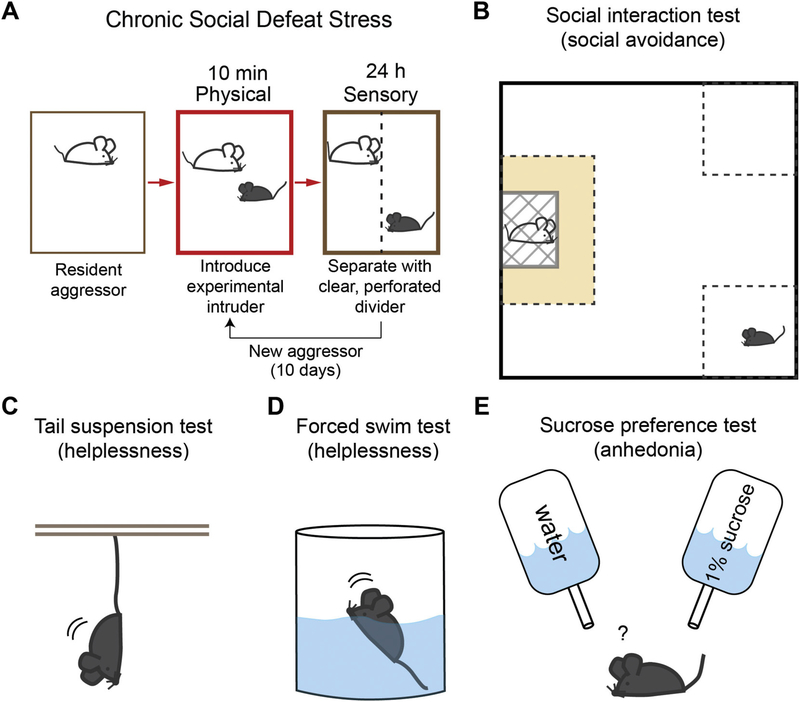
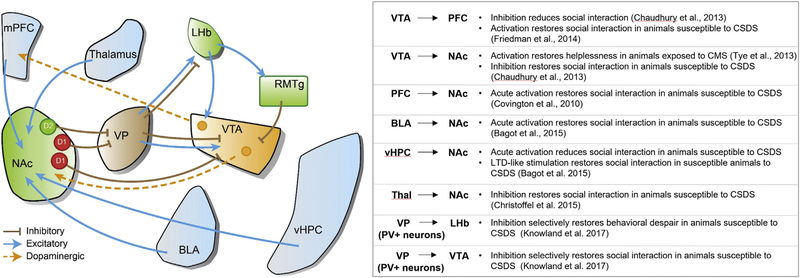
Major depressive disorder (MDD) is a common but serious neuropsychiatric affliction that comprises a diverse set of symptoms such as the inability to feel pleasure, lack of motivation, changes in appetite, and cognitive difficulties. Given the patient to patient symptomatic variability in MDD and differing severities of individual symptoms, it is likely that maladaptive changes in distinct brain areas may mediate discrete symptoms in MDD. The advent and recent surge of studies using viral-genetic approaches have allowed for circuit-specific dissection of networks underlying motivational behavior. In particular, areas such as the ventral tegmental area (VTA), nucleus accumbens (NAc), and ventral pallidum (VP) are thought to generally promote reward, with the medial prefrontal cortex (mPFC) providing top-down control of reward seeking. On the contrary, the lateral habenula (LHb) is considered to be the aversive center of the brain as it has been shown to encode negative valence. The behavioral symptoms of MDD may arise from a disruption in the reward circuitry, hyperactivity of aversive centers, or a combination of the two. Thus, gaining access to specific circuits within the brain and how separate motivational-relevant regions transmit and encode information between each other in the context of separate depression-related symptoms can provide critical knowledge towards symptom-specific treatment of MDD. Here, we review published literature emphasizing circuit- and cell type-specific dissection of depressive-like behaviors in animal models of depression with a particular focus on the chronic social defeat stress model of MDD.
重度抑郁症(MDD)是一种常见但严重的神经精神疾病,其症状多种多样,包括无法感到愉悦、缺乏动力、食欲改变和认知困难。鉴于 MDD 患者之间症状的差异以及个体症状的严重程度不同,大脑中不同区域的适应性变化可能会导致 MDD 出现不同的症状。采用病毒基因方法的研究的出现和最近的激增,使得对动机行为相关网络的特定回路进行剖析成为可能。特别是腹侧被盖区(VTA)、伏隔核(NAc)和腹侧苍白球(VP)等区域通常被认为可以促进奖励,而内侧前额叶皮层(mPFC)则对奖励寻求提供自上而下的控制。相反,外侧缰核(LHb)被认为是大脑的厌恶中心,因为它已被证明可以编码负效价。MDD 的行为症状可能源于奖励回路的中断、厌恶中心的过度活跃,或者两者的结合。因此,深入了解大脑中的特定回路,以及在与不同抑郁相关症状相关的情况下,分离的与动机相关的区域之间如何相互传递和编码信息,可以为 MDD 的特定症状治疗提供关键知识。在这里,我们回顾了强调在抑郁动物模型中对抑郁样行为进行回路和细胞类型特异性剖析的已发表文献,特别关注慢性社会挫败应激模型的 MDD。