Department of Geology and Earth System Science Interdisciplinary Center, University of Maryland, College Park, MD 20740;
Cary Institute of Ecosystem Studies, Millbrook, NY 12545;
Proc Natl Acad Sci U S A. 2018 Jan 23;115(4):E574-E583. doi: 10.1073/pnas.1711234115. Epub 2018 Jan 8.
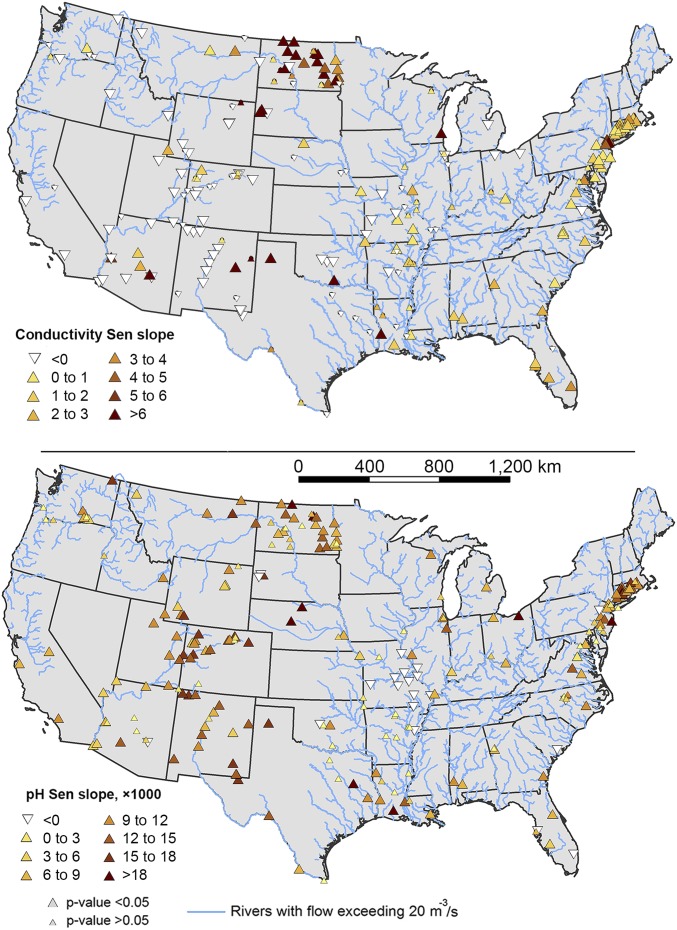
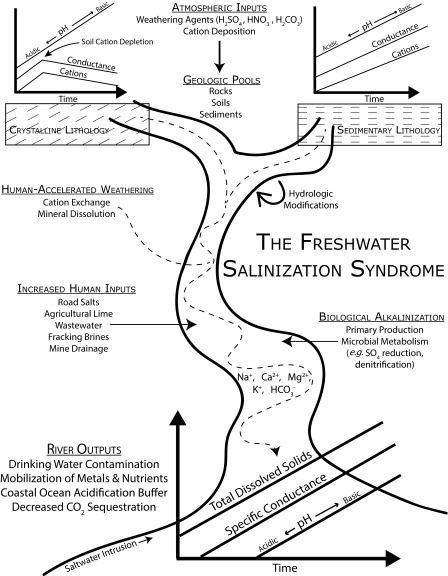
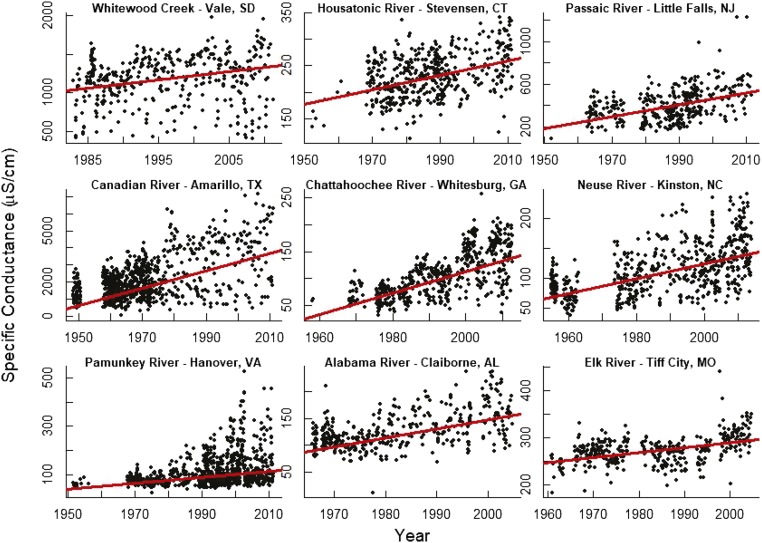
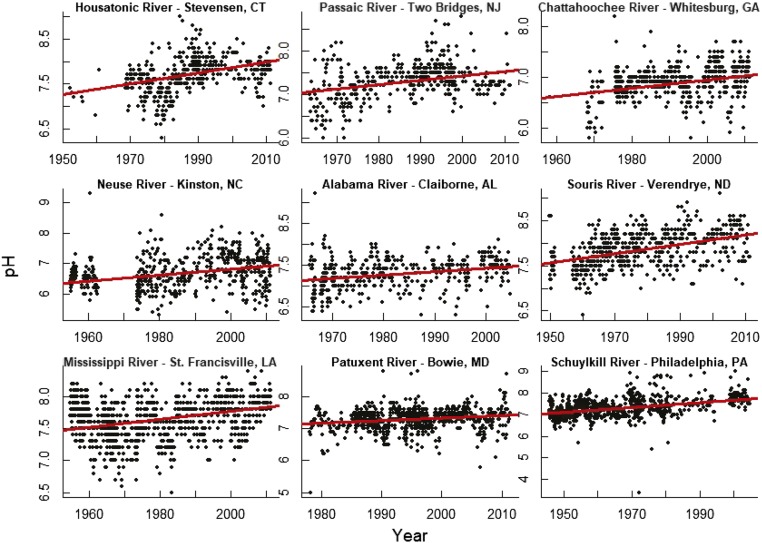
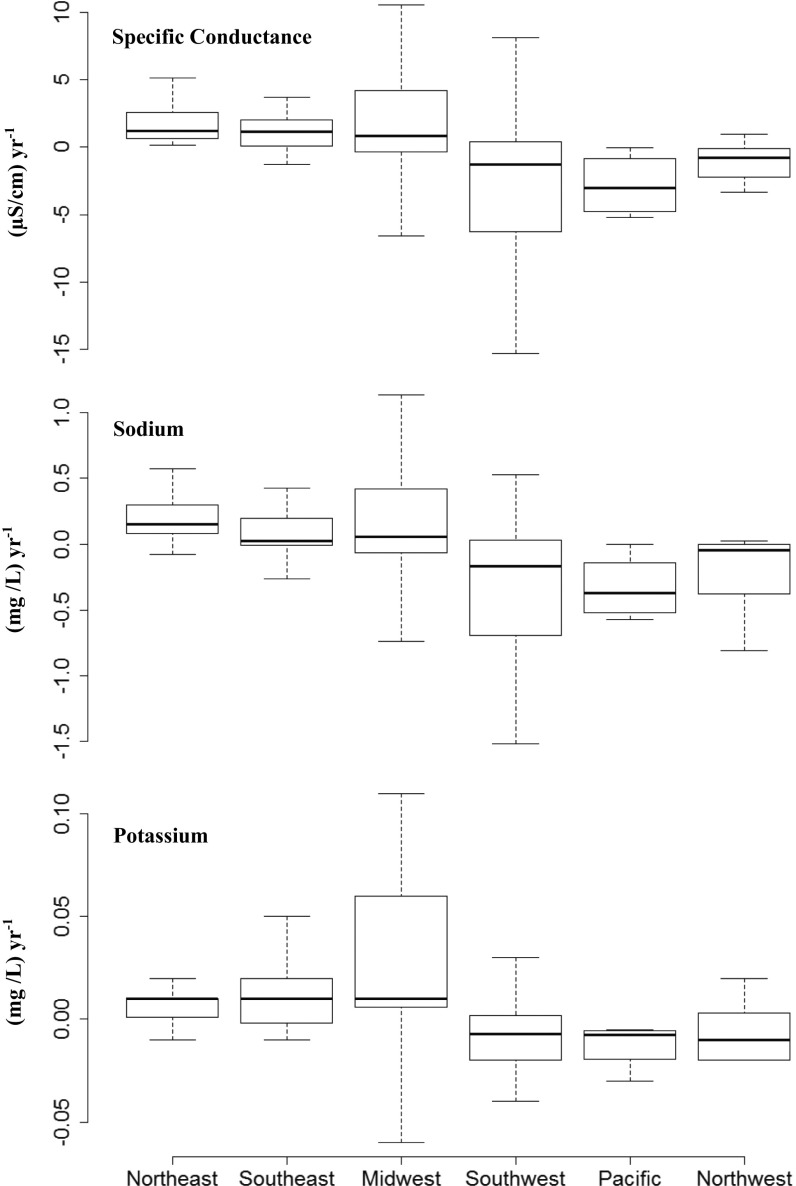
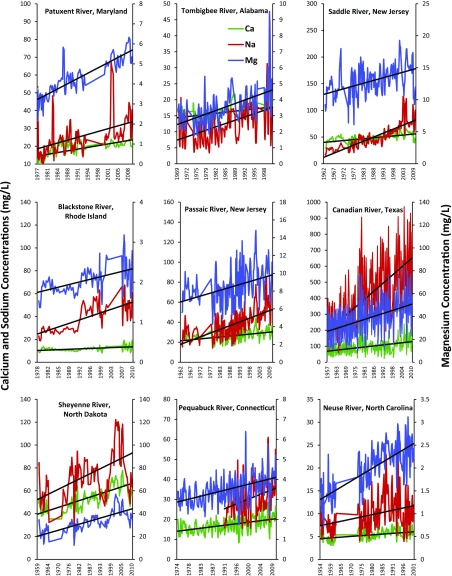
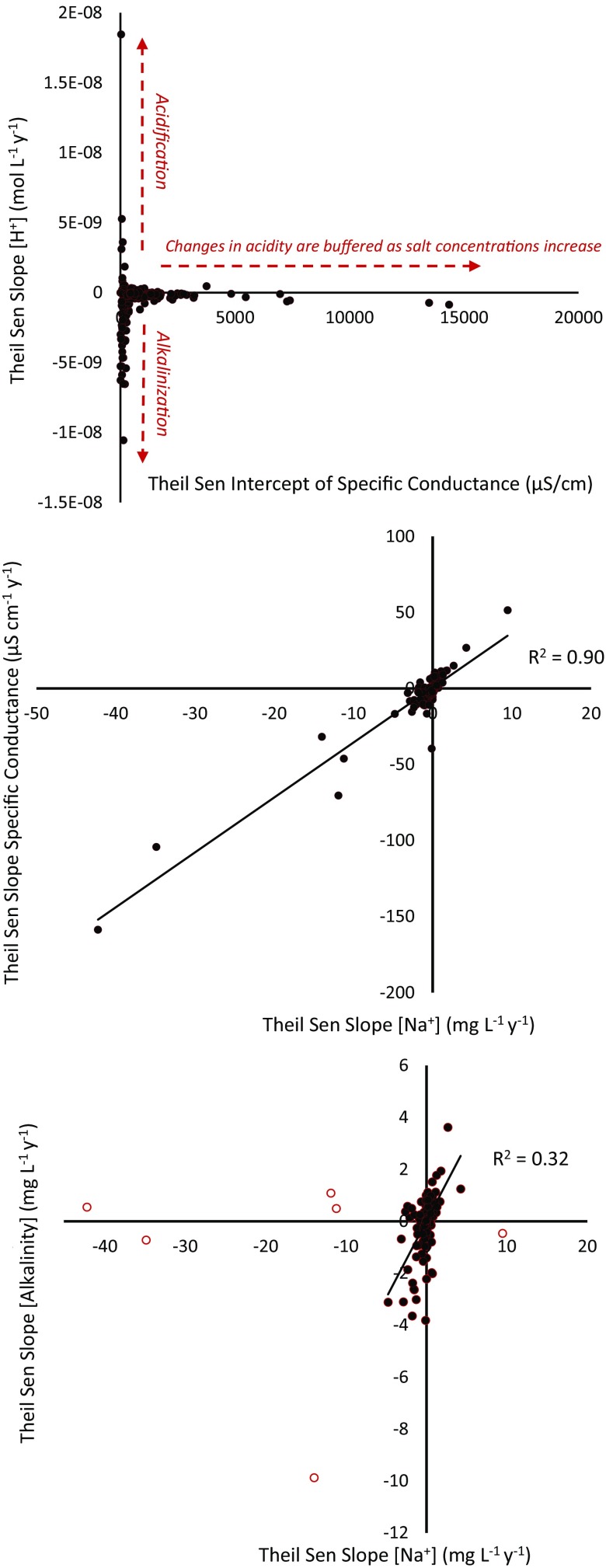
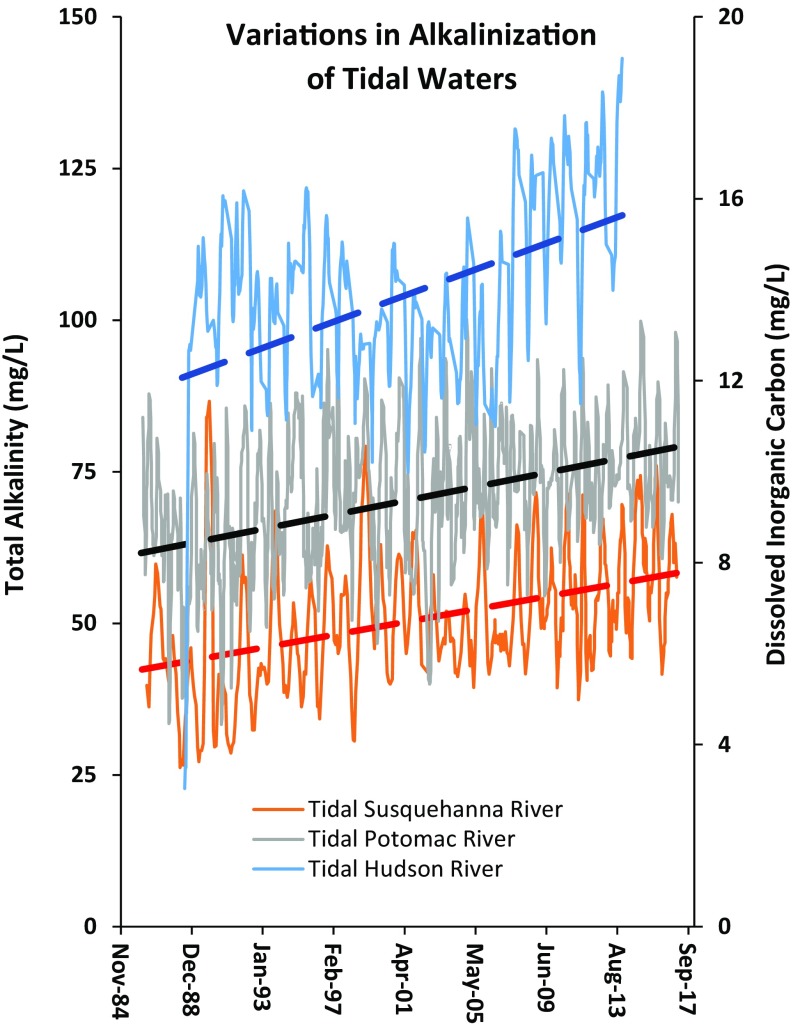
Salt pollution and human-accelerated weathering are shifting the chemical composition of major ions in fresh water and increasing salinization and alkalinization across North America. We propose a concept, the freshwater salinization syndrome, which links salinization and alkalinization processes. This syndrome manifests as concurrent trends in specific conductance, pH, alkalinity, and base cations. Although individual trends can vary in strength, changes in salinization and alkalinization have affected 37% and 90%, respectively, of the drainage area of the contiguous United States over the past century. Across 232 United States Geological Survey (USGS) monitoring sites, 66% of stream and river sites showed a statistical increase in pH, which often began decades before acid rain regulations. The syndrome is most prominent in the densely populated eastern and midwestern United States, where salinity and alkalinity have increased most rapidly. The syndrome is caused by salt pollution (e.g., road deicers, irrigation runoff, sewage, potash), accelerated weathering and soil cation exchange, mining and resource extraction, and the presence of easily weathered minerals used in agriculture (lime) and urbanization (concrete). Increasing salts with strong bases and carbonates elevate acid neutralizing capacity and pH, and increasing sodium from salt pollution eventually displaces base cations on soil exchange sites, which further increases pH and alkalinization. Symptoms of the syndrome can include: infrastructure corrosion, contaminant mobilization, and variations in coastal ocean acidification caused by increasingly alkaline river inputs. Unless regulated and managed, the freshwater salinization syndrome can have significant impacts on ecosystem services such as safe drinking water, contaminant retention, and biodiversity.
盐污染和人为加速风化正在改变北美的主要离子在淡水中的化学组成,并增加了淡水的盐度和碱度。我们提出了一个概念,即淡水盐化综合征,它将盐化和碱化过程联系起来。该综合征表现为电导率、pH 值、碱度和碱基阳离子的同时变化趋势。尽管个别趋势的强度可能有所不同,但在过去一个世纪,盐化和碱化分别影响了美国大陆 37%和 90%的流域面积。在美国地质调查局 (USGS) 的 232 个监测站点中,有 66%的溪流和河流站点的 pH 值呈统计上升趋势,而这种趋势通常在酸雨法规出台前几十年就开始了。该综合征在美国东部和中西部人口密集地区最为明显,那里的盐度和碱度增长最快。该综合征是由盐污染(如道路除冰剂、灌溉径流、污水、钾肥)、加速风化和土壤阳离子交换、采矿和资源开采以及农业(石灰)和城市化(混凝土)中使用的易风化矿物引起的。富含强碱和碳酸盐的盐分增加了酸中和能力和 pH 值,盐污染导致的钠离子最终取代了土壤交换位点上的碱基阳离子,这进一步增加了 pH 值和碱度。该综合征的症状包括:基础设施腐蚀、污染物迁移以及由于河流输入越来越碱性而导致的沿海海洋酸化变化。除非加以监管和管理,否则淡水盐化综合征可能会对安全饮用水、污染物截留和生物多样性等生态系统服务产生重大影响。